Yankum Ropes
Soft Shackle
Choose options
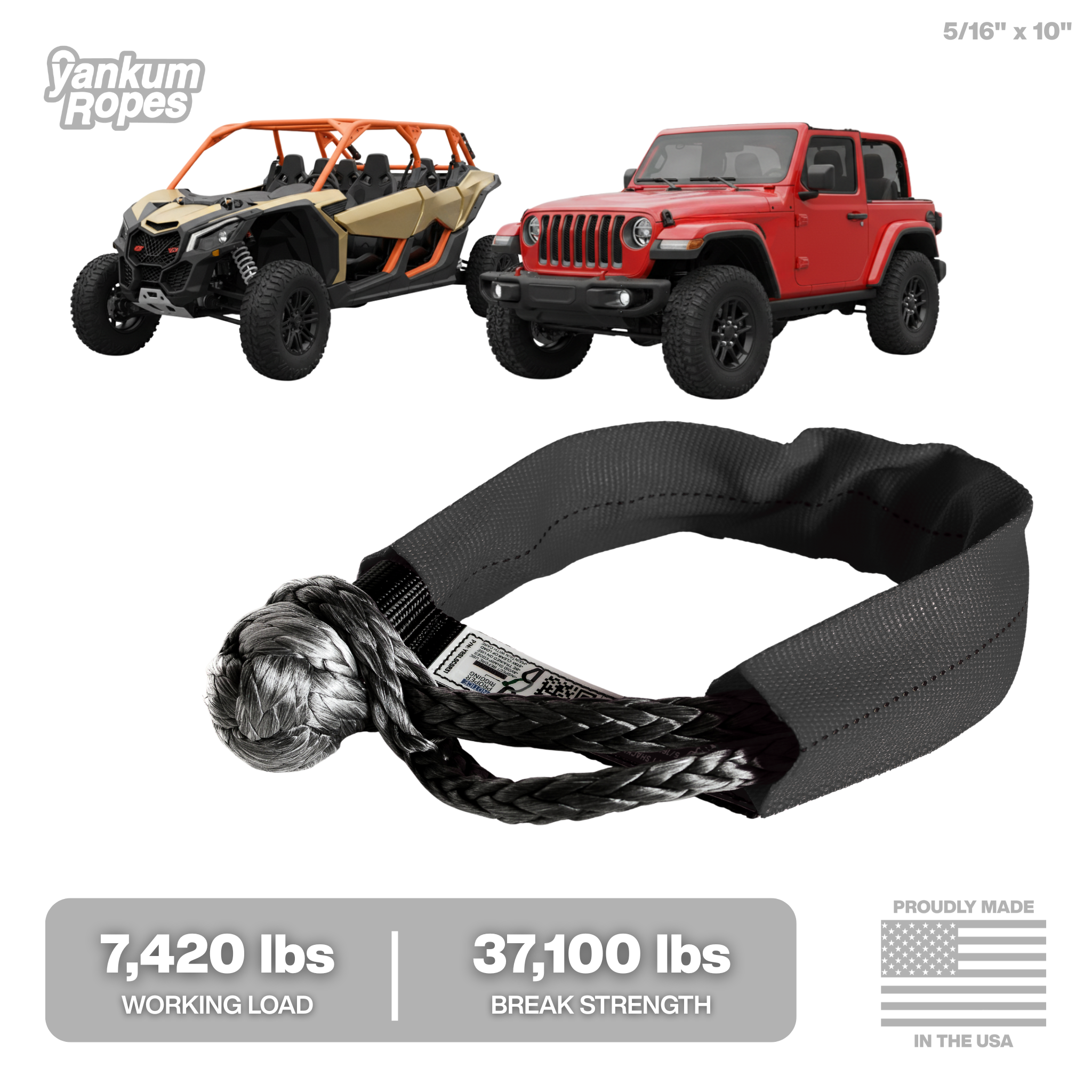
A steel bow shackle is heavy, it is three pieces, and the pin ends up in the mud about as often as it ends up in your hand. It also becomes a projectile if something lets go under load.
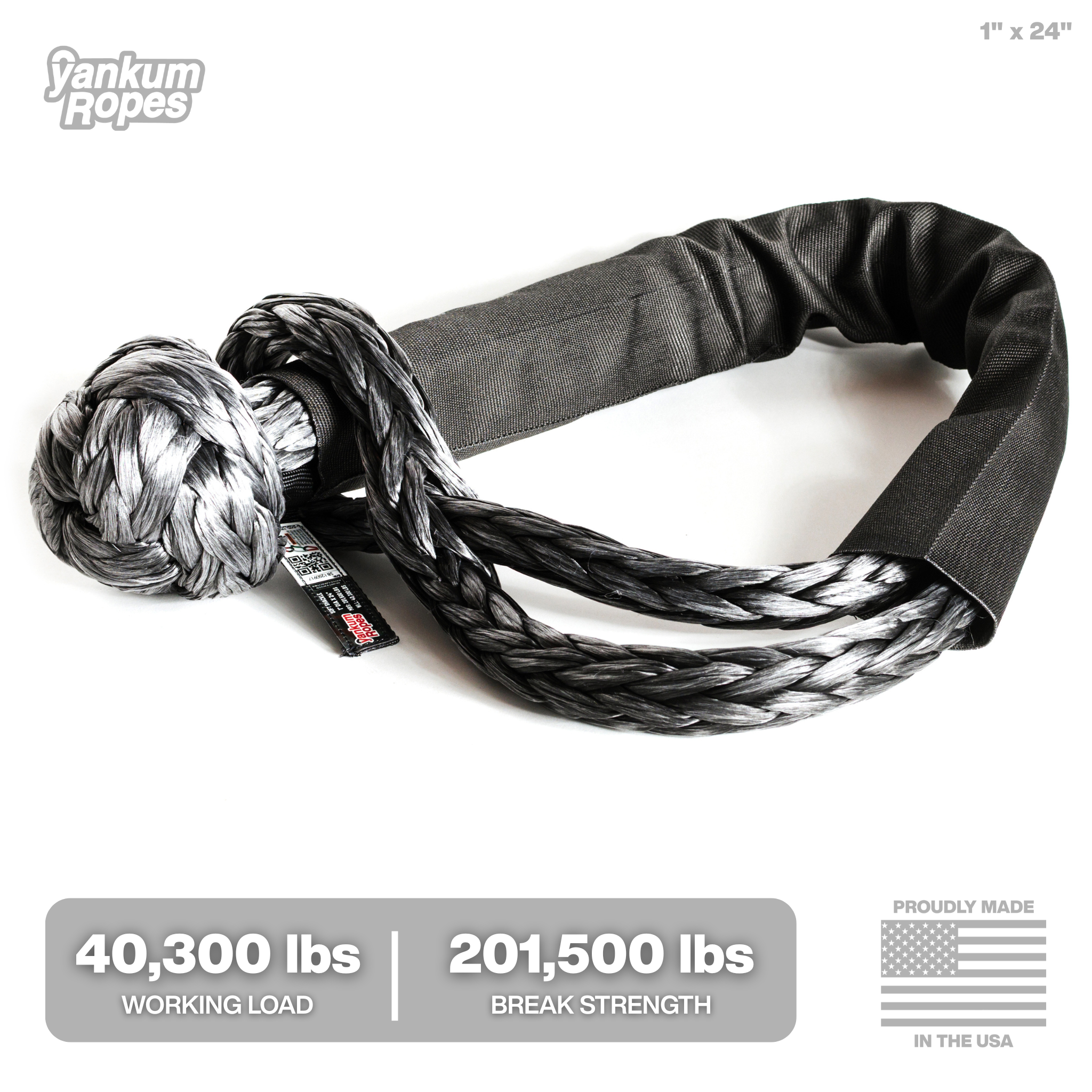
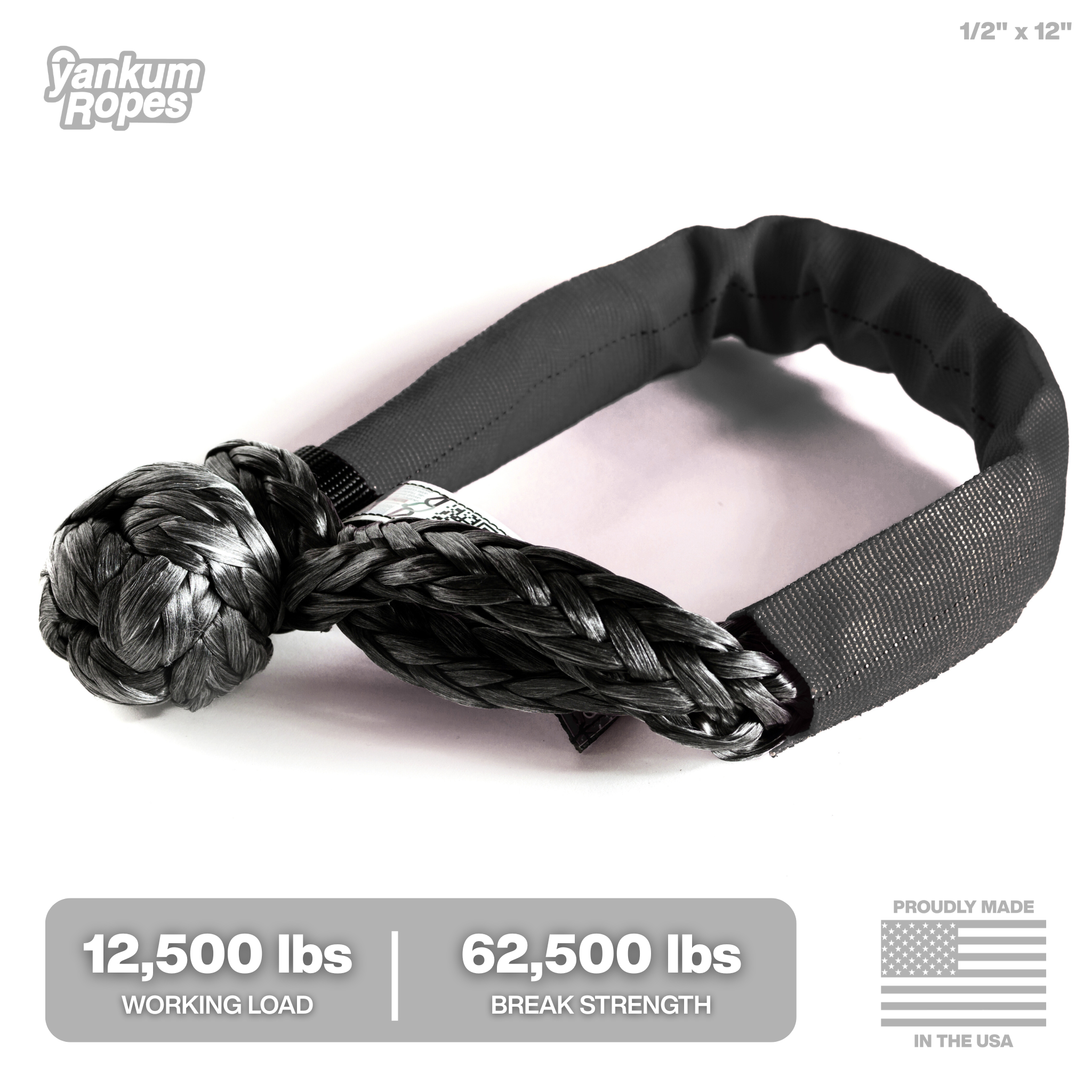
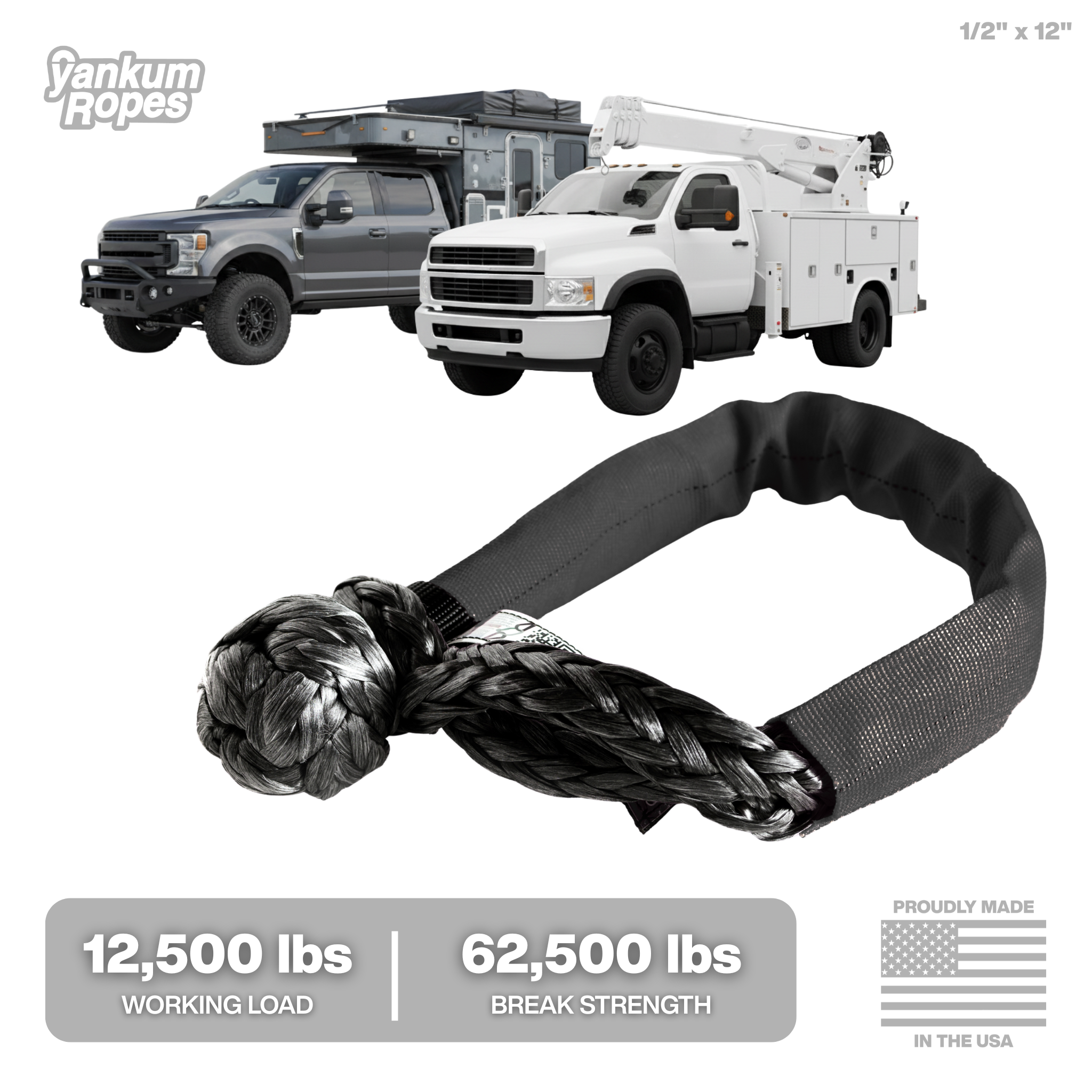
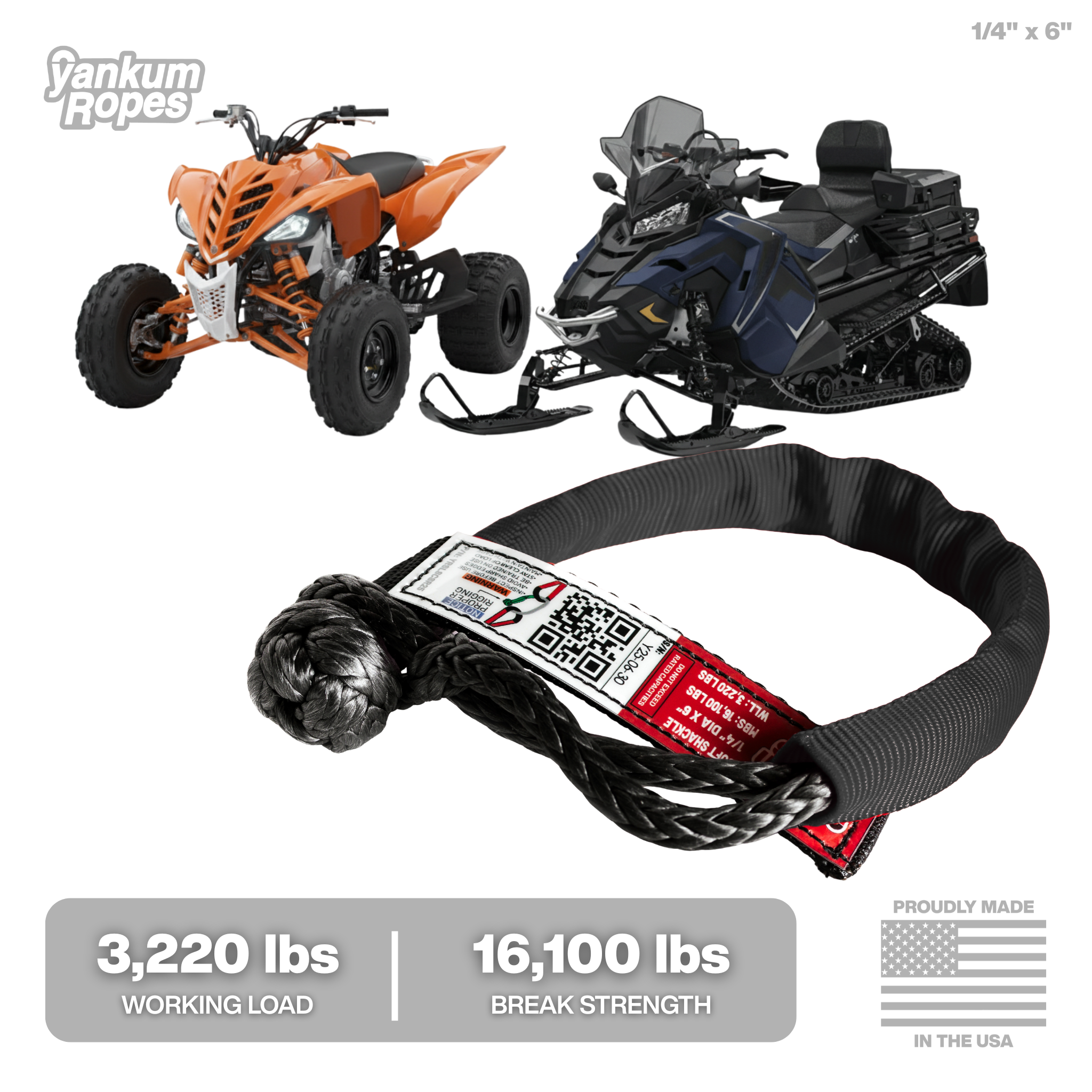
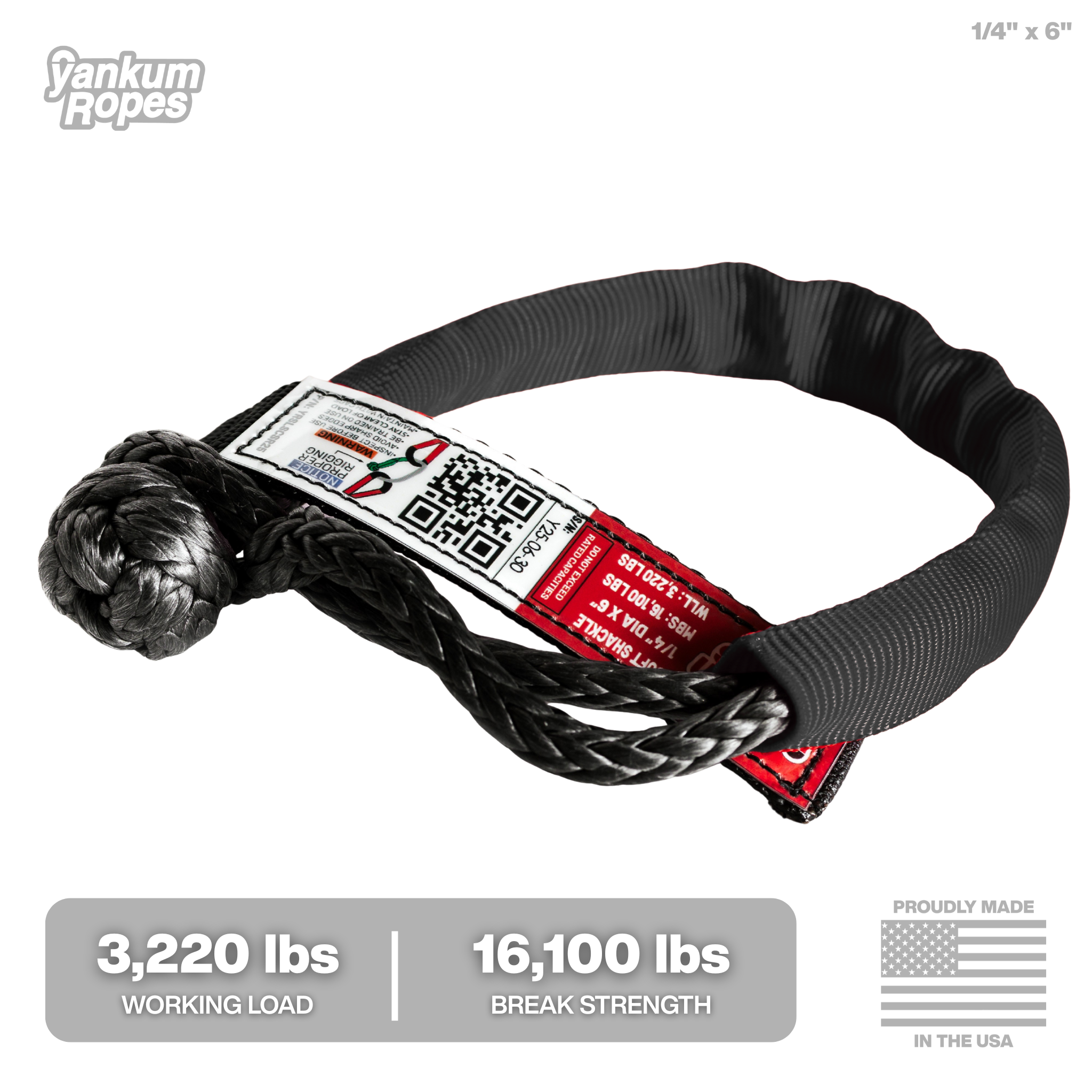
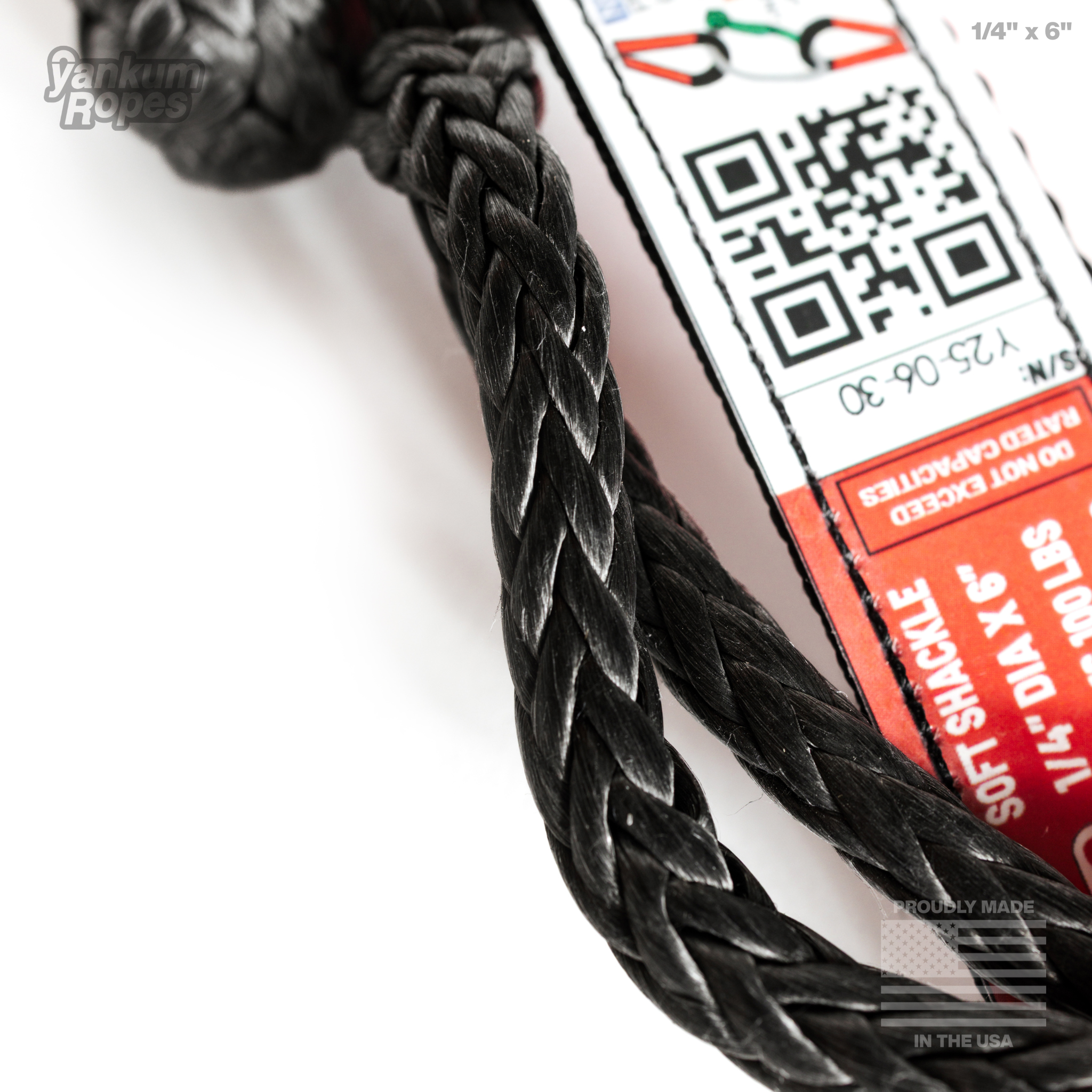
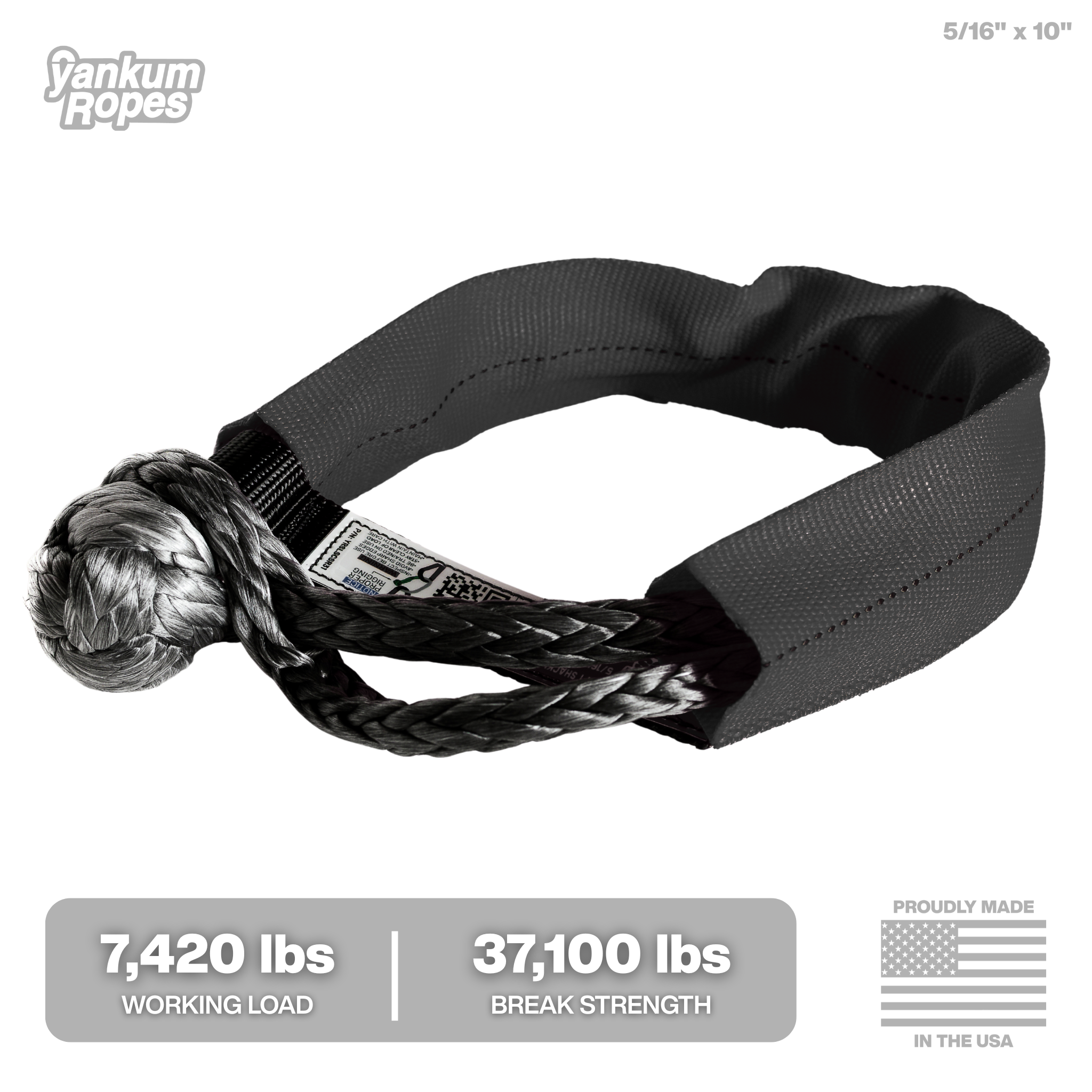
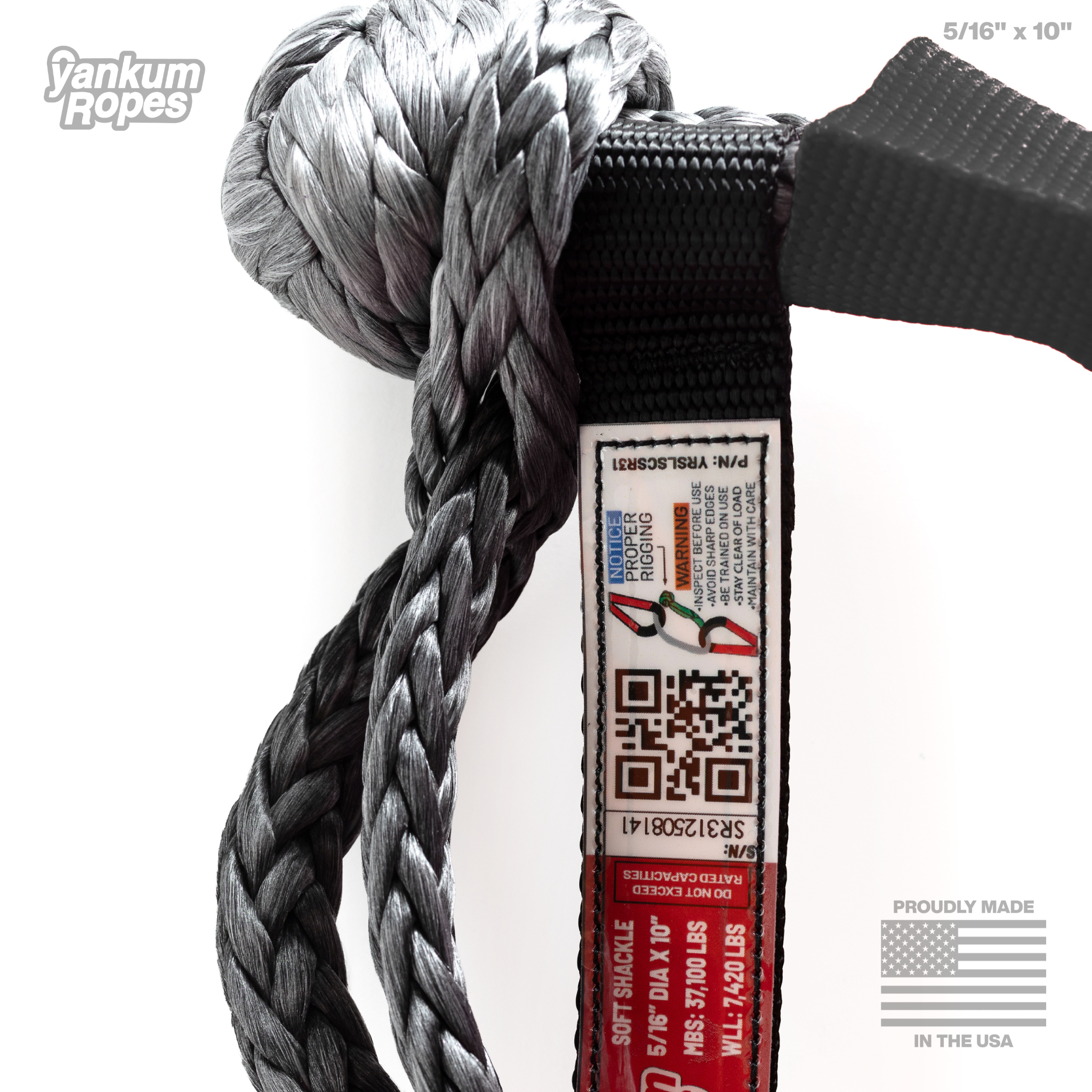
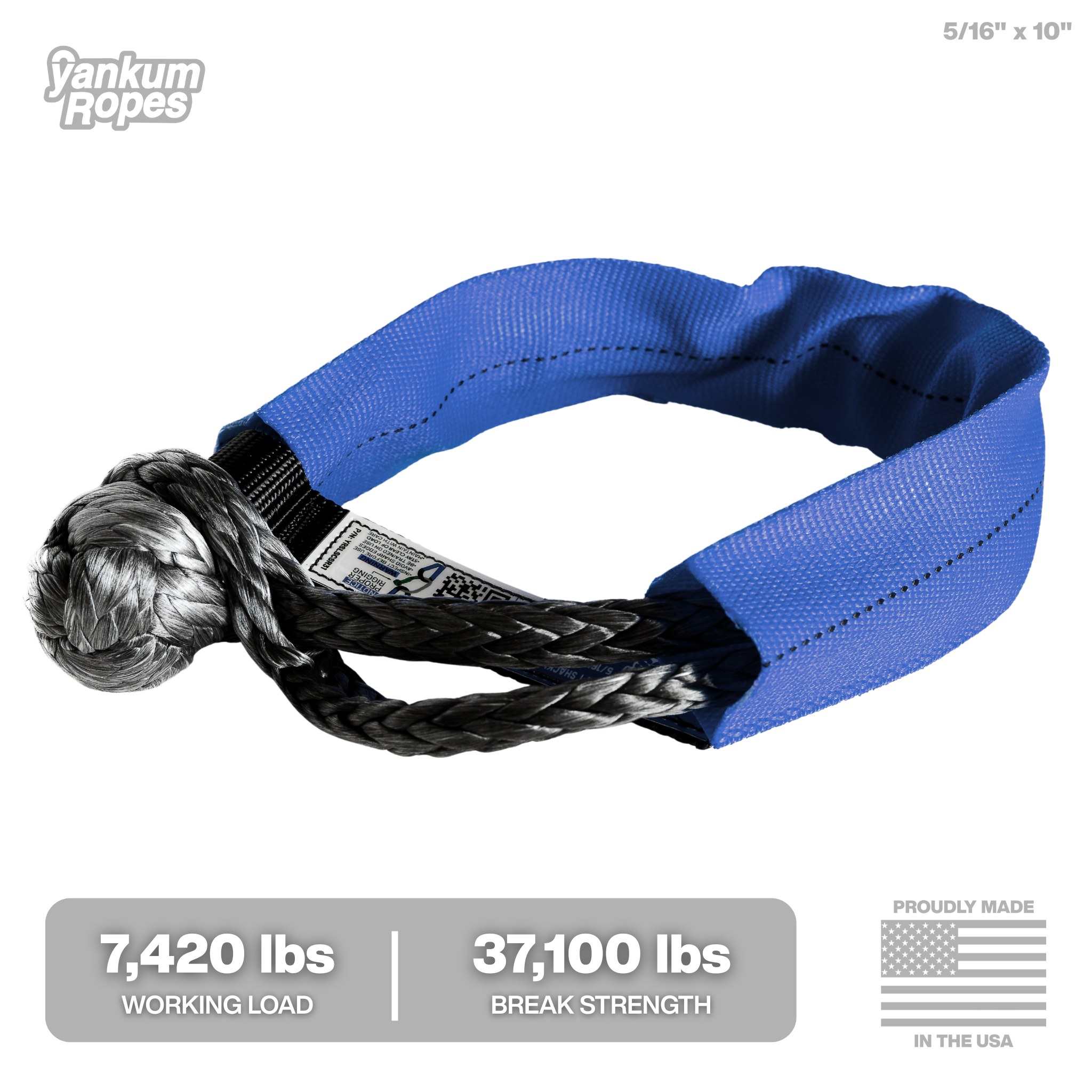
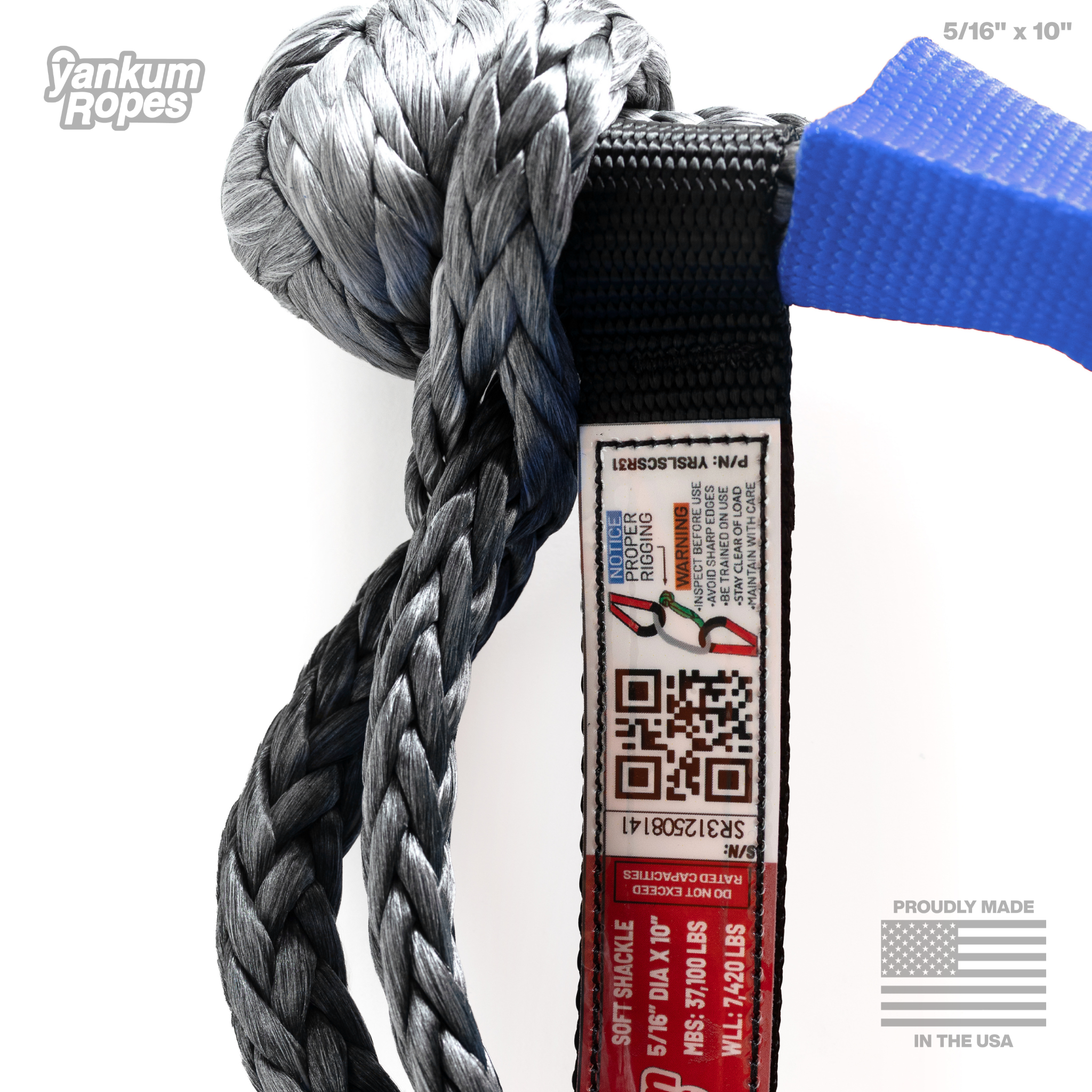
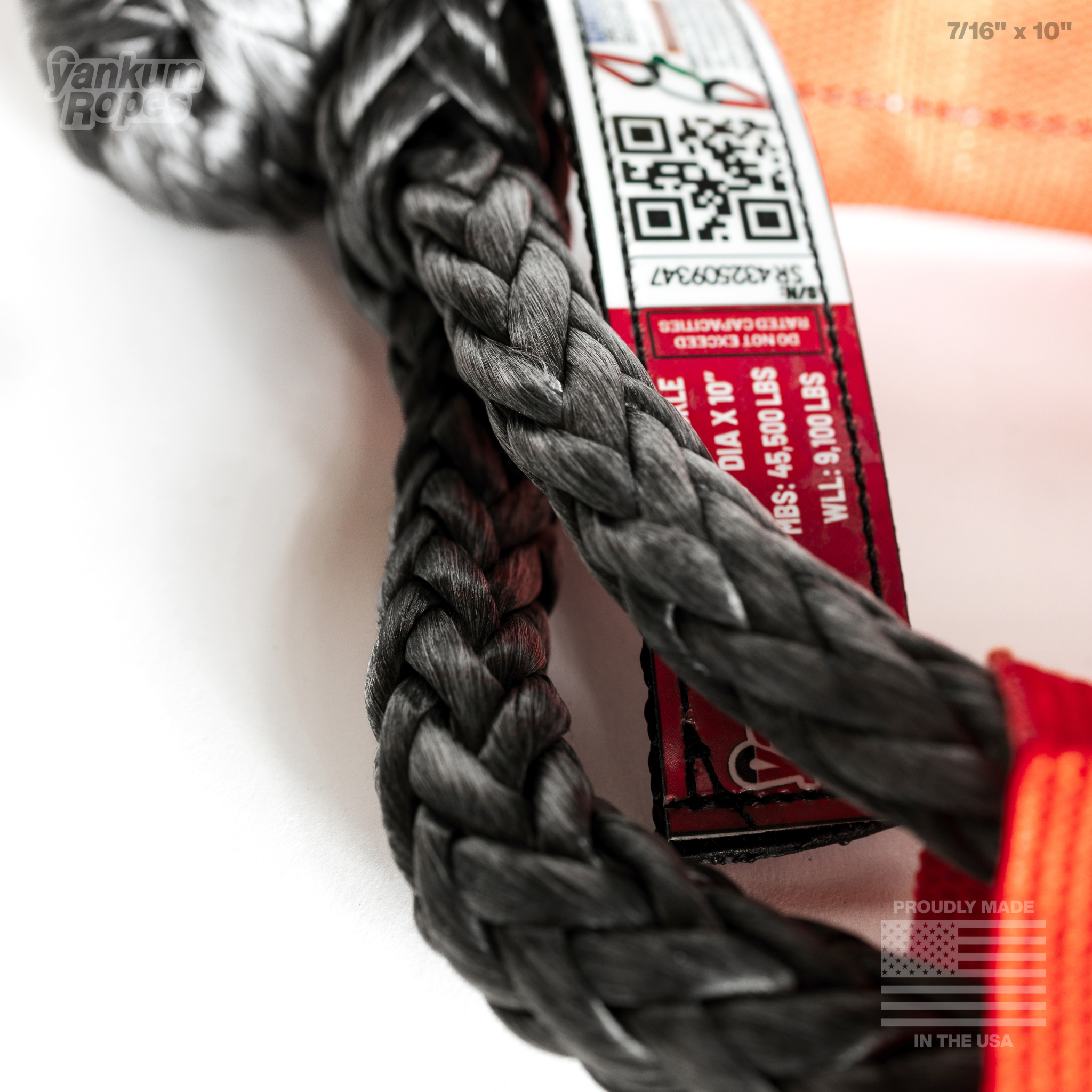
A soft shackle is one piece of HMPE fiber that does the same job at the same strength. It weighs almost nothing, it floats, it will not chip your paint, and if it ever fails it drops rather than flies. Once people switch, they generally do not go back.
Pick your size
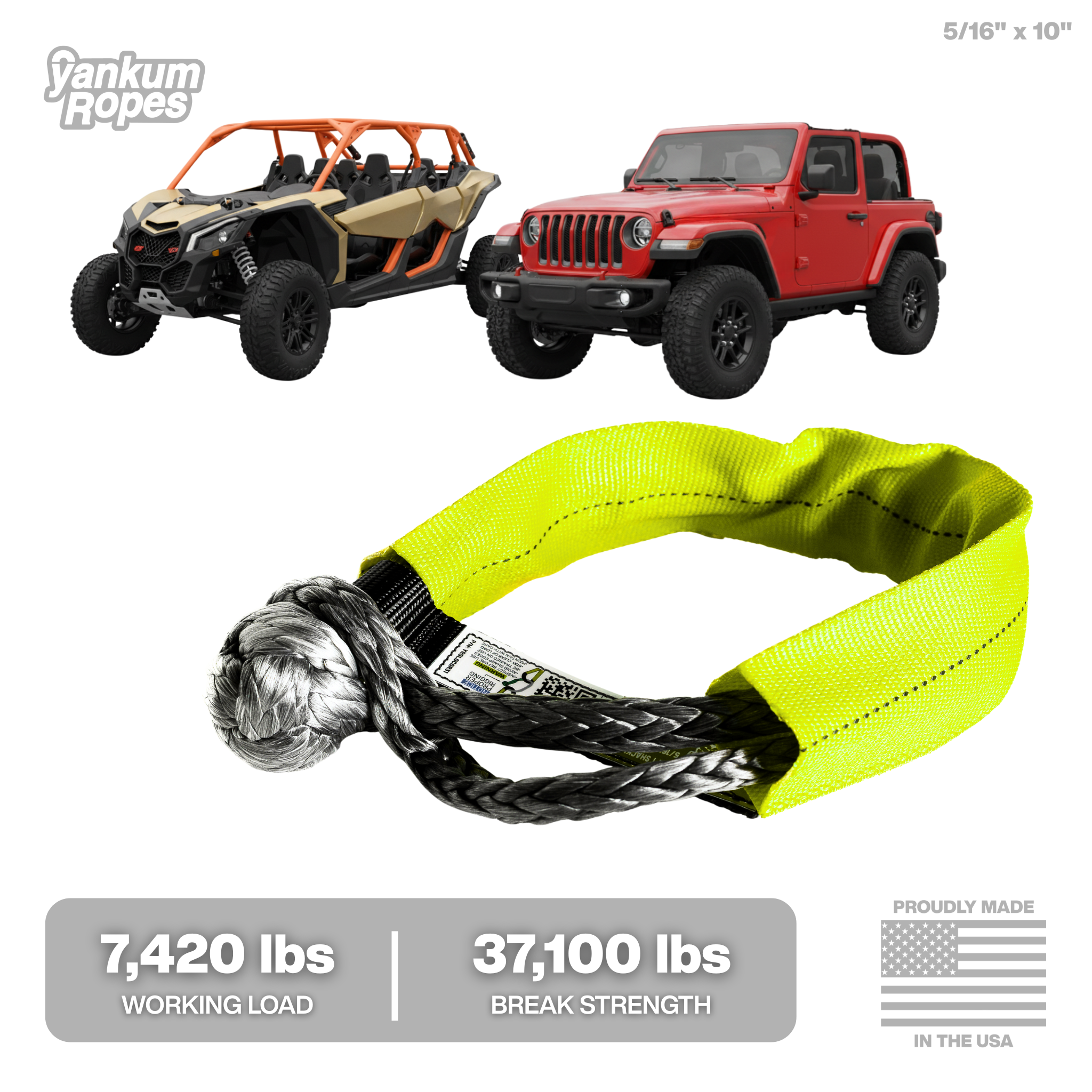
Same rule as the ropes: size to the vehicle doing the recovery, not the one that is stuck. These ranges line up with our kinetic rope sizing, so if you already know your rope size the shackle follows from it.
| Diameter | Breaking strength | Recovery vehicle weight | Pairs with |
|---|---|---|---|
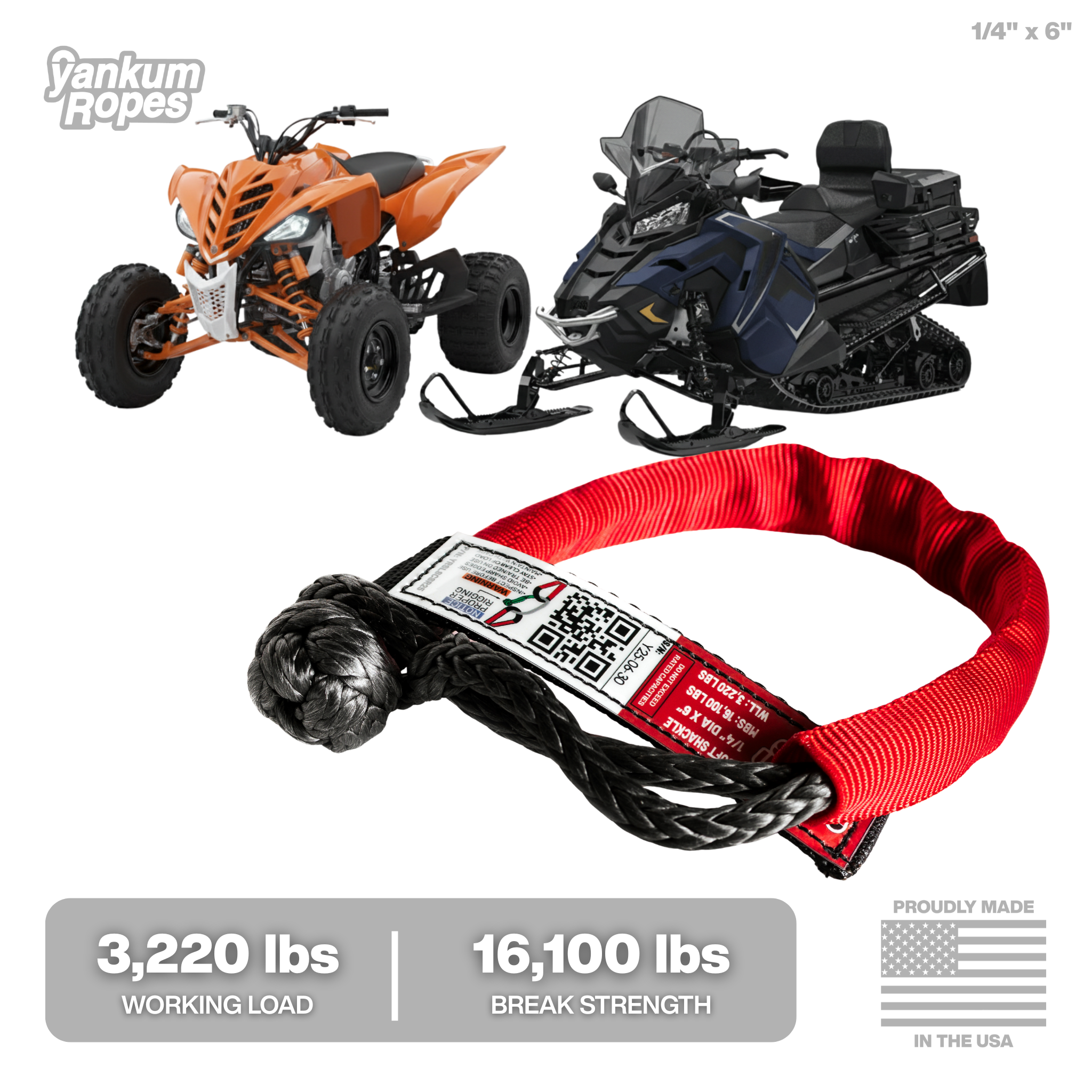
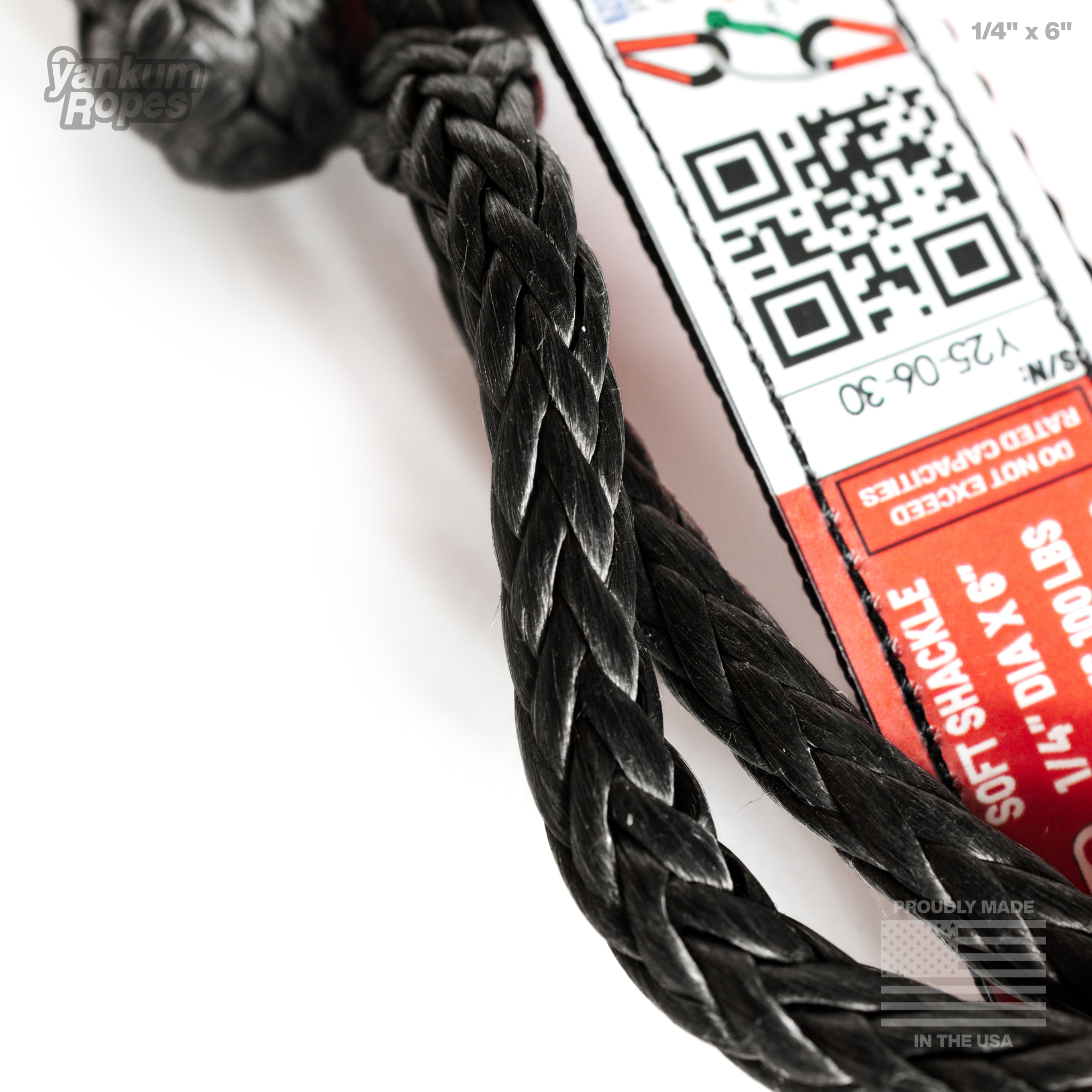
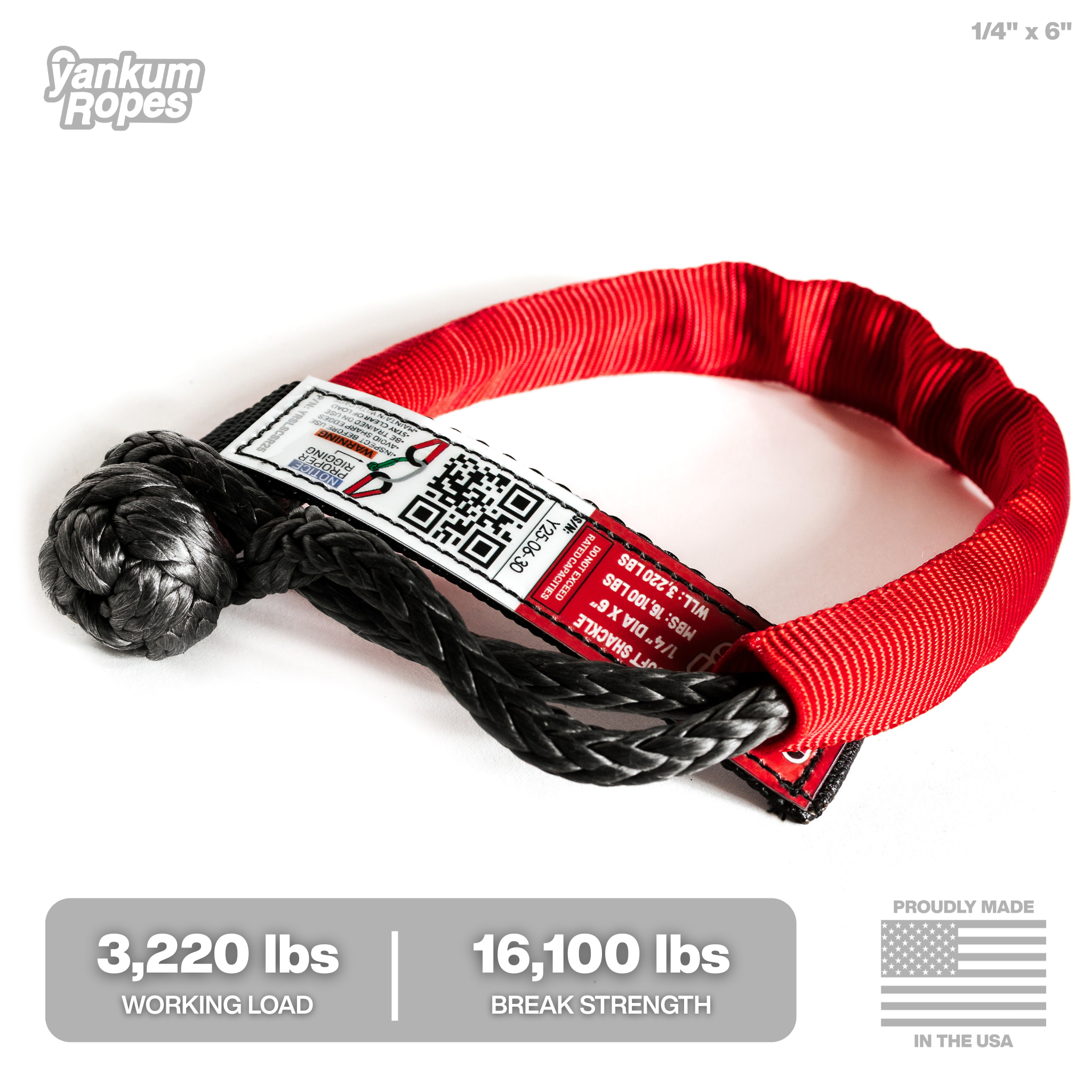
| 1/4" | 16,100 lbs | 700 – 1,399 lbs | 1/2" Racer |
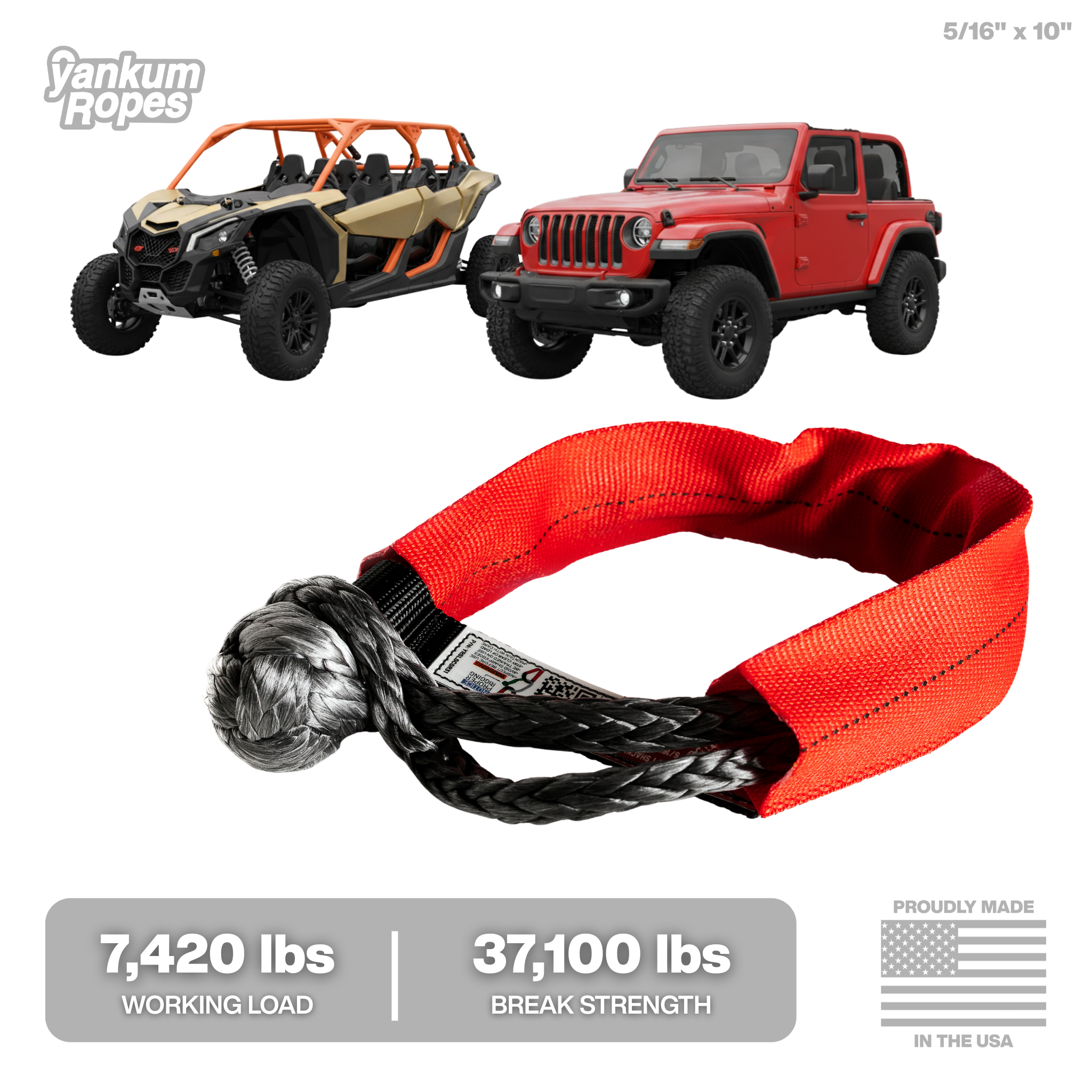
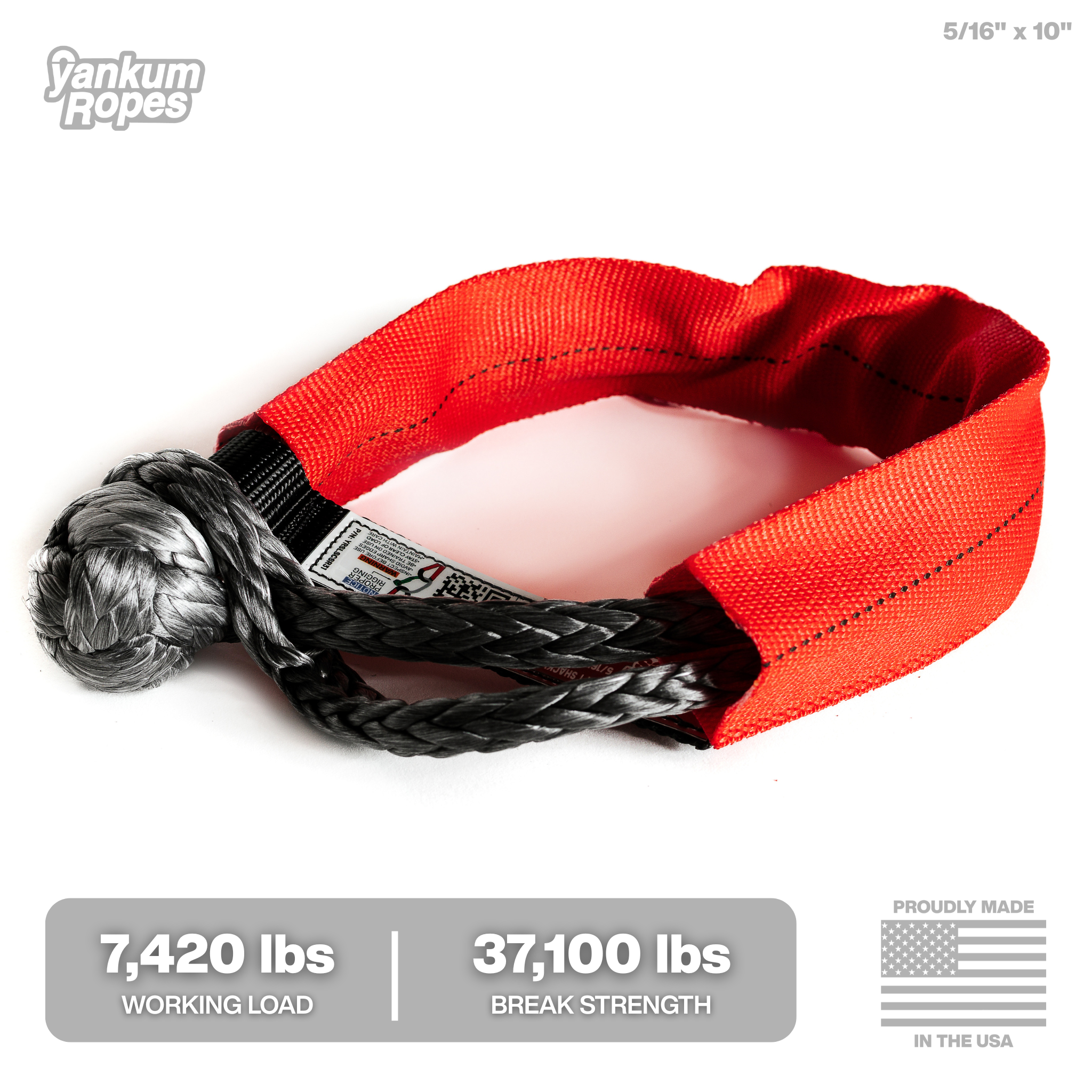
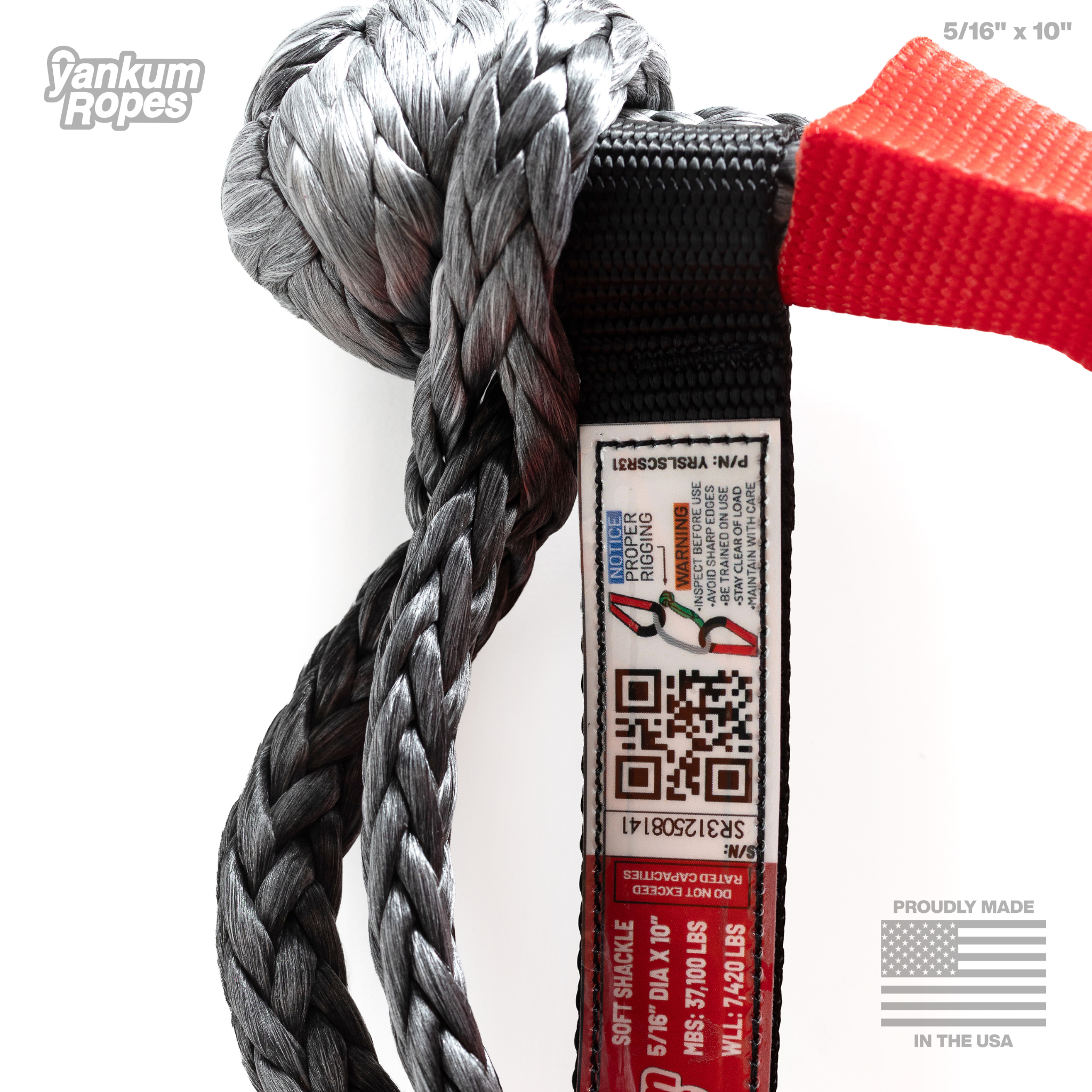
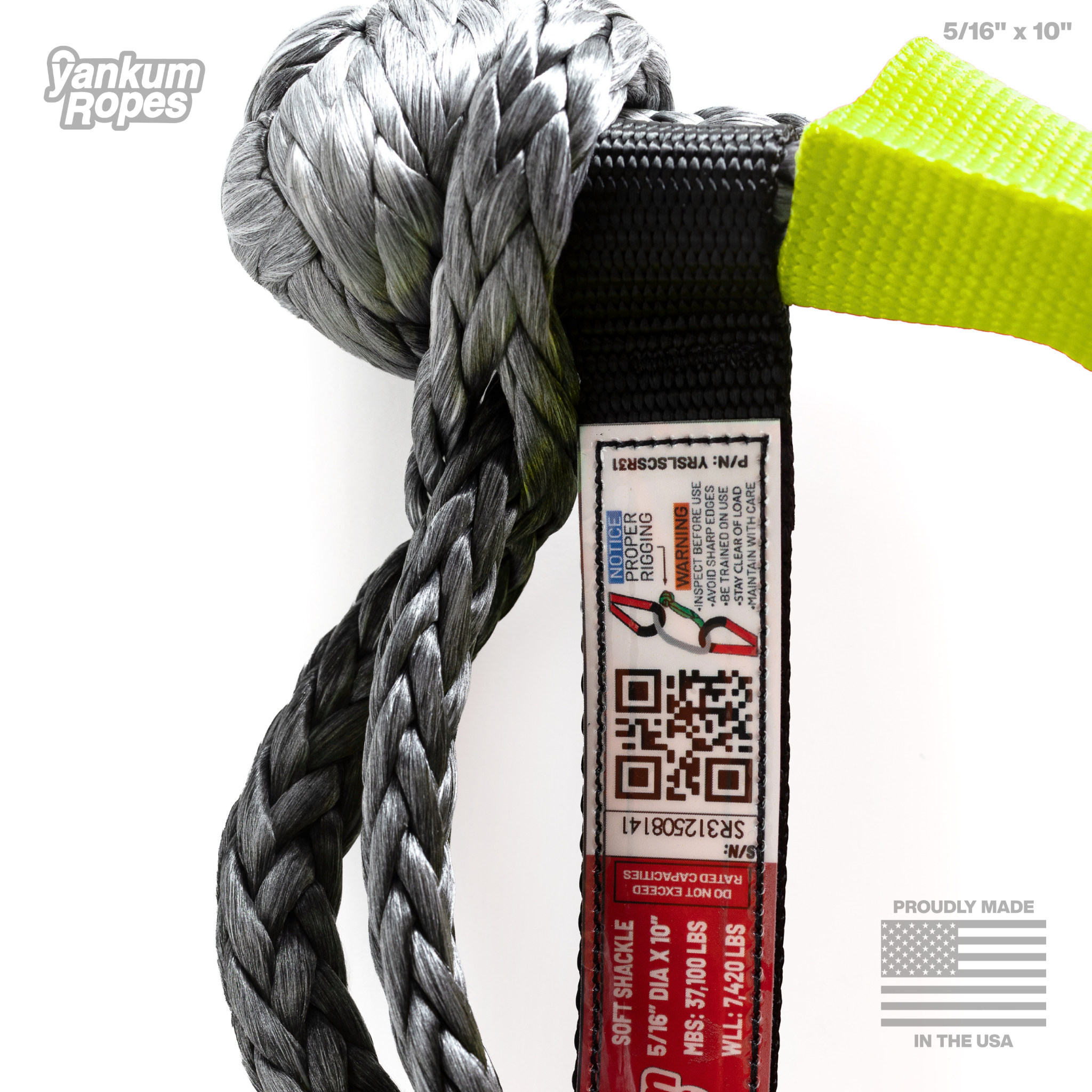
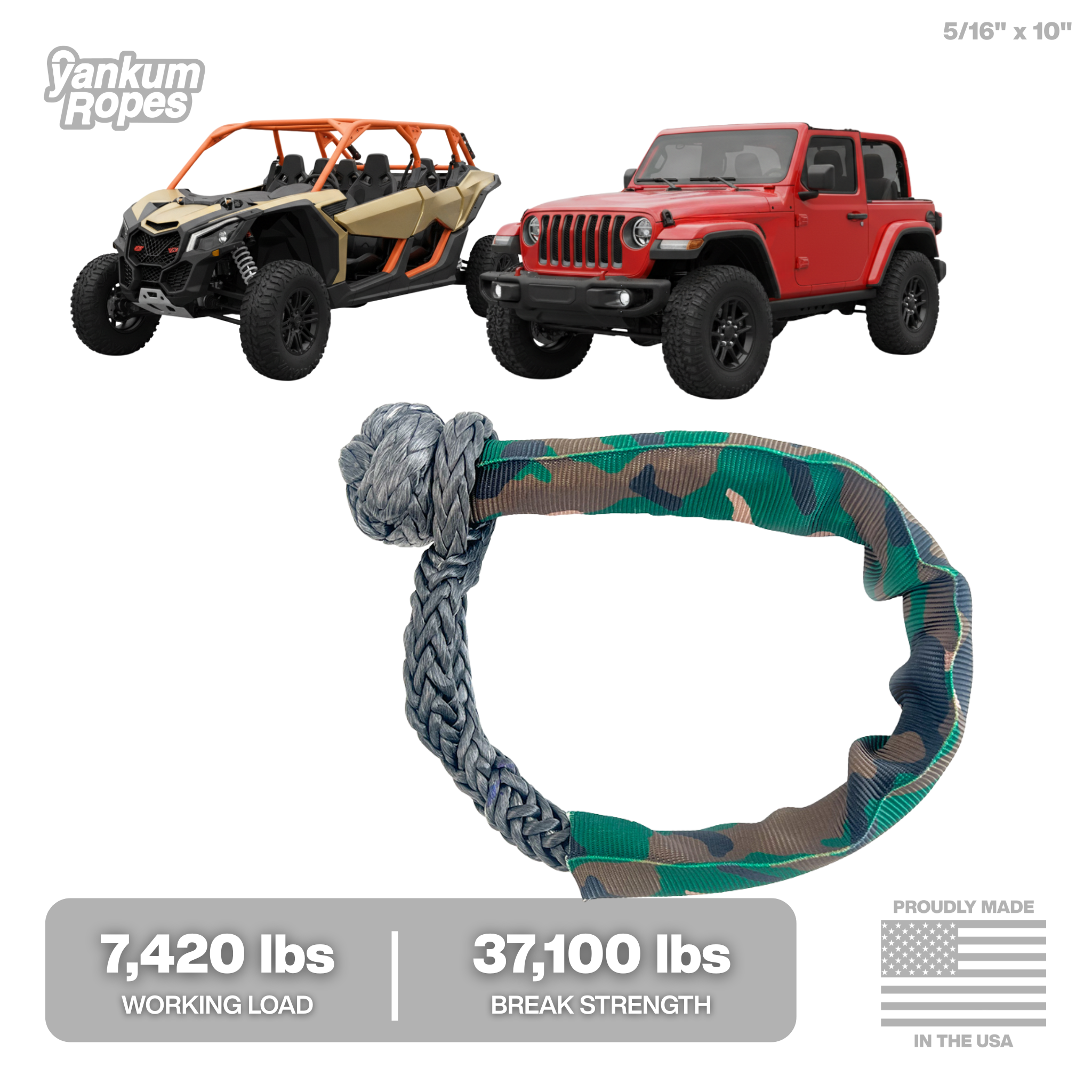
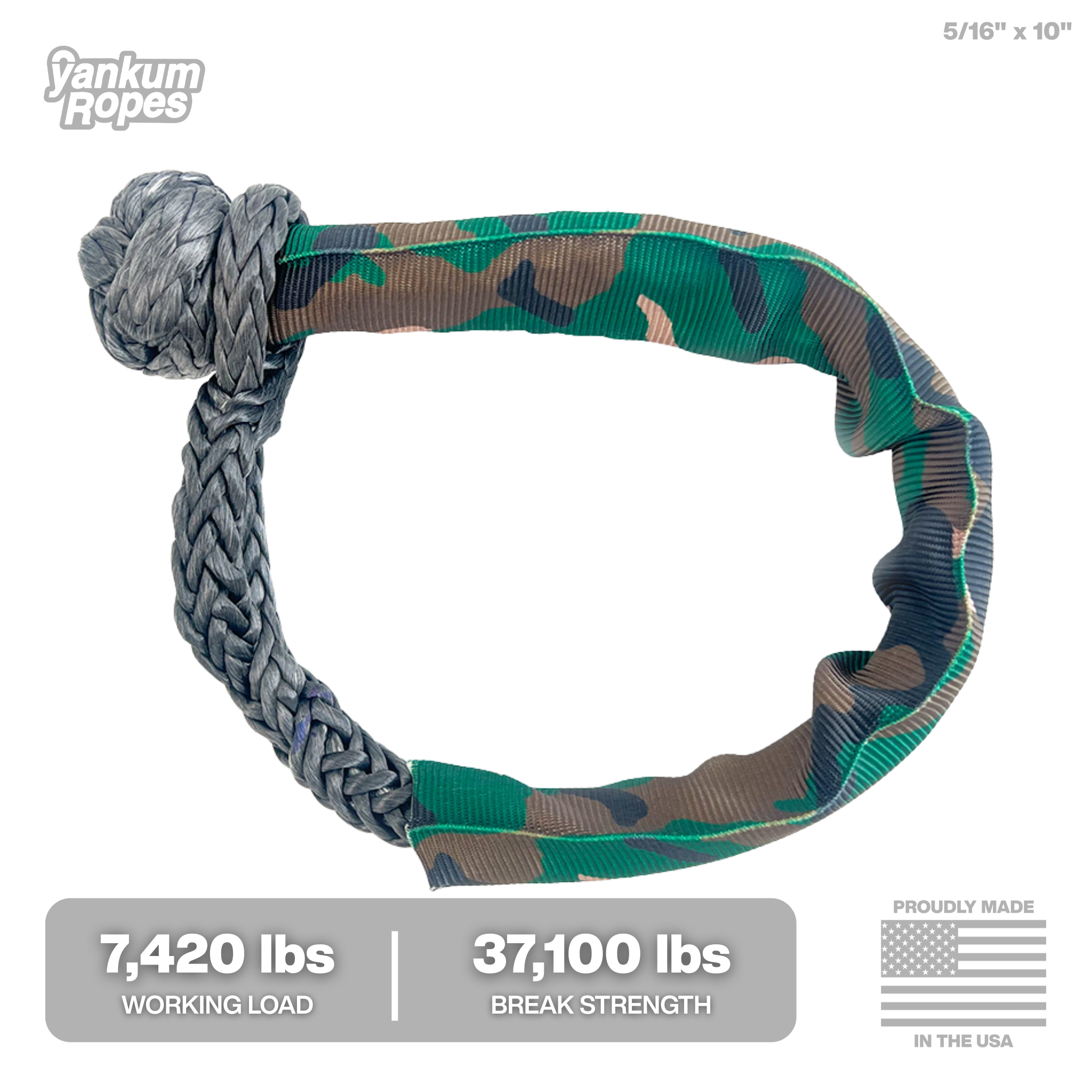
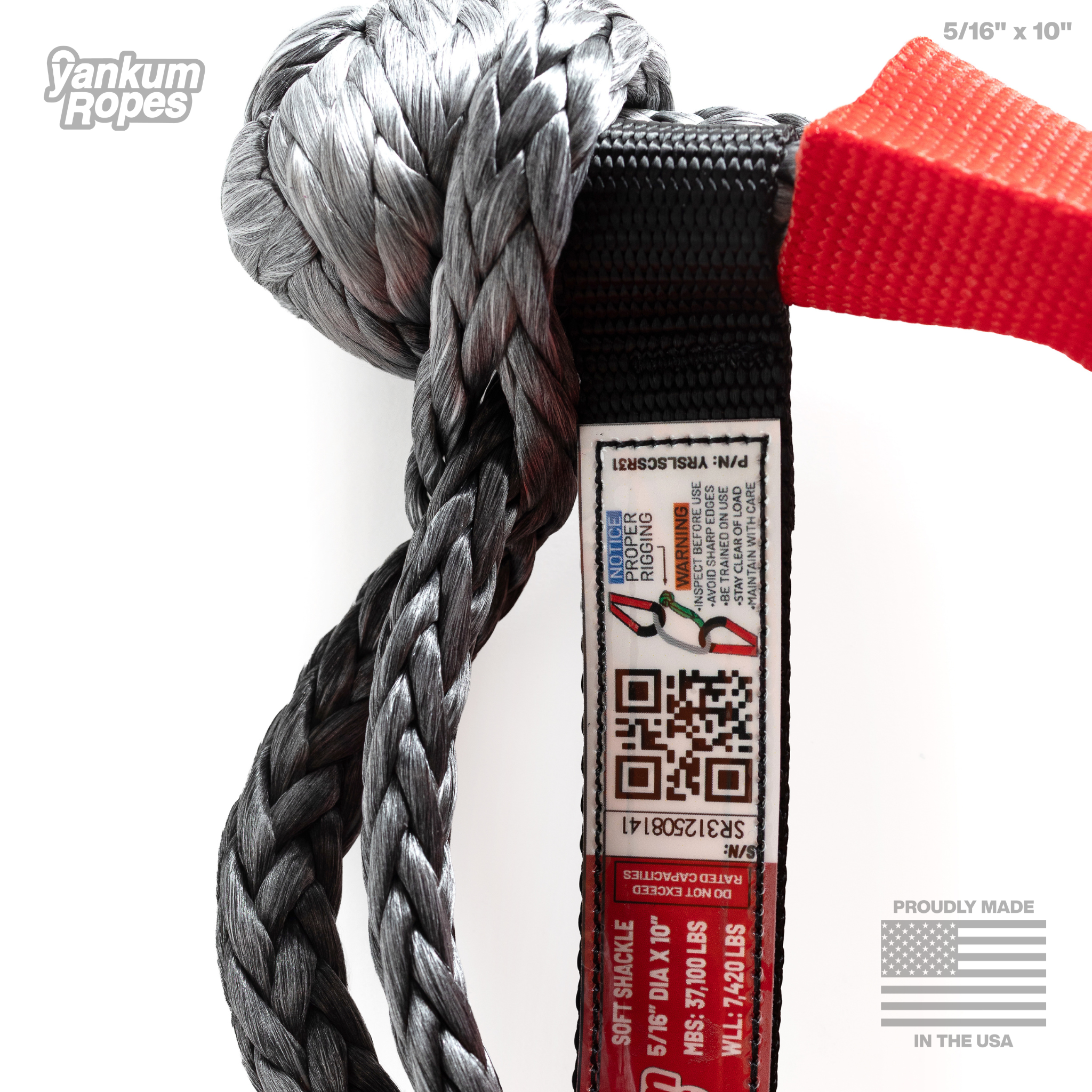
| 5/16" | 37,000 lbs | 1,400 – 4,999 lbs | 5/8" Viper, 3/4" Rubber Boa |
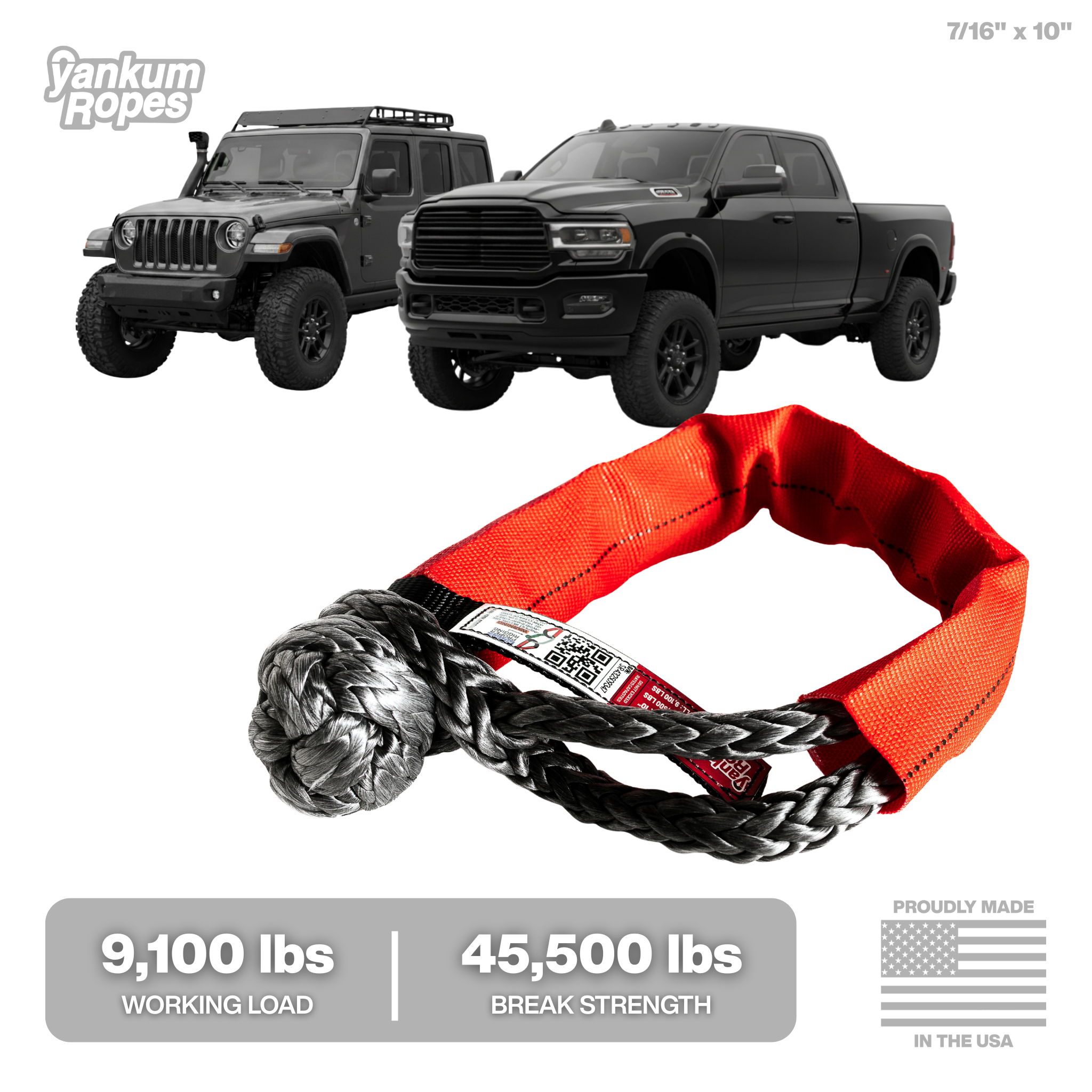
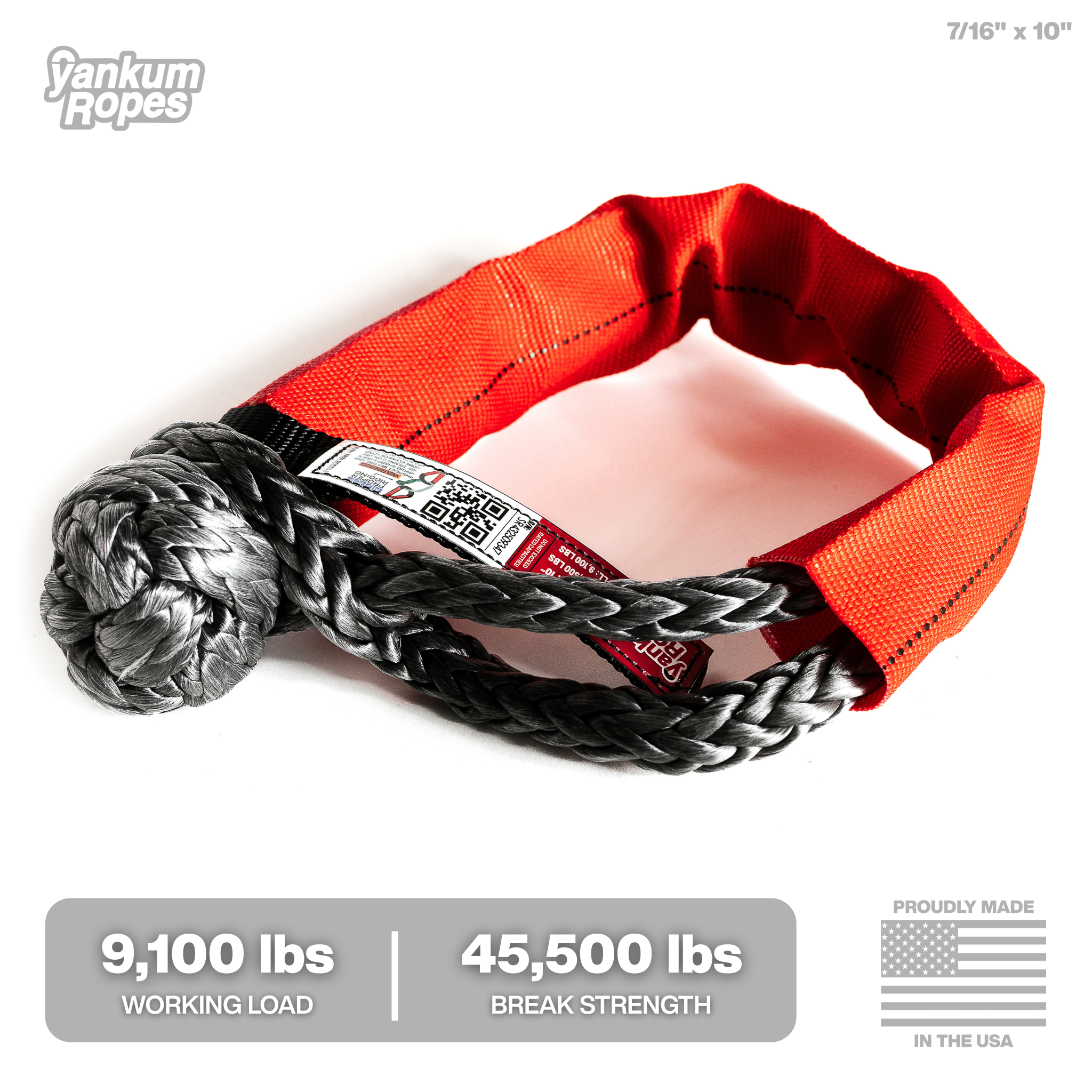
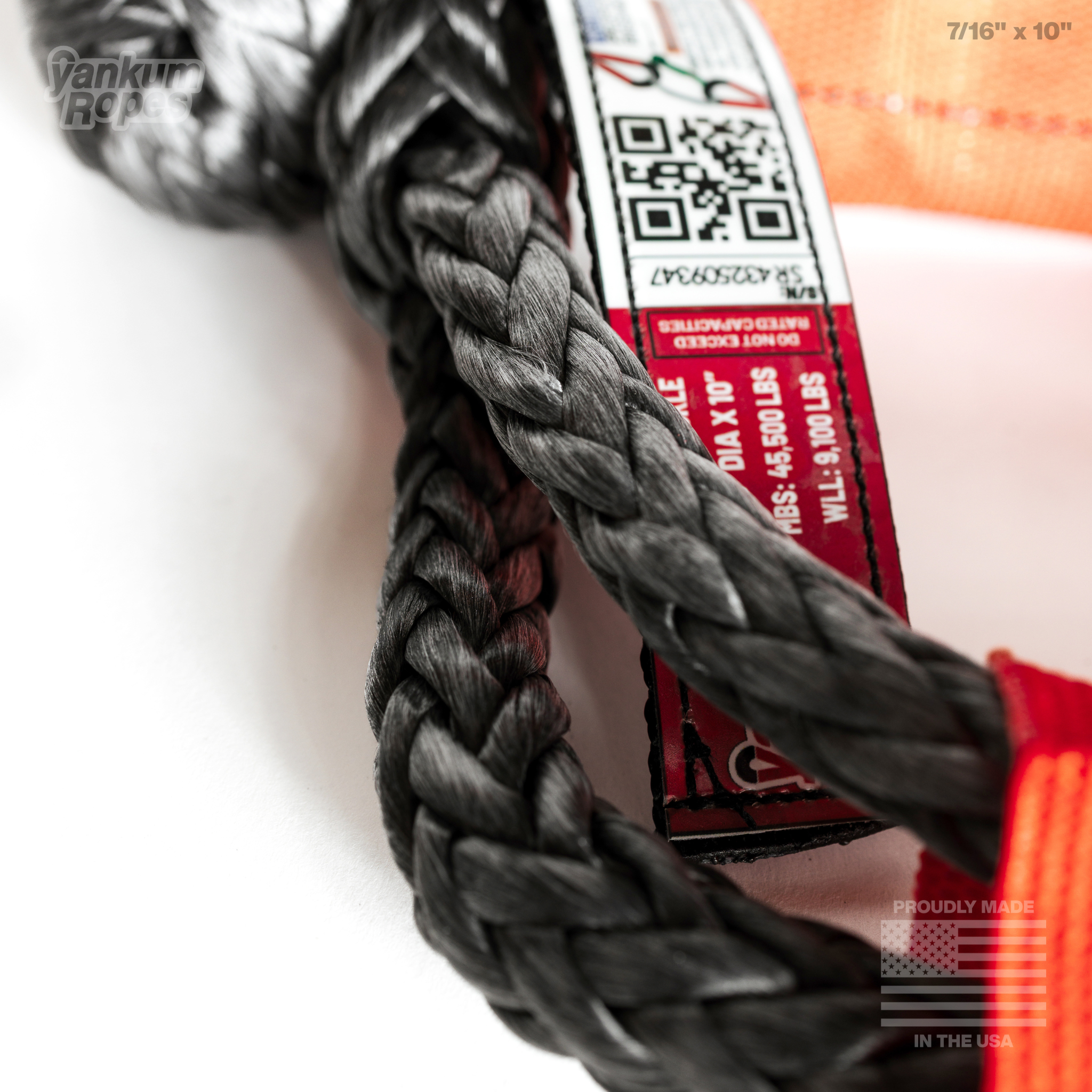
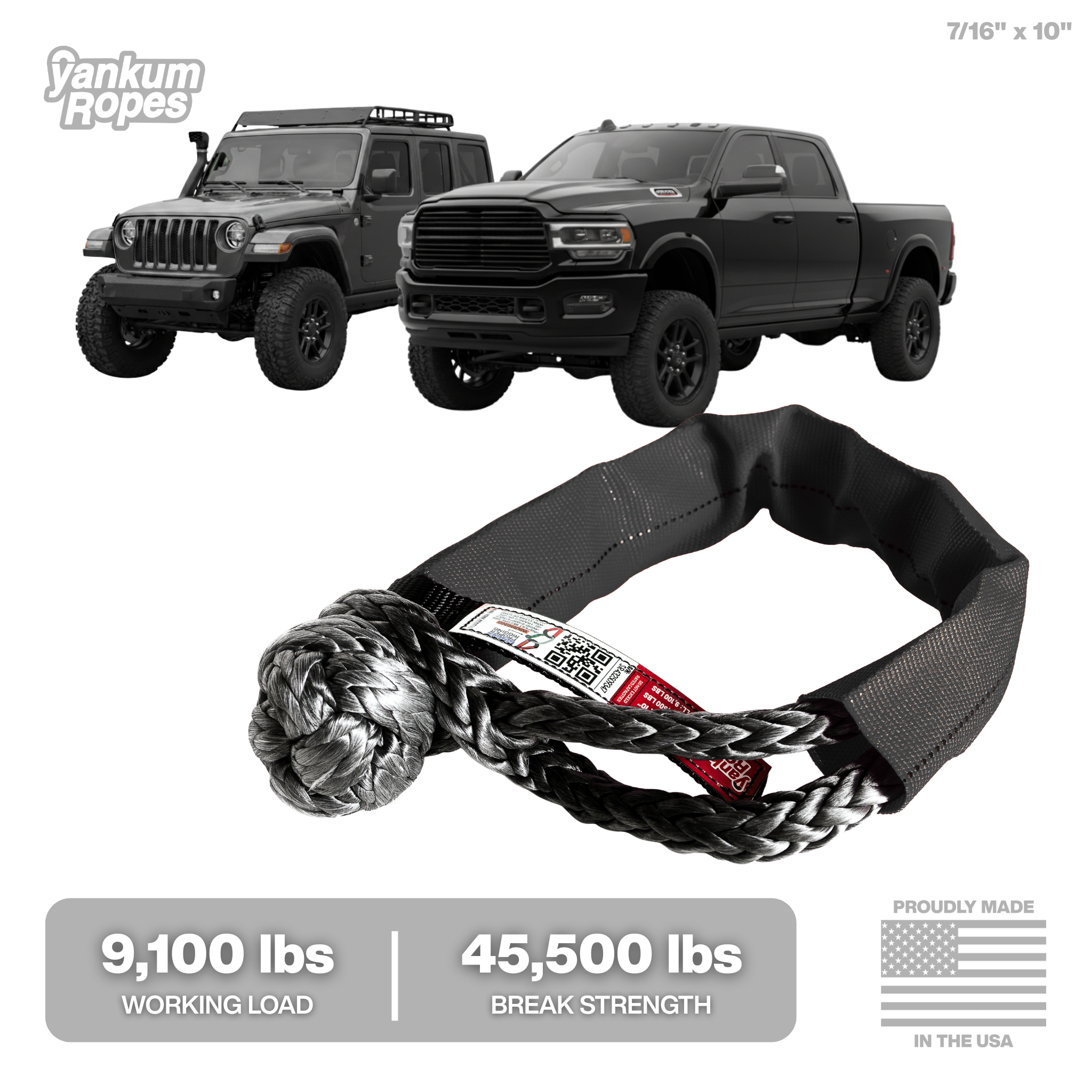
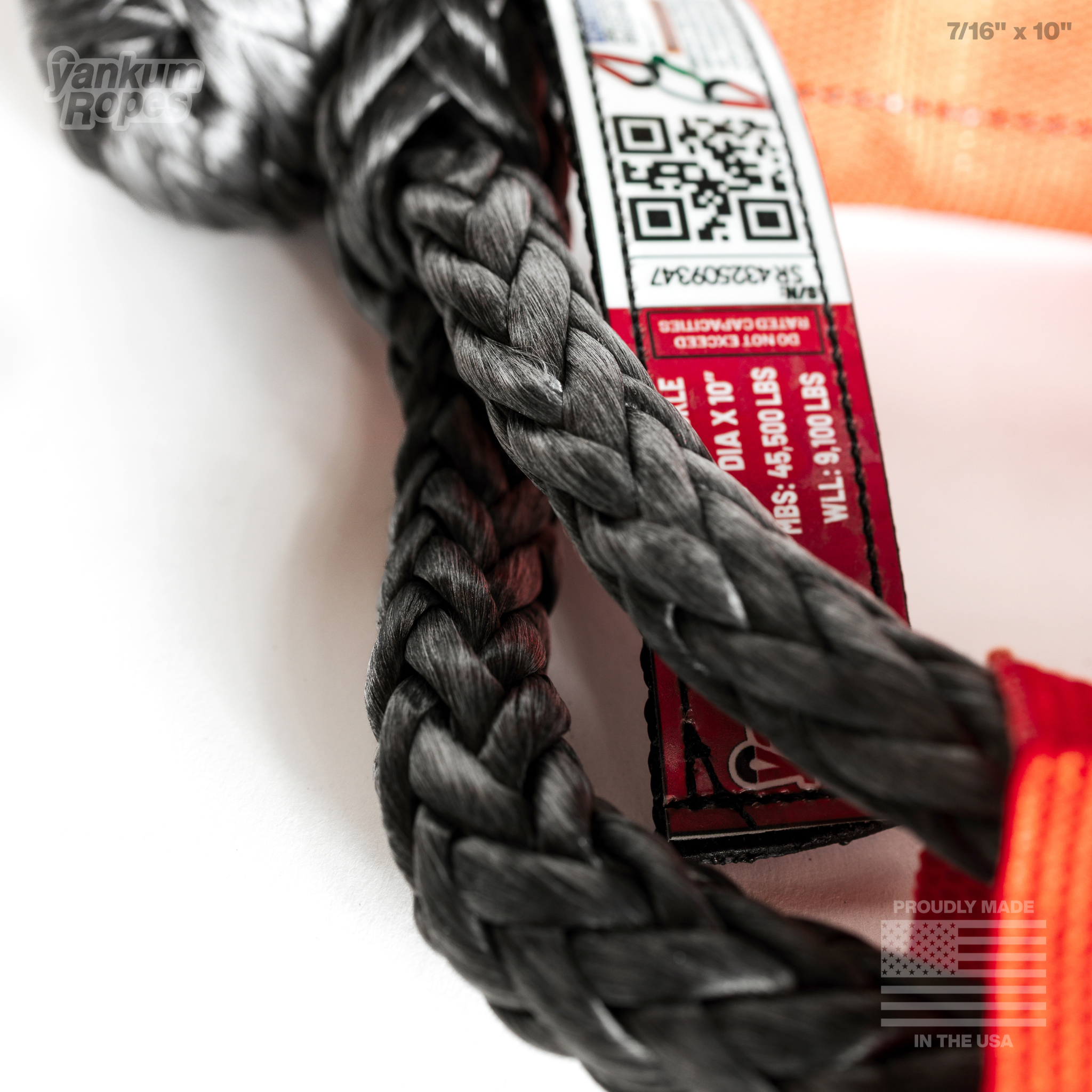
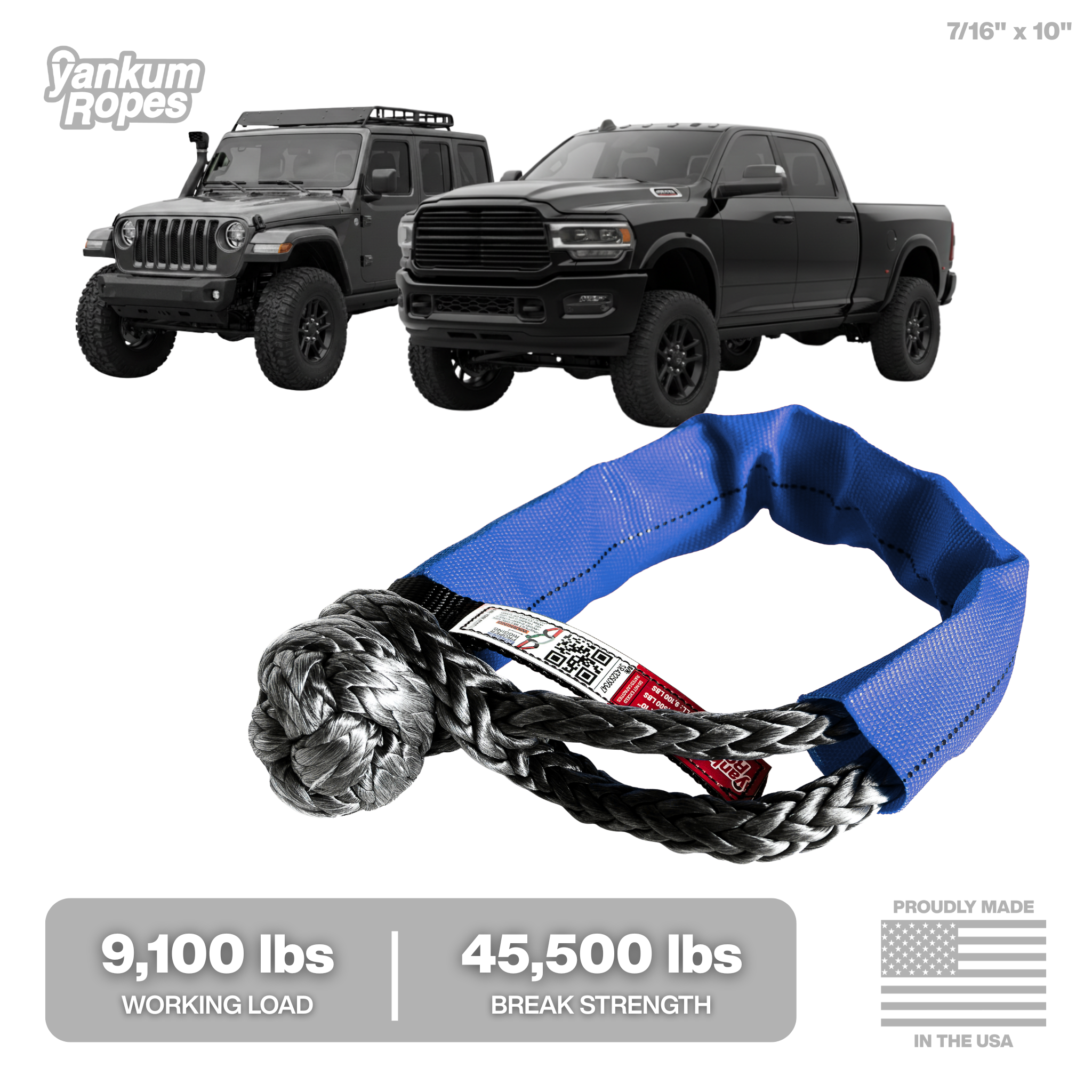
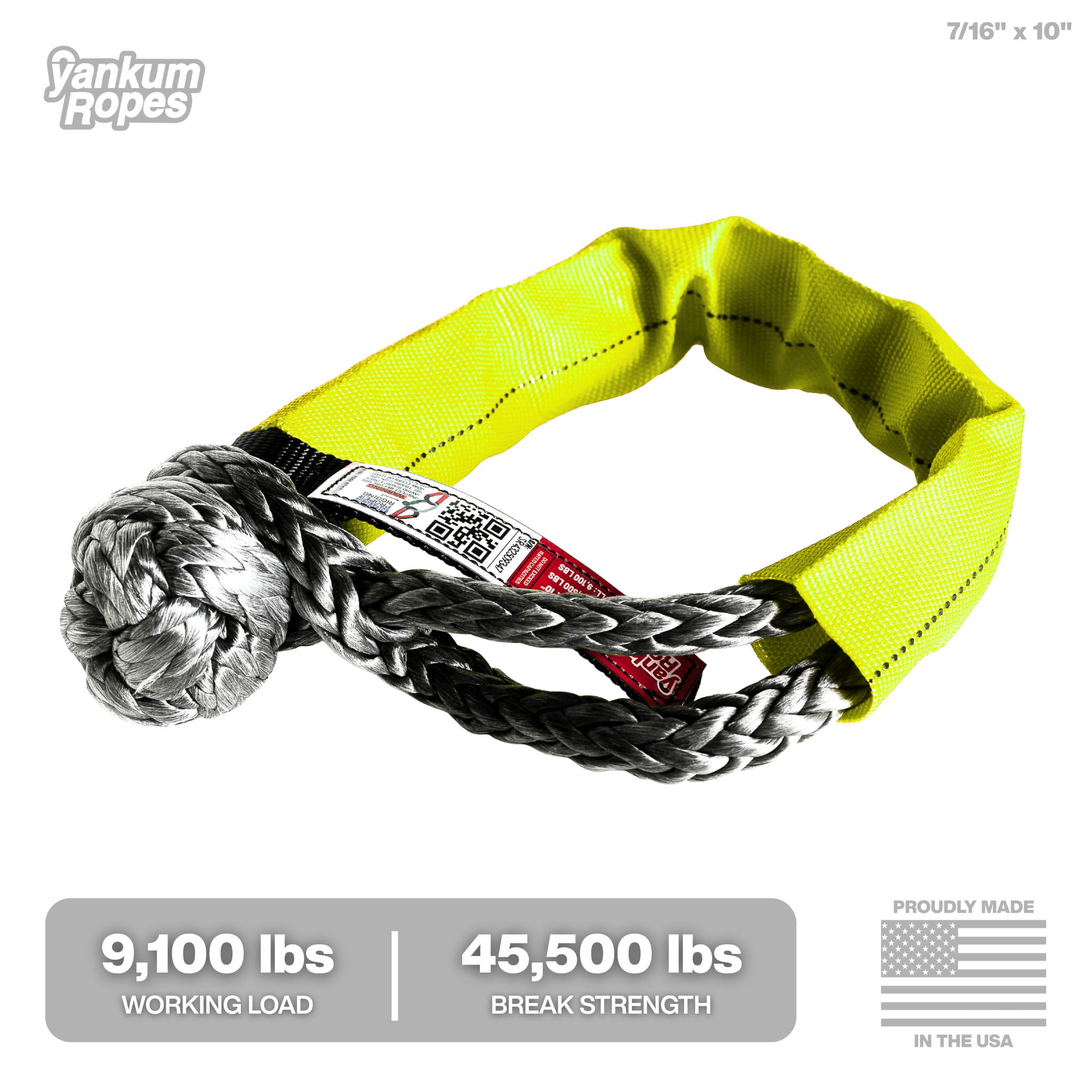
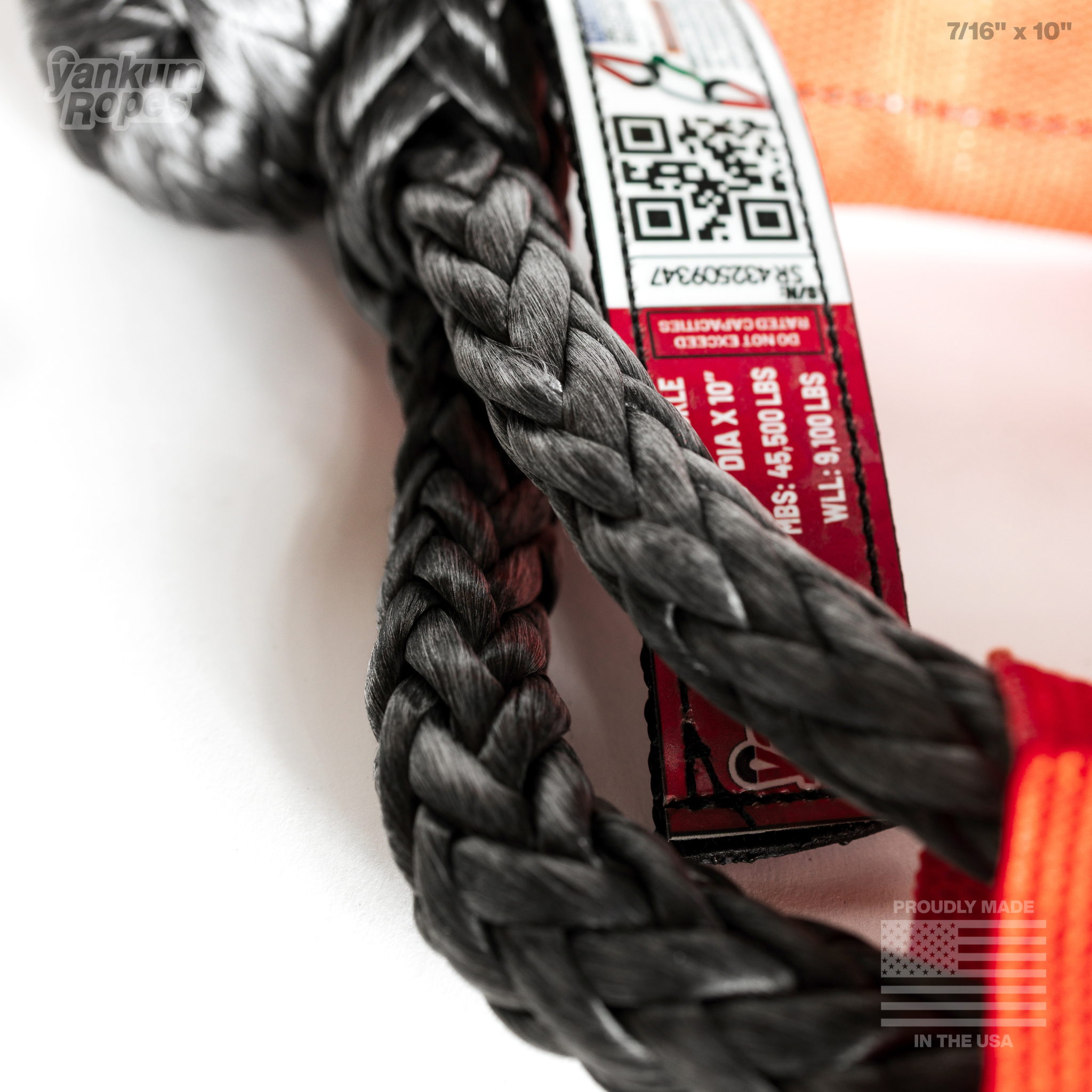
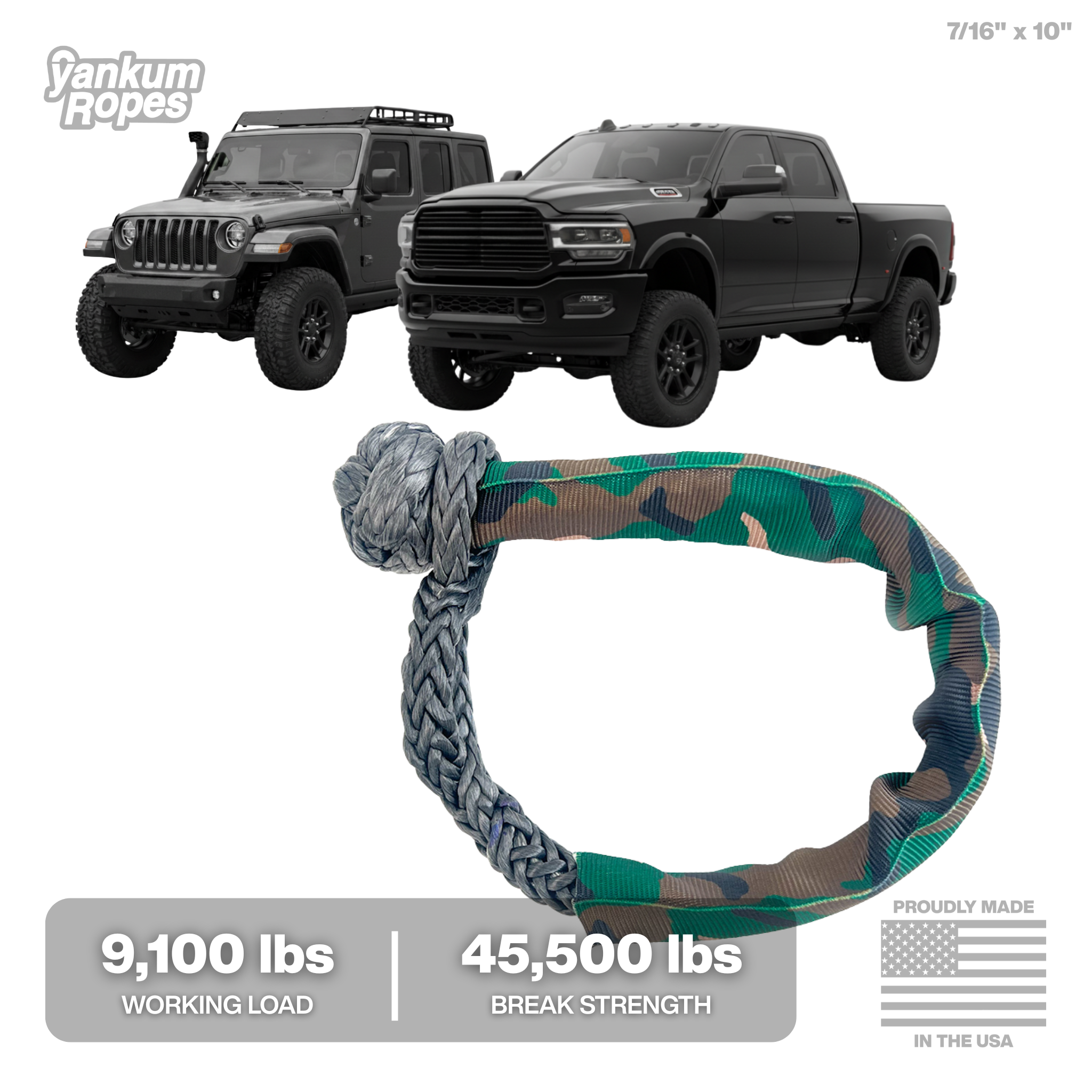
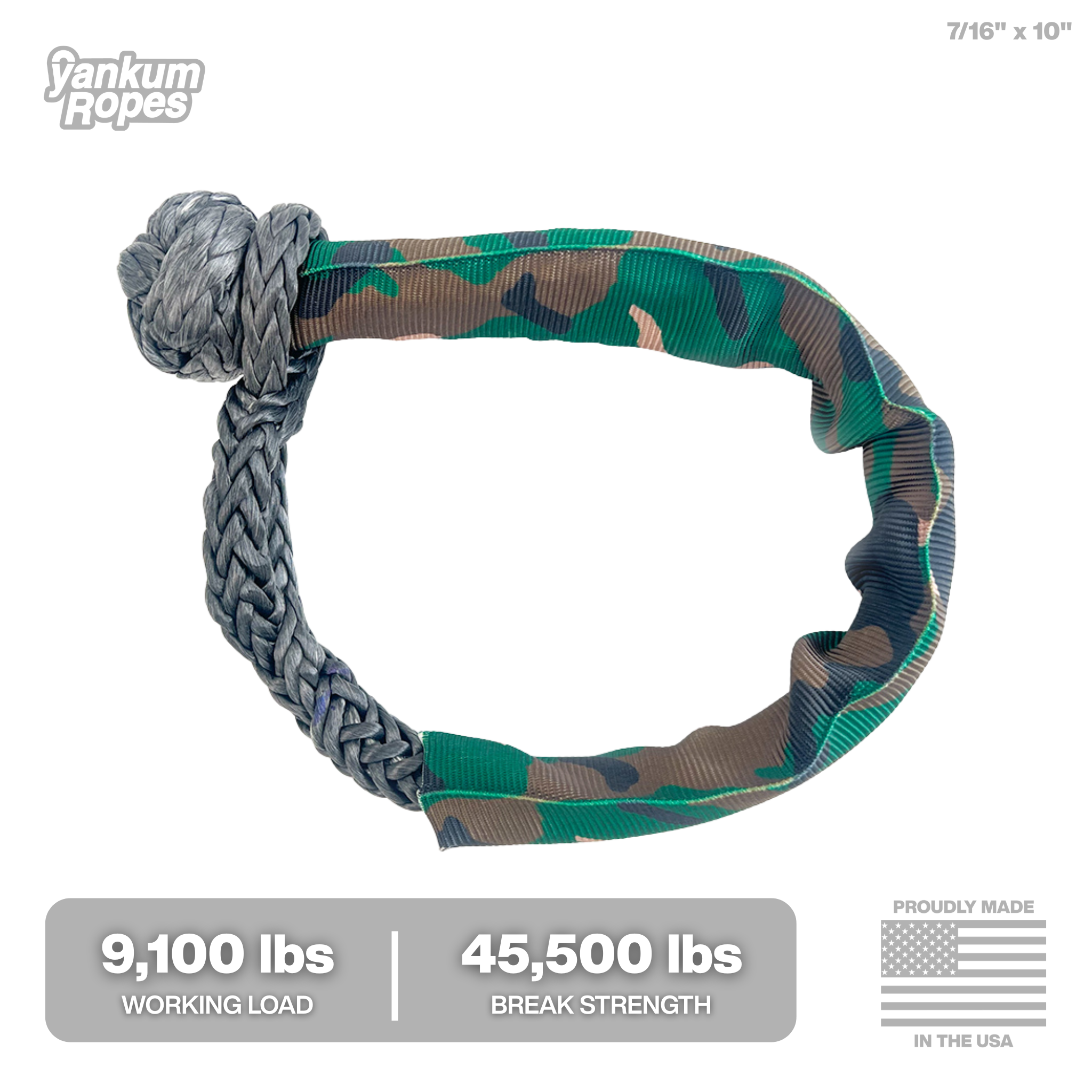
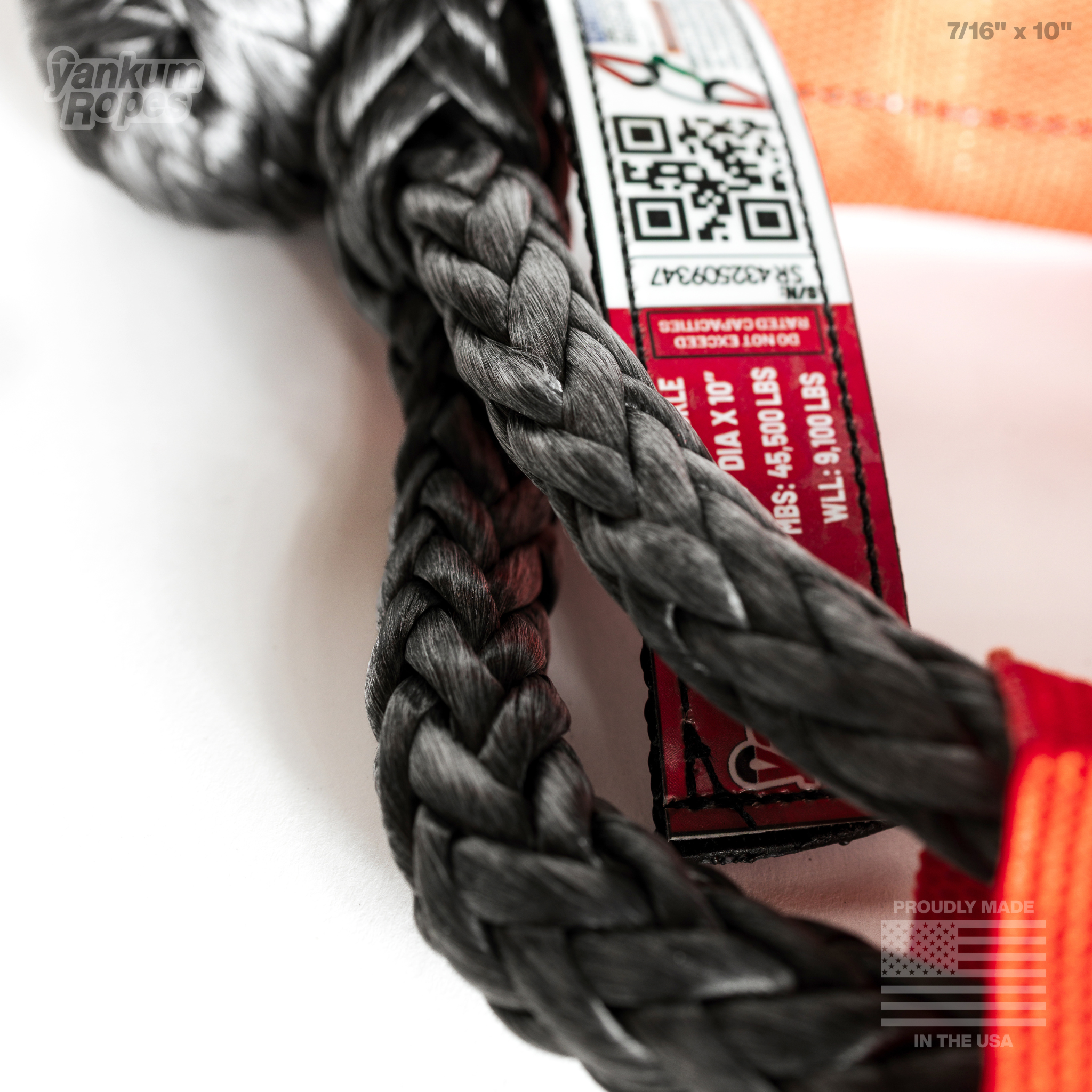
| 7/16" | 45,500 lbs | 5,000 – 10,249 lbs | 7/8" Python, 1" Rattler |
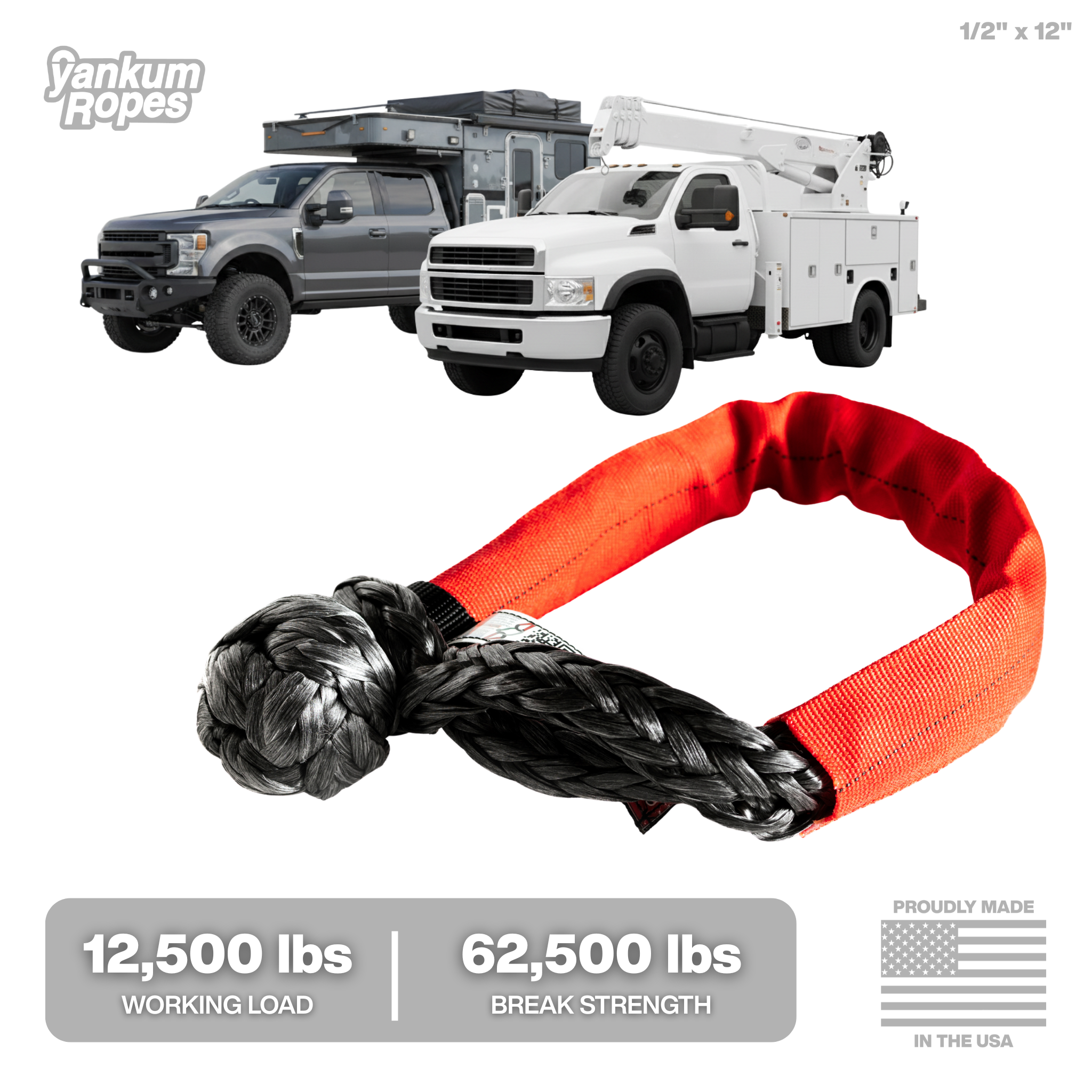
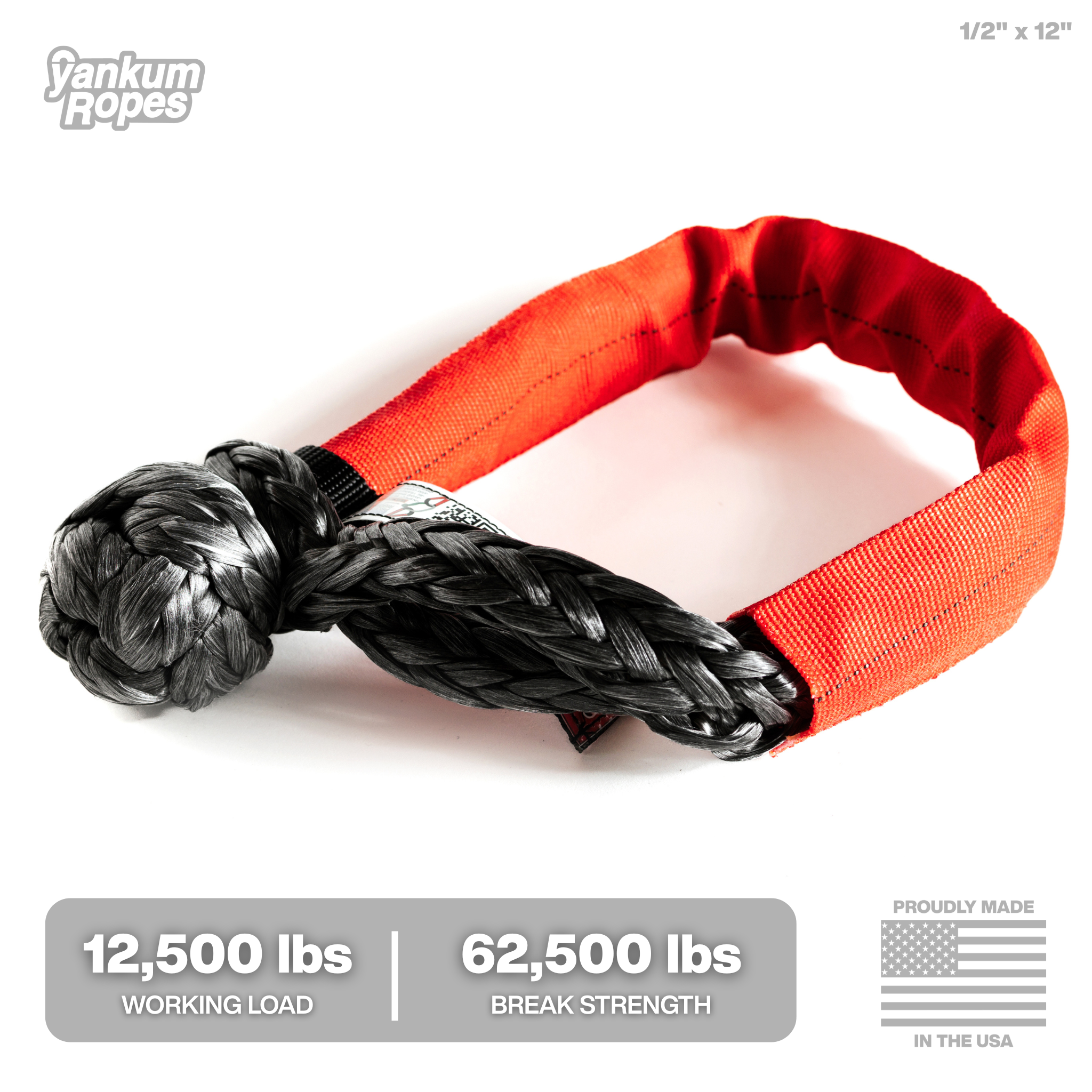
| 1/2" | 62,500 lbs | 10,250 – 14,499 lbs | 1-1/4" Mamba |
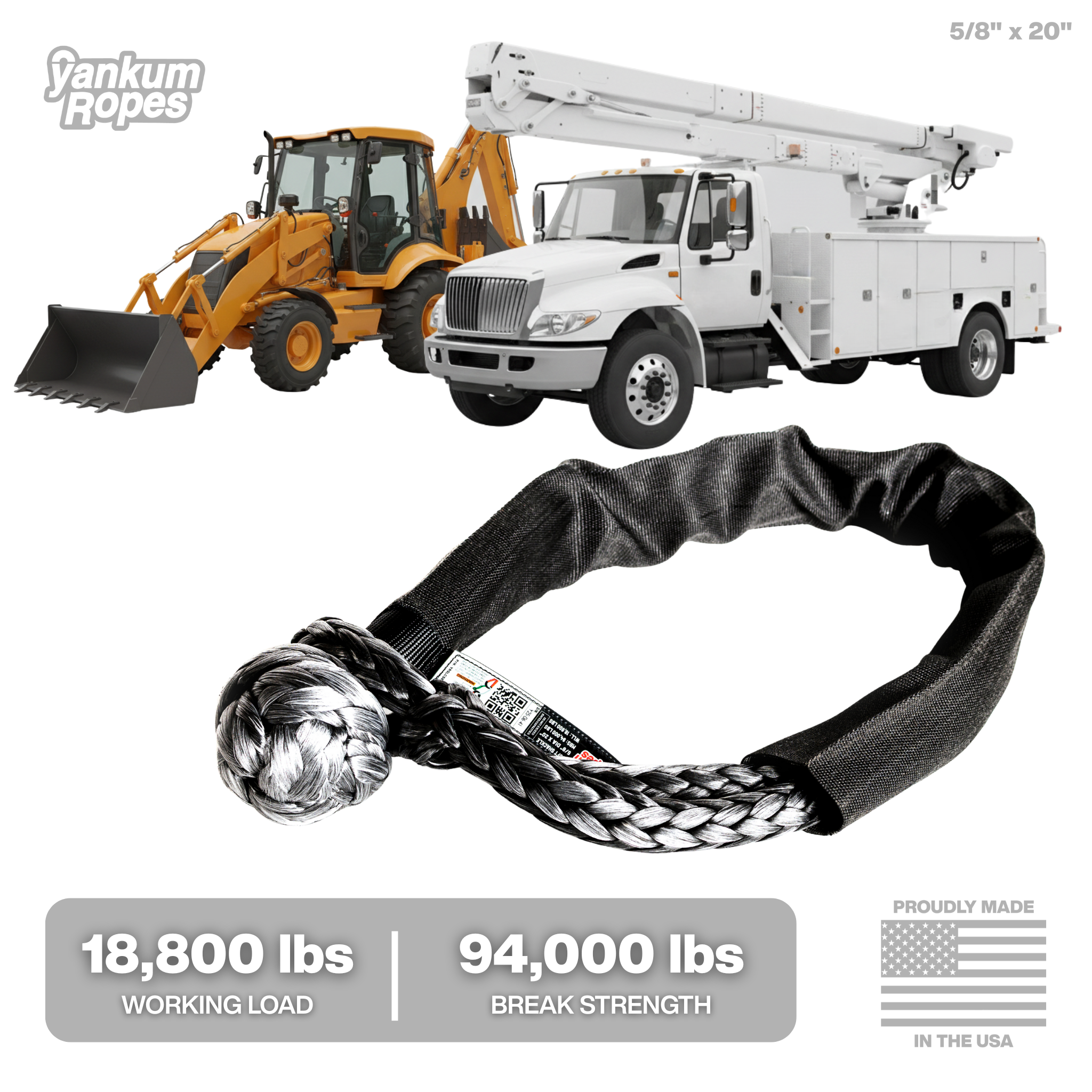
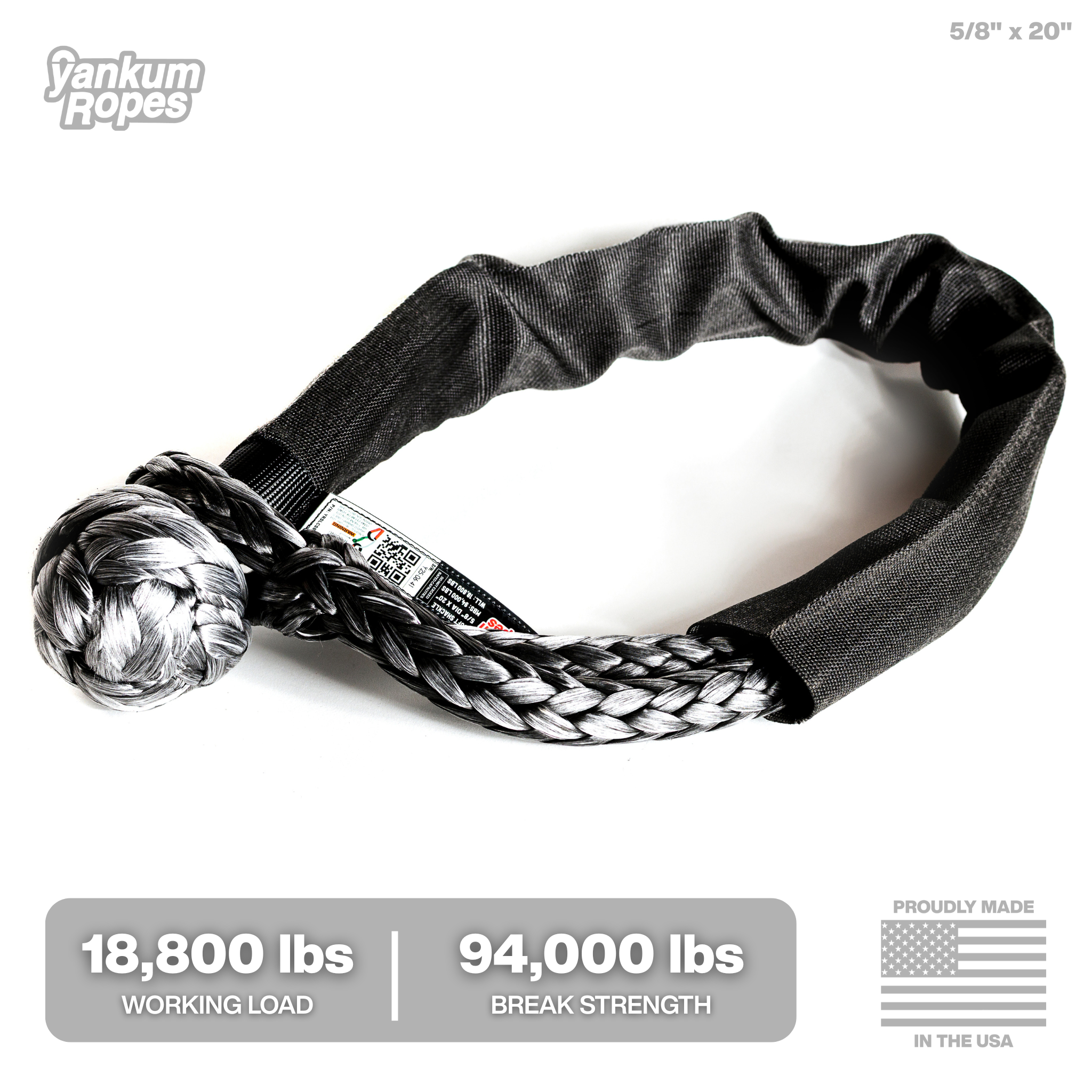
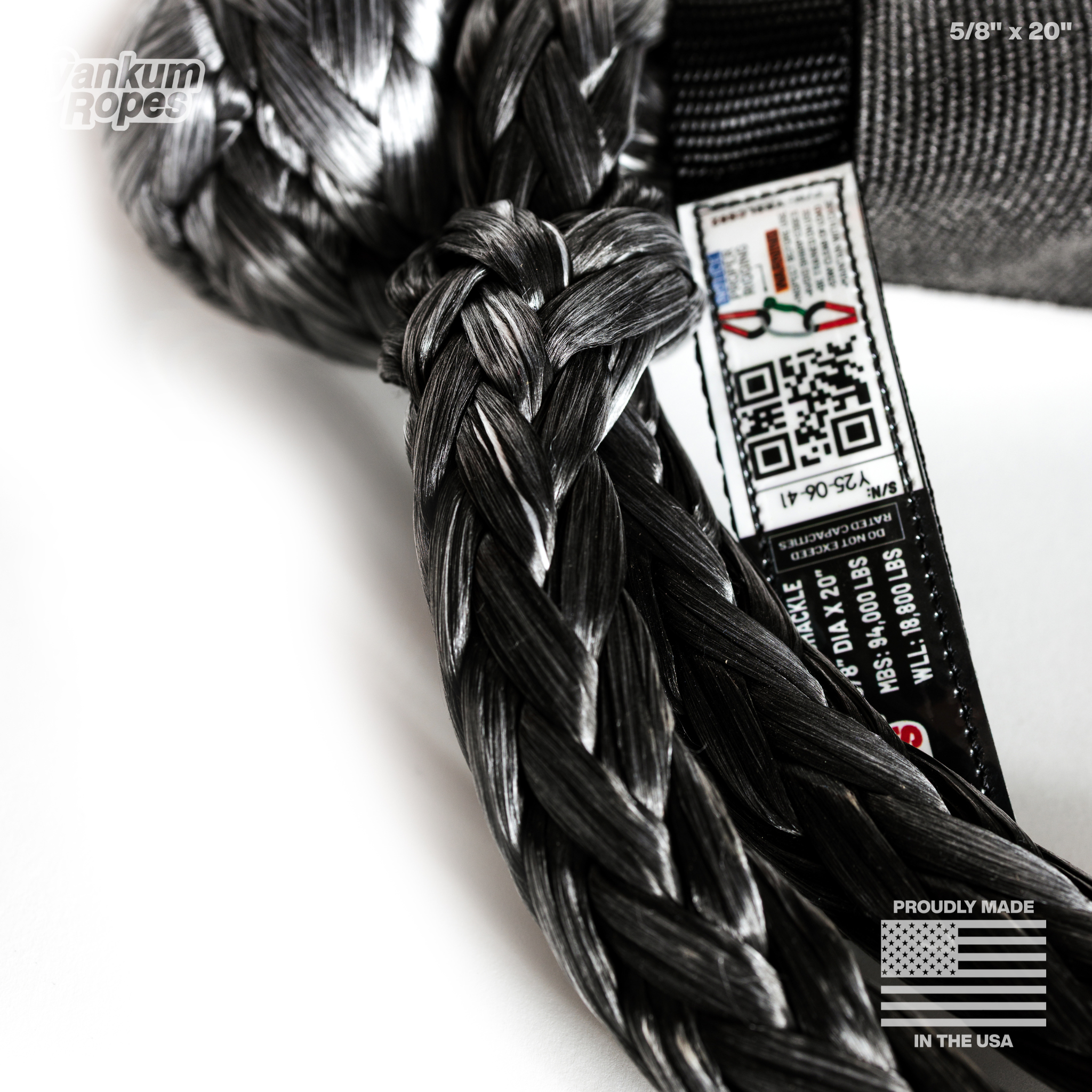
| 5/8" | 94,000 lbs | 14,500 – 22,999 lbs | 1-1/2" rope |
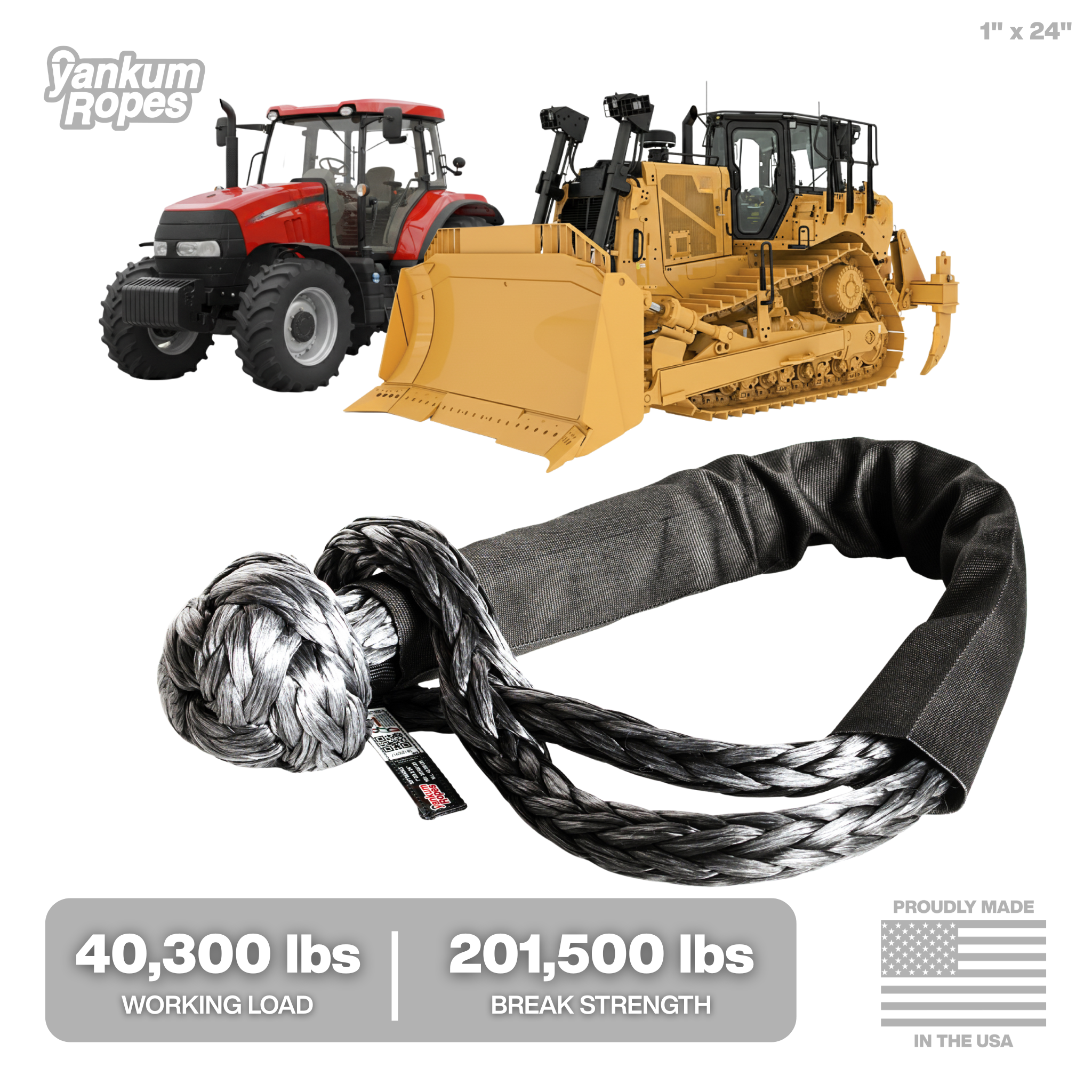
| 1" | 201,500 lbs | 23,000 – 67,000 lbs | 2" and 2-1/2" rope |
Those breaking strengths look enormous next to the rope they attach to, and they should. The shackle is never meant to be the weak point in the system.
Which one do most people buy
7/16" covers the bulk of full-size trucks and SUVs — anything from a 4-door Wrangler up to a one-ton. If you run a 7/8" Python or a 1" Rattler, this is your shackle. Buy two: one at each end of the rope, and you will want a spare the first time you need to rig around something.
Standard, Heavy Duty, or Double Loop
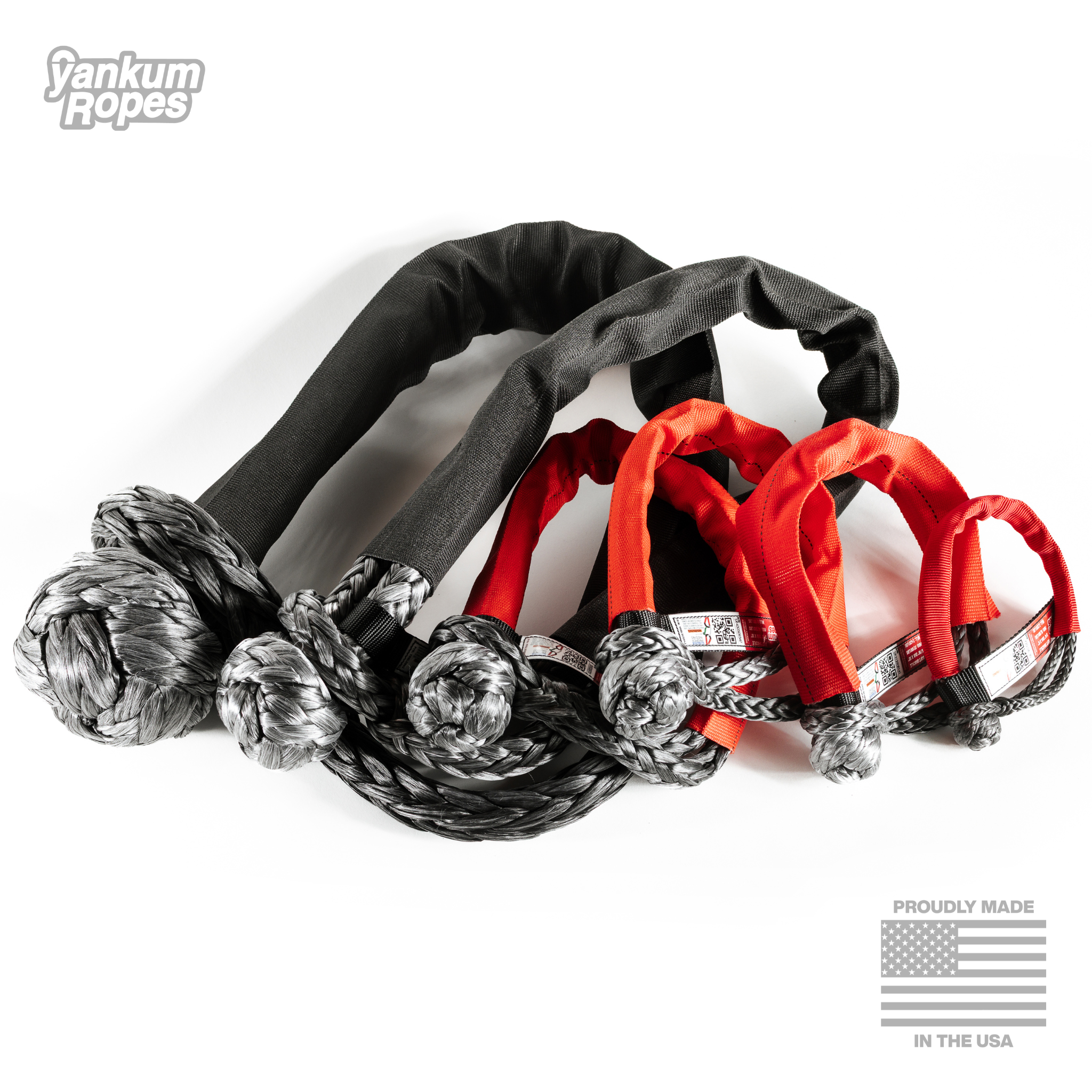
Three versions, and the difference is not strength — it is the sleeve and the length.
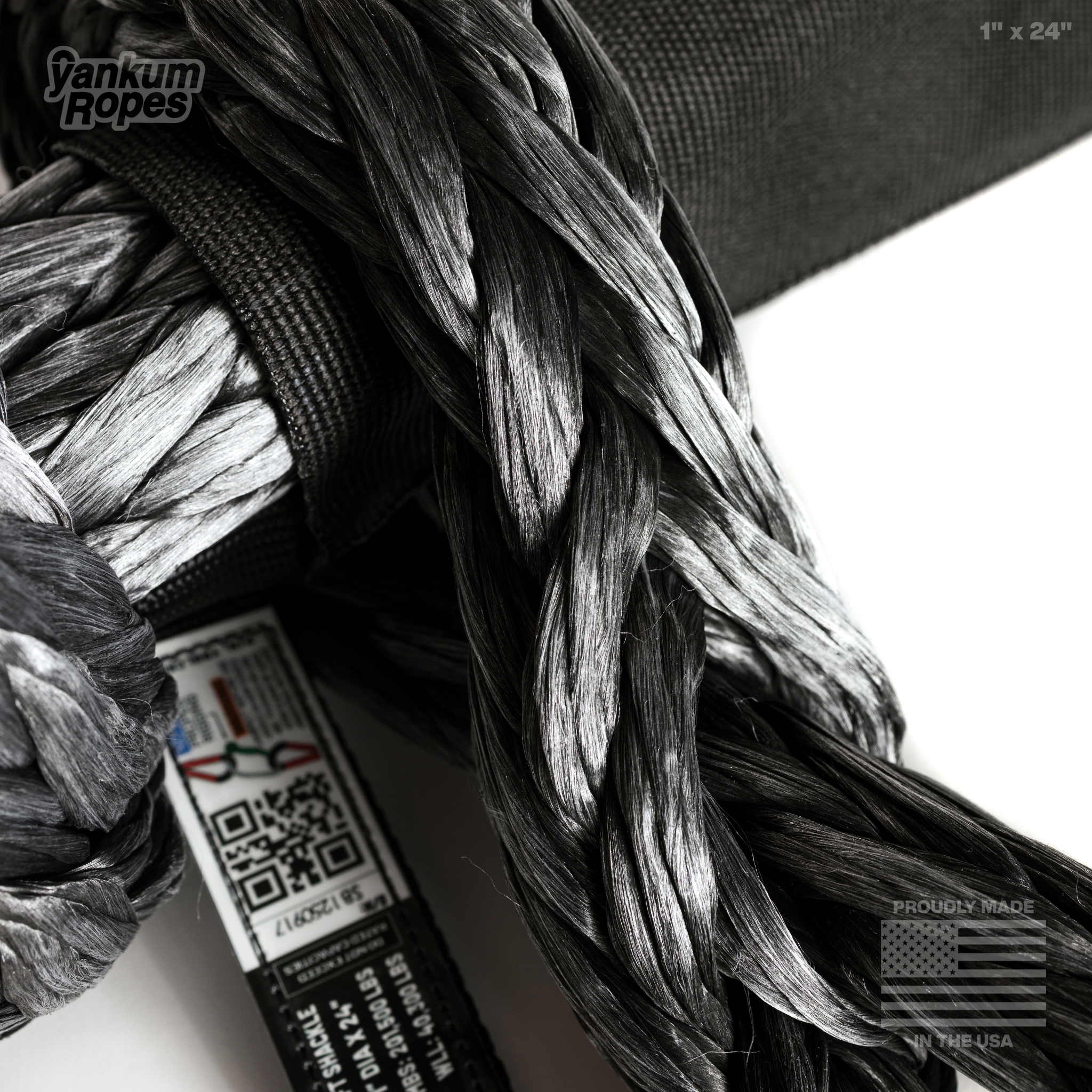
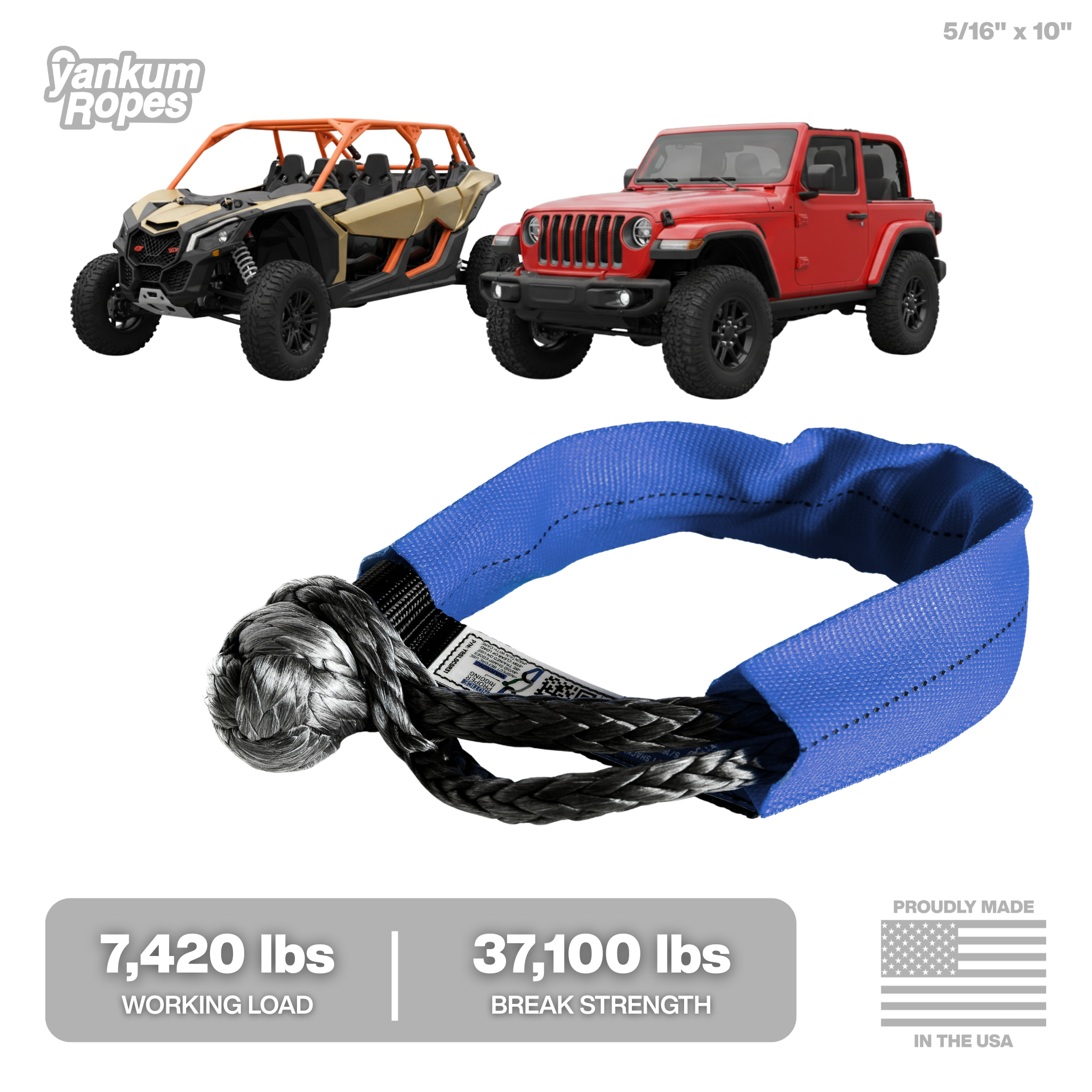
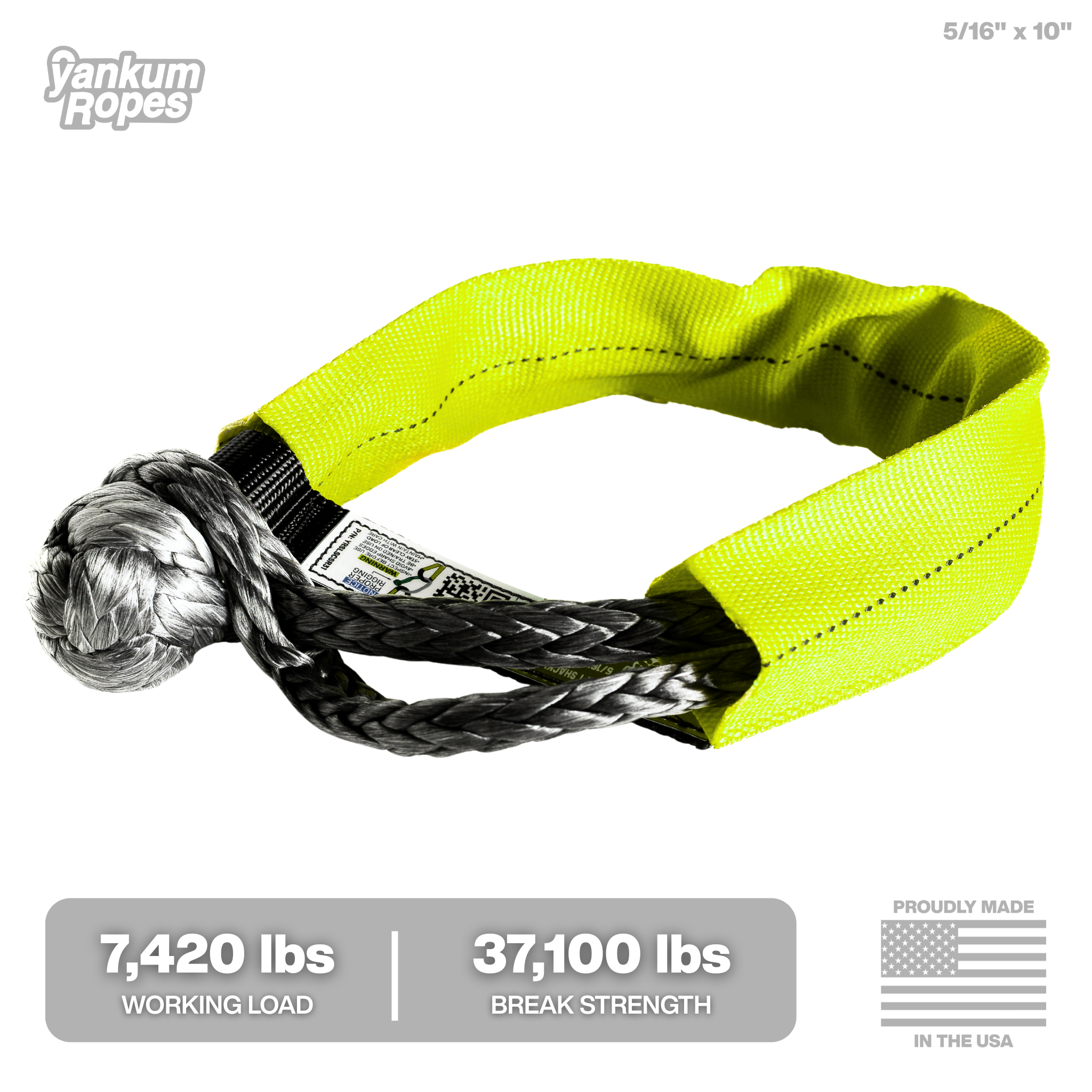
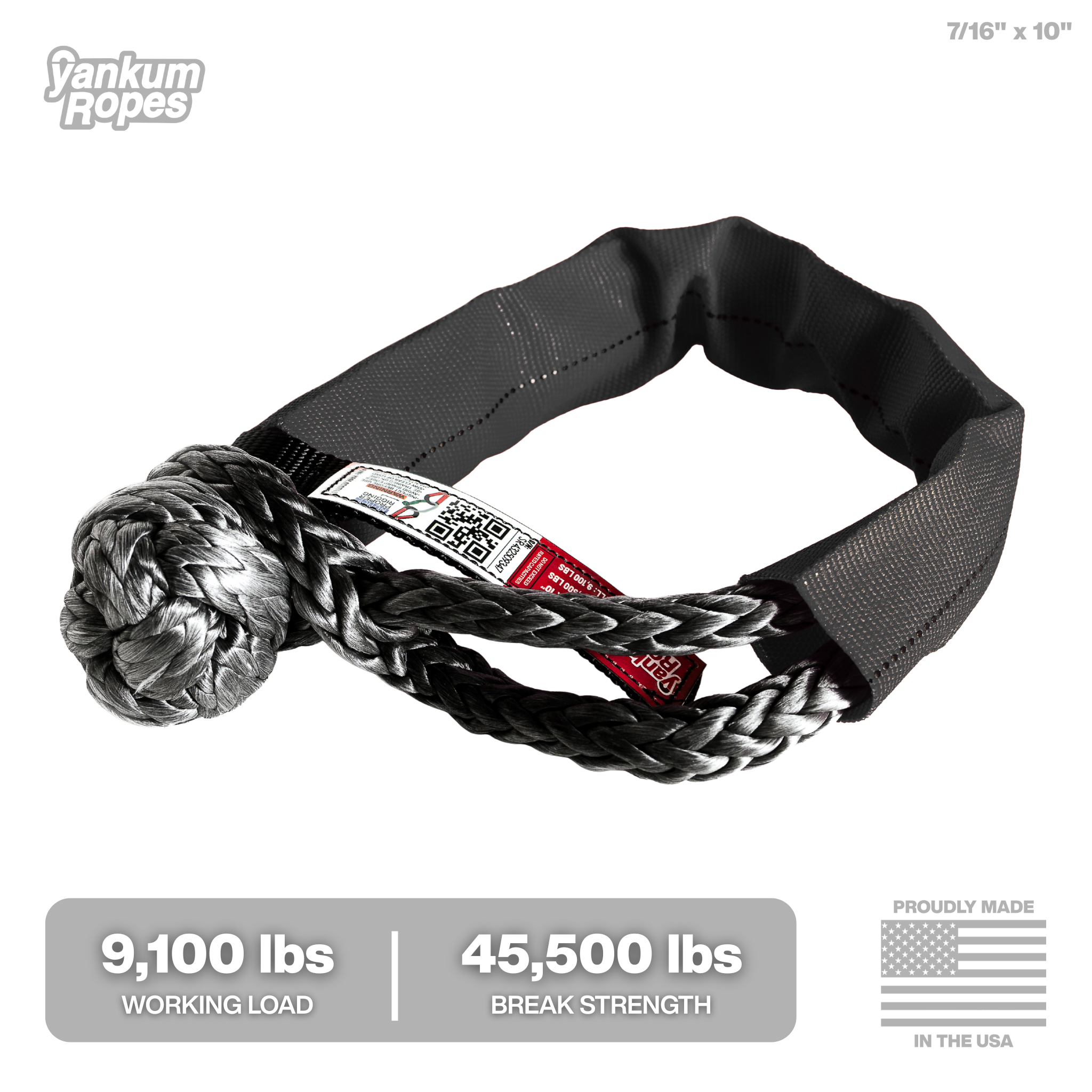
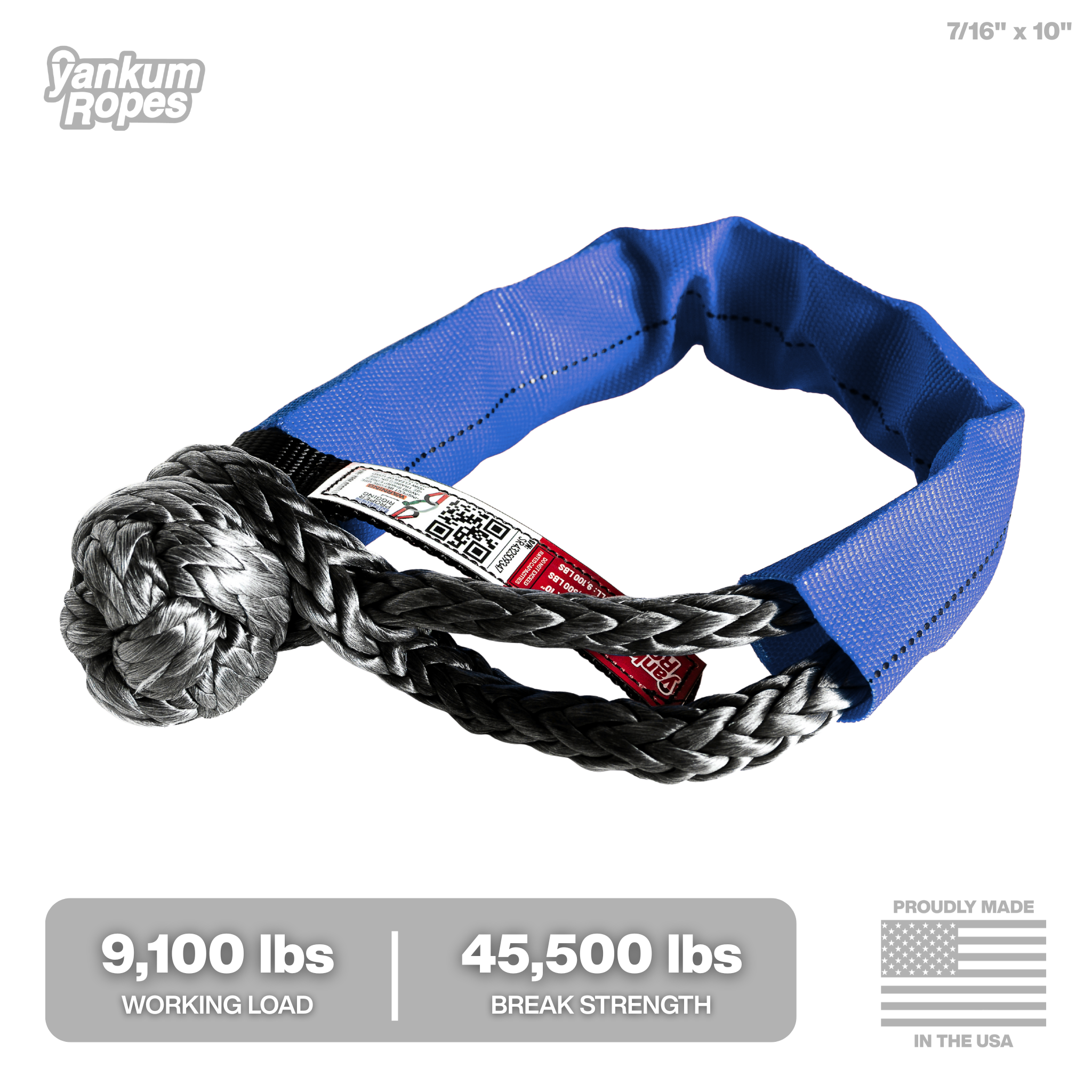
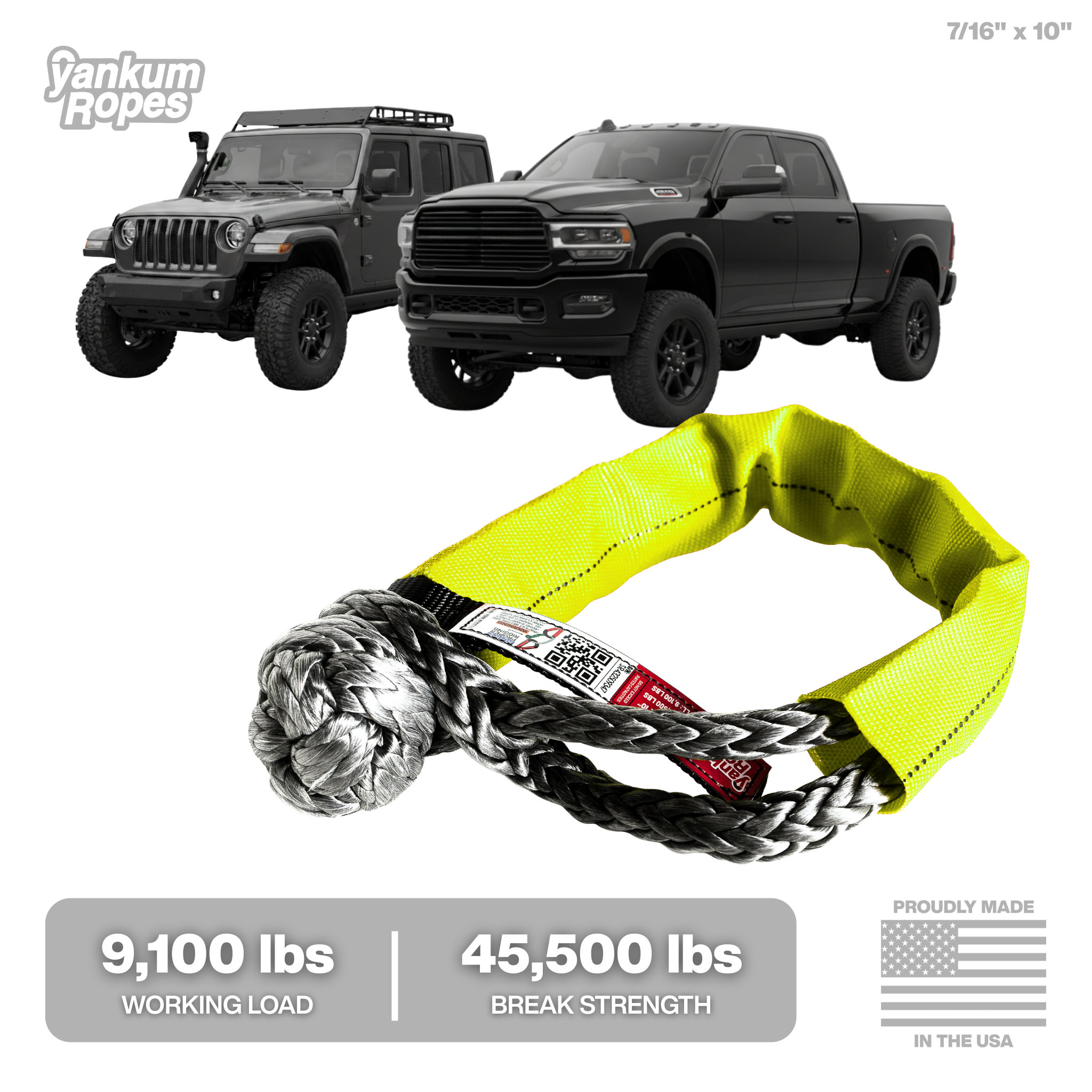
- Standard — tubular polyester chafe sleeve. Available 1/4" through 1". This is the one you are looking at, and it is the right default.
- Heavy Duty — urethane elastomer dipped sleeve instead of polyester. Buy this if your recovery point is rough, sharp, or otherwise less than ideal. Available 5/16" and up.
- Double Loop — roughly twice the length. Use it to reach an awkward recovery point, or double it back on itself for roughly twice the working load when winching or joining two ropes.
Soft or hard shackle
Honest answer: both work, and it depends what you value.
Soft shackles are lighter, faster to rig one-handed, will not damage paint or coatings, float, and drop instead of flying if something fails. They are the safer choice around people.
Green Pin hard shackles are alloy steel, extremely durable, and cheaper. They are also heavy and they clank around in the bag. If you are rigging against something abrasive that would chew through fiber, steel still has its place.
Most people end up carrying both.
FAQ
How do I use one?
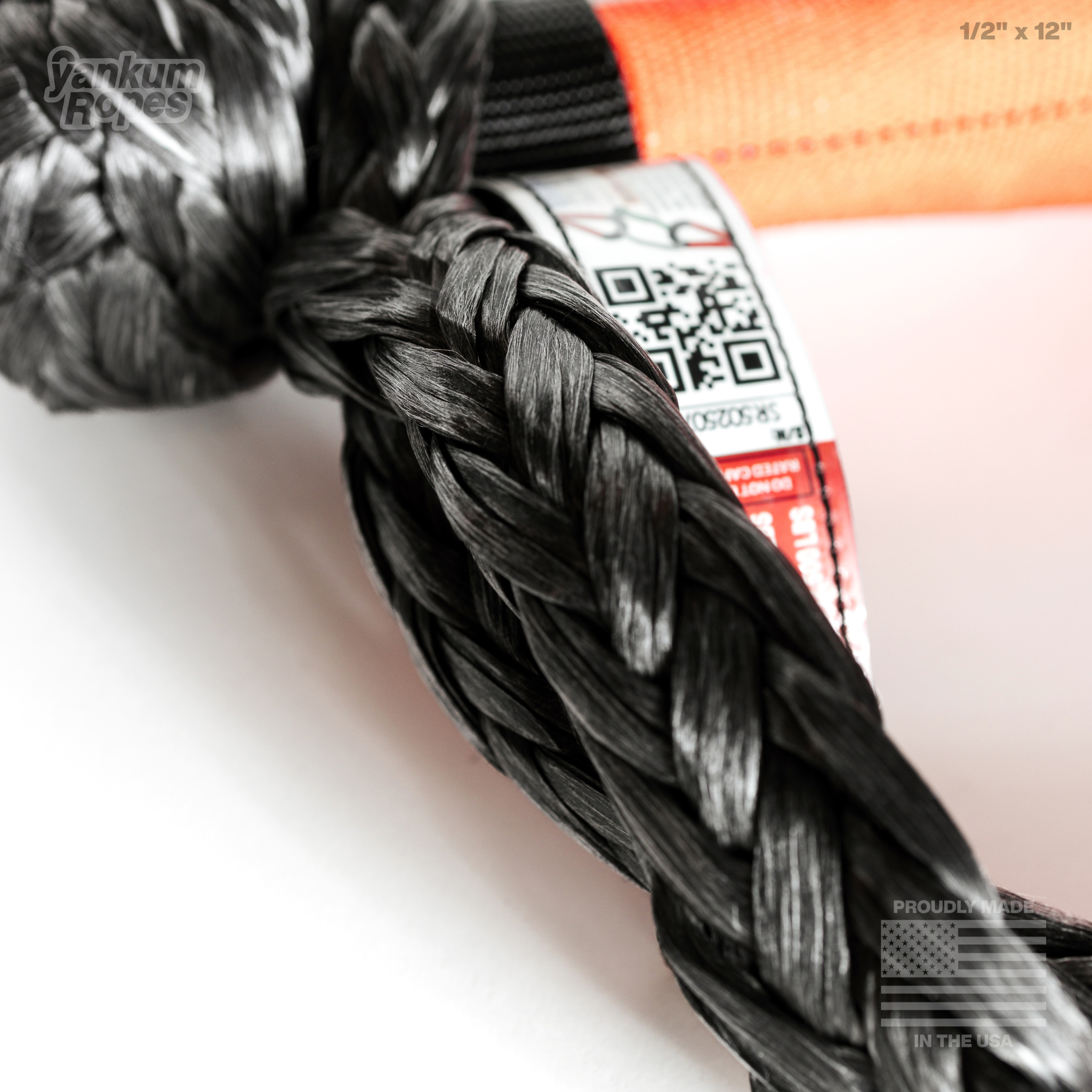
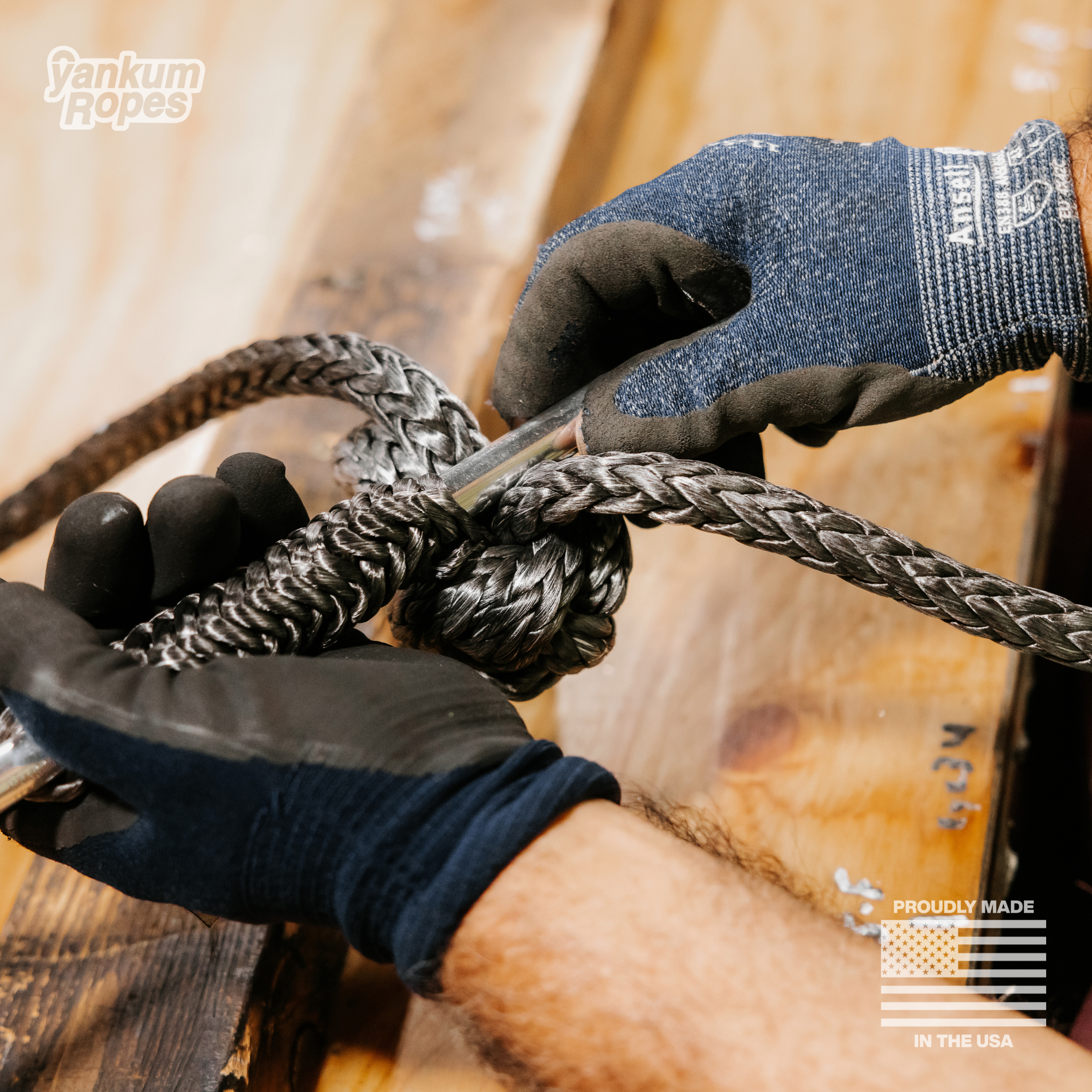
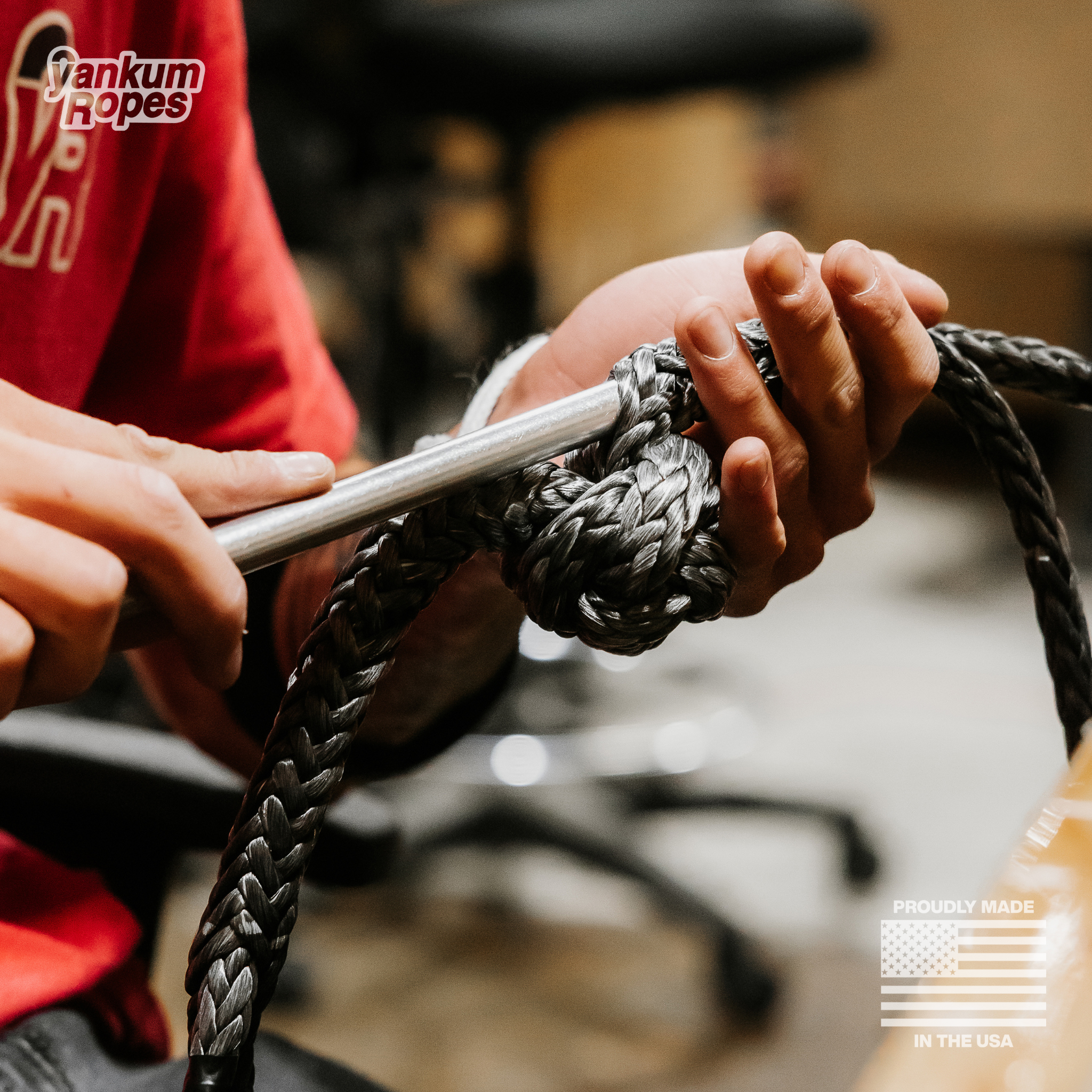
Pass the loop through the recovery point and over the knot. That is it. To release, push the knot back through the loop — it comes apart by hand even after a hard pull, which is not true of a seized steel pin.
Will it cut on a sharp edge?
HMPE is strong but it does not like abrasion. That is what the sleeve is for. If your recovery point has a genuinely sharp edge or a rough weld, go Heavy Duty or file the edge.
When do I retire it?
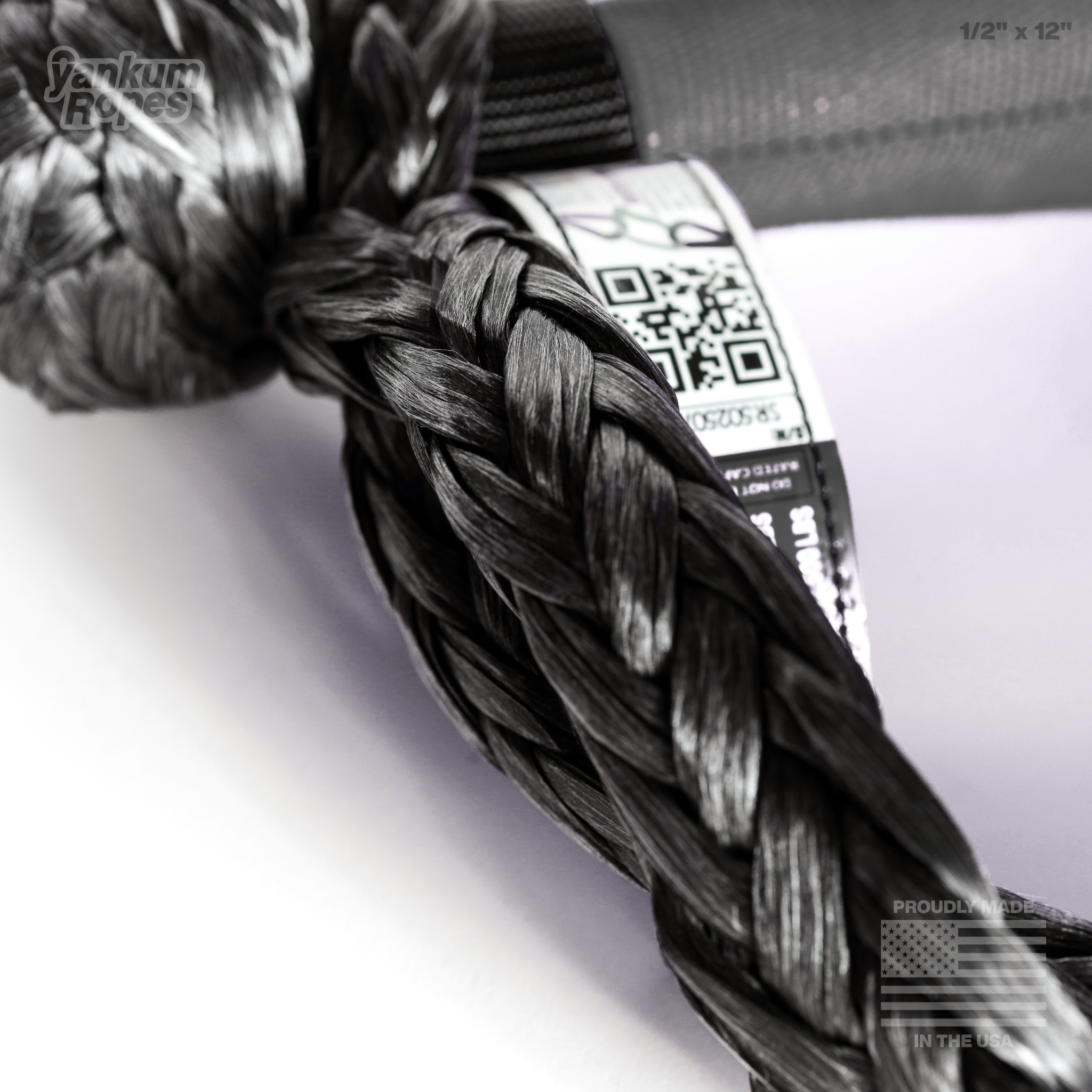
Inspect before use. Look for cut or fuzzed fiber, a sleeve worn through, or glazing that suggests heat. Any of those and it is done. A shackle is cheap relative to what it is holding.
How many should I carry?
Two minimum — one per end of the rope. Four is more useful than it sounds once you start rigging around obstacles or joining ropes.
Made from HMPE fiber. 1 year limited warranty, through Yankum.
Not sure which size? Ask us — tell us your vehicle and your rope and we will tell you the shackle.
Also worth a look
Presented by Overland Kitted
The Dispatch
Gear We Like: DVA Mechanics for the Grenadier
MAXTRAX Introduces Universal Mounting Pins for MKII, XTREME, and LITE Boards