


Yankum Ropes
Kinetic Recovery Rope
Choose options
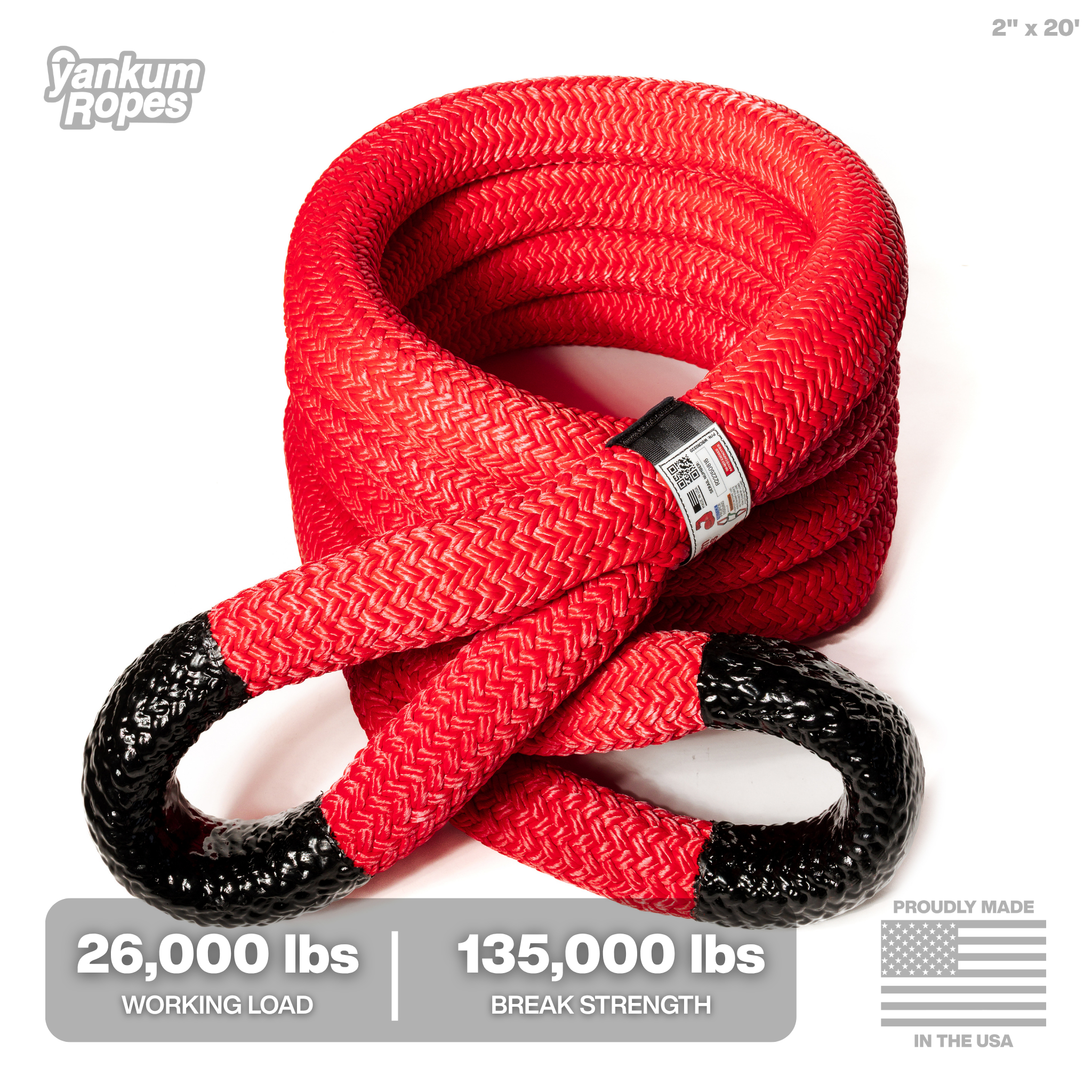
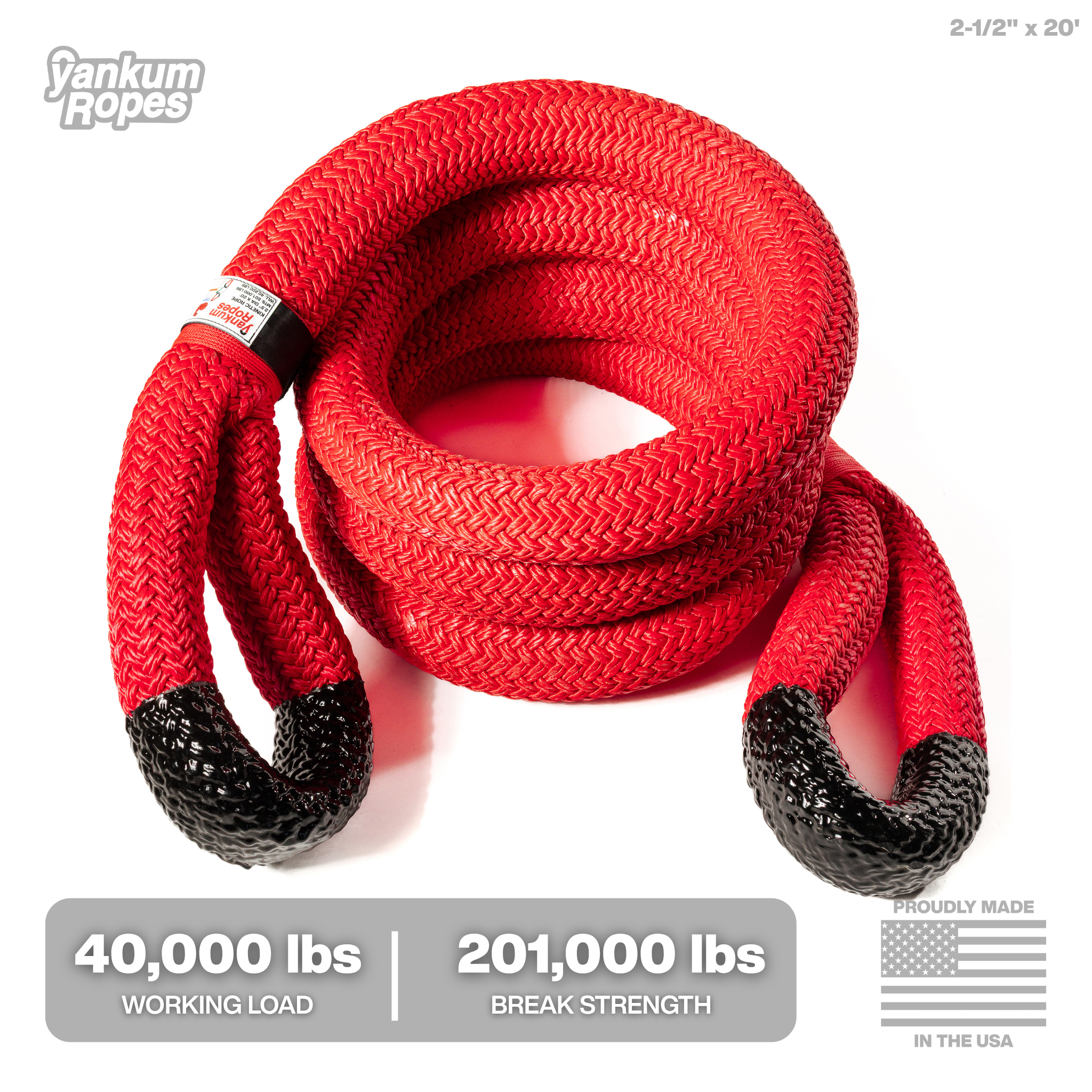
A flat tow strap has no give. When you hit the end of it, the shock goes into the recovery points, the frame, and the person holding the wheel. A kinetic rope stretches — up to 30% — and gives the load somewhere to go. That stretch is why a rope will pull a vehicle out that a strap will not.
This is the full Yankum kinetic rope range in one place. Pick your diameter and length below. If you already know your size, order and go. If you do not, the next section is the only part you need to read.
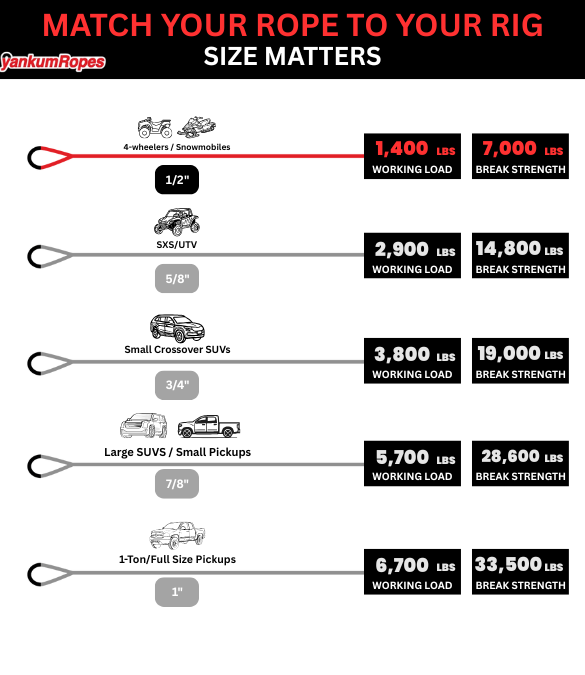
The one rule for sizing
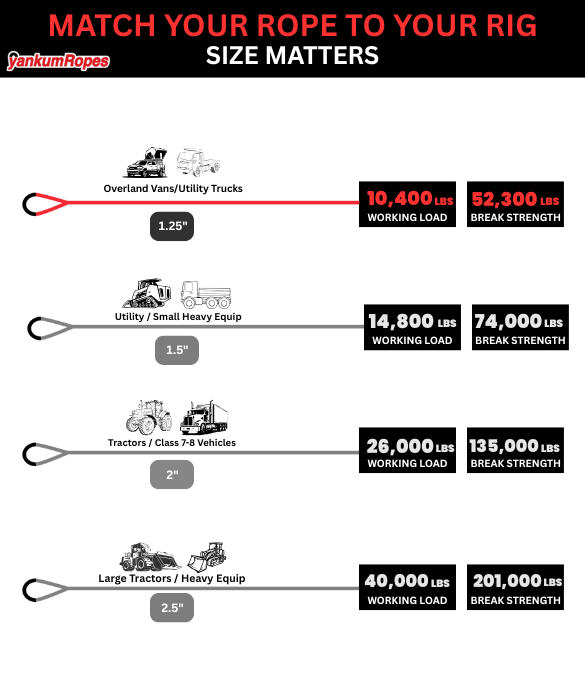
You size the rope to the vehicle doing the pulling, not the vehicle that is stuck.
This is the mistake we see most often. Your one-ton pulling out a buried quad needs the one-ton's rope, not the quad's. The rope has to survive the force your vehicle can generate.
Undersize it and you are shock-loading past its design. Oversize it and it will not stretch enough to do anything — a rope that does not elongate is just an expensive strap. Both directions are wrong.
Use loaded weight, not the brochure figure. Fuel, gear, passengers, a roof rack and a full fridge add up fast. If you are near a boundary, go up a size.
Pick your diameter
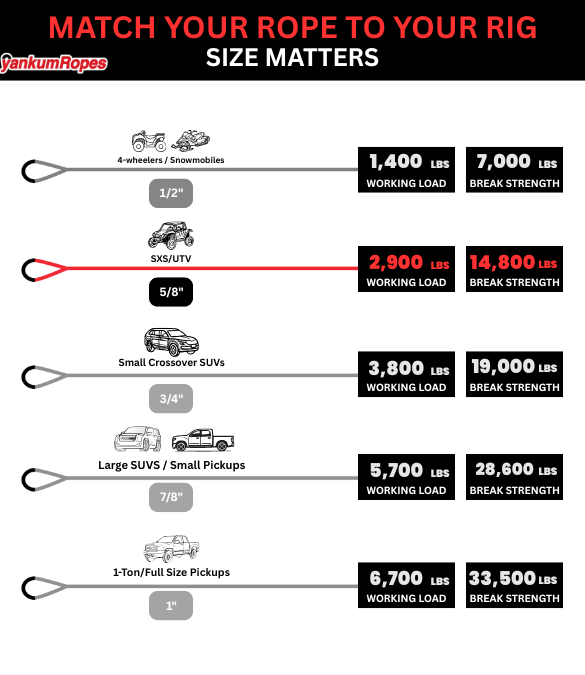
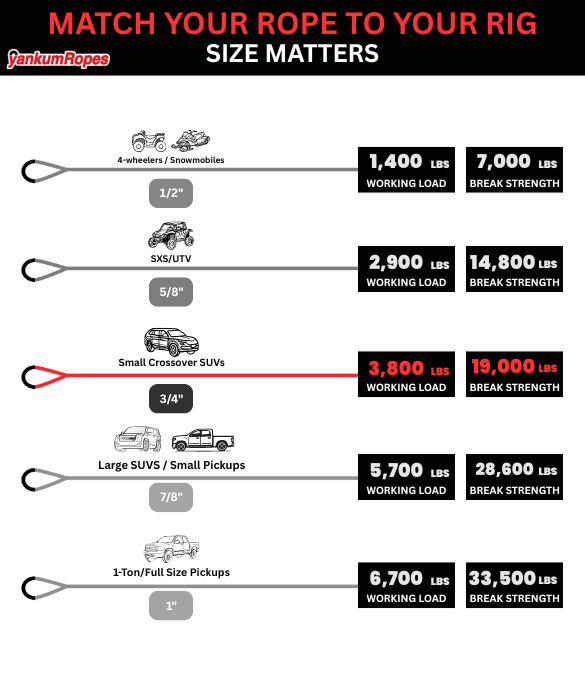
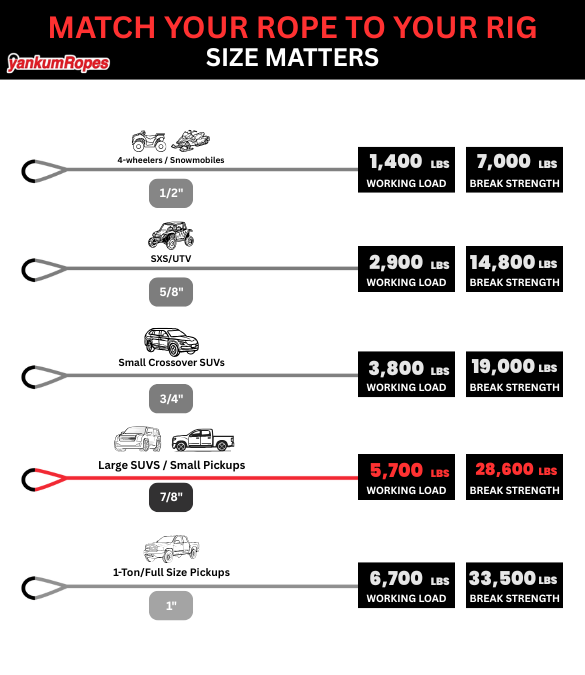
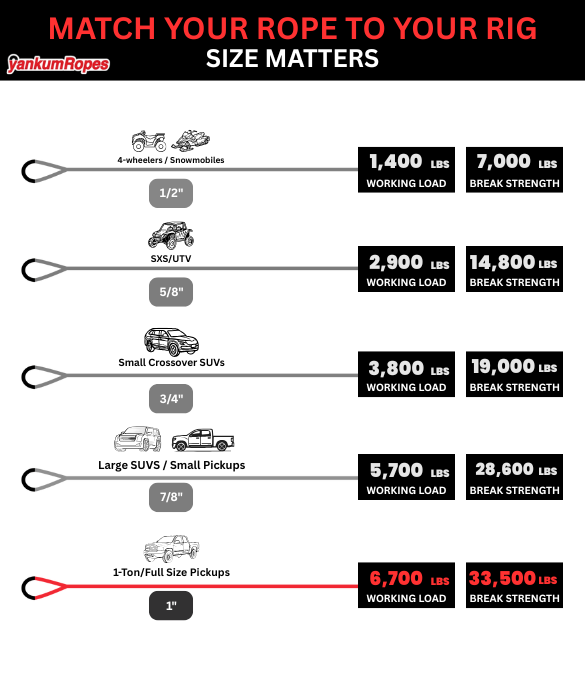
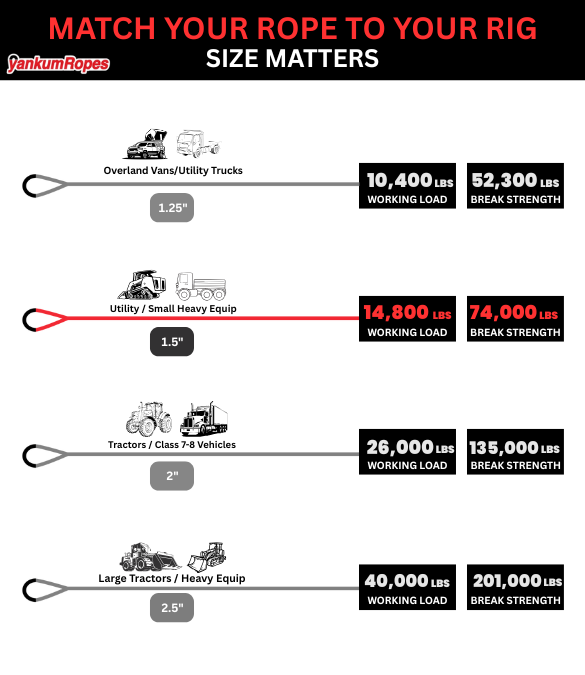
| Diameter | Name | Recovery vehicle weight | Breaking strength | Typical rigs |
|---|---|---|---|---|
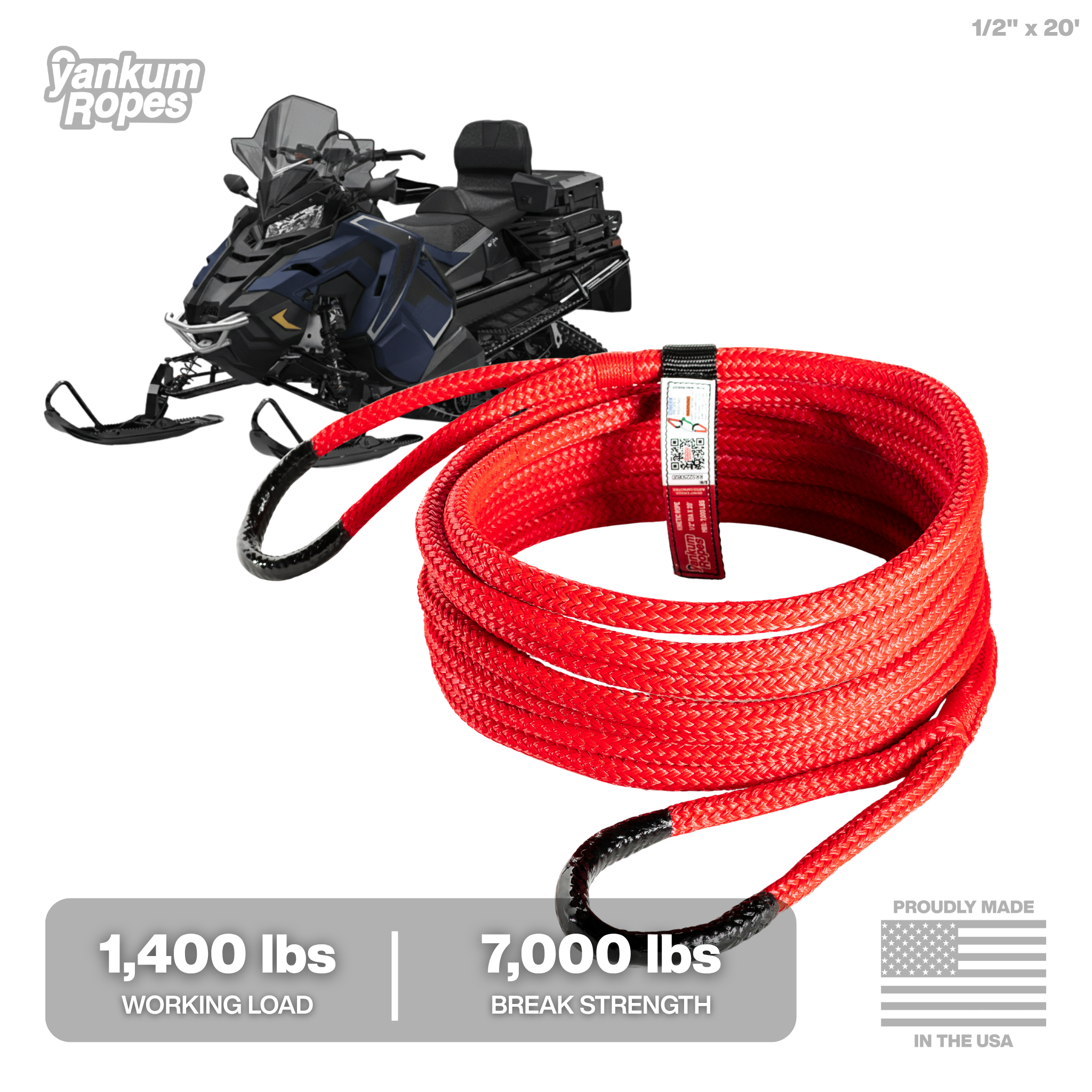
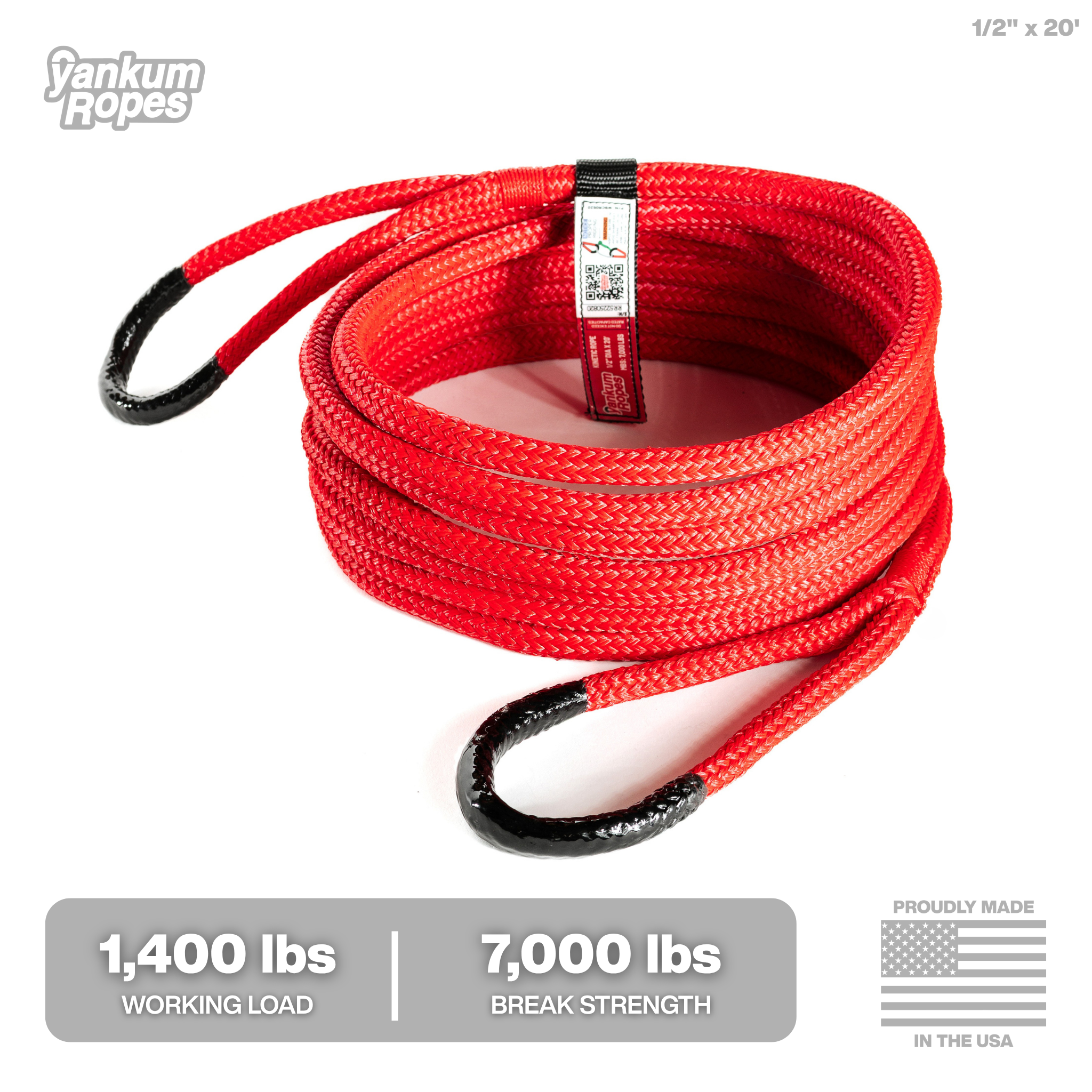
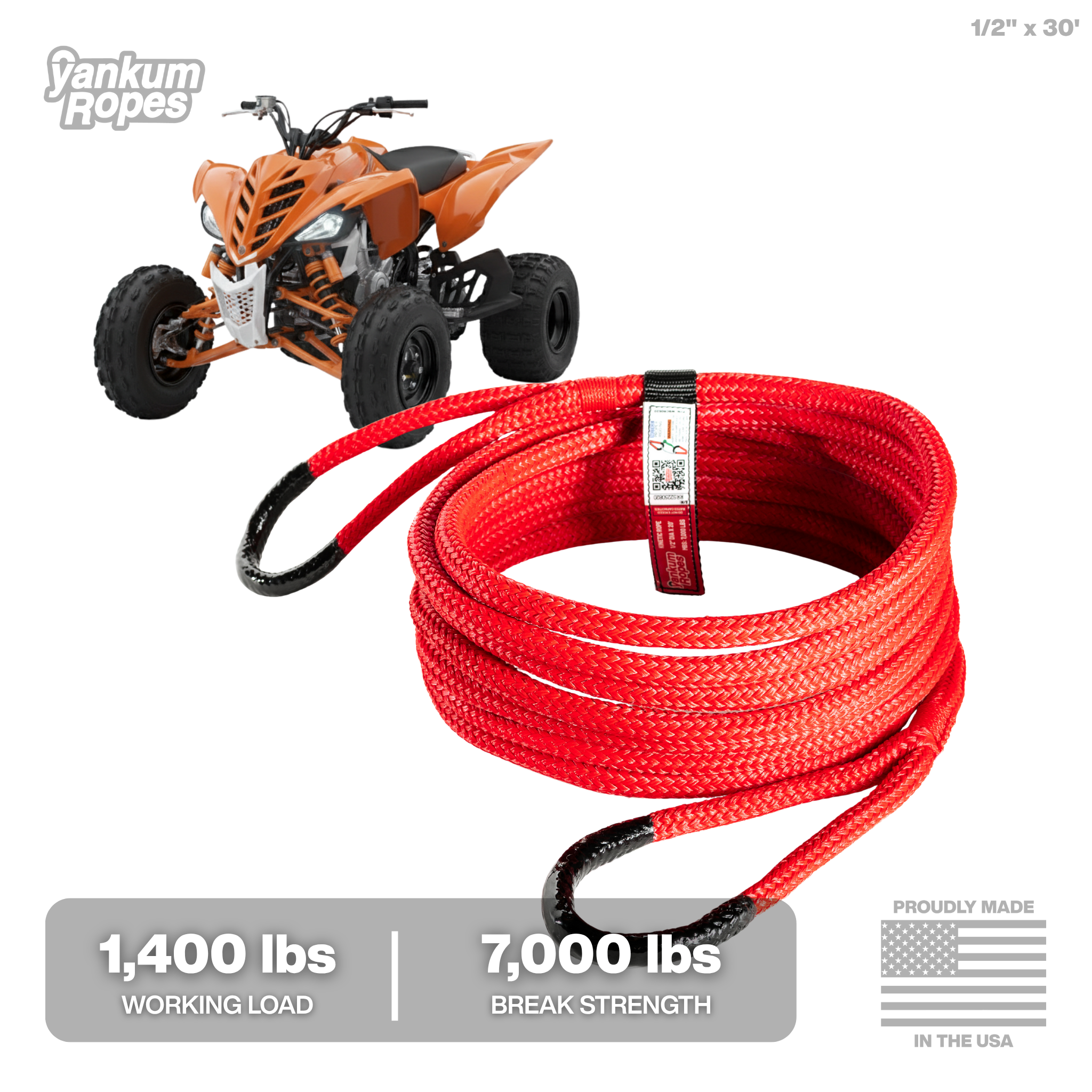
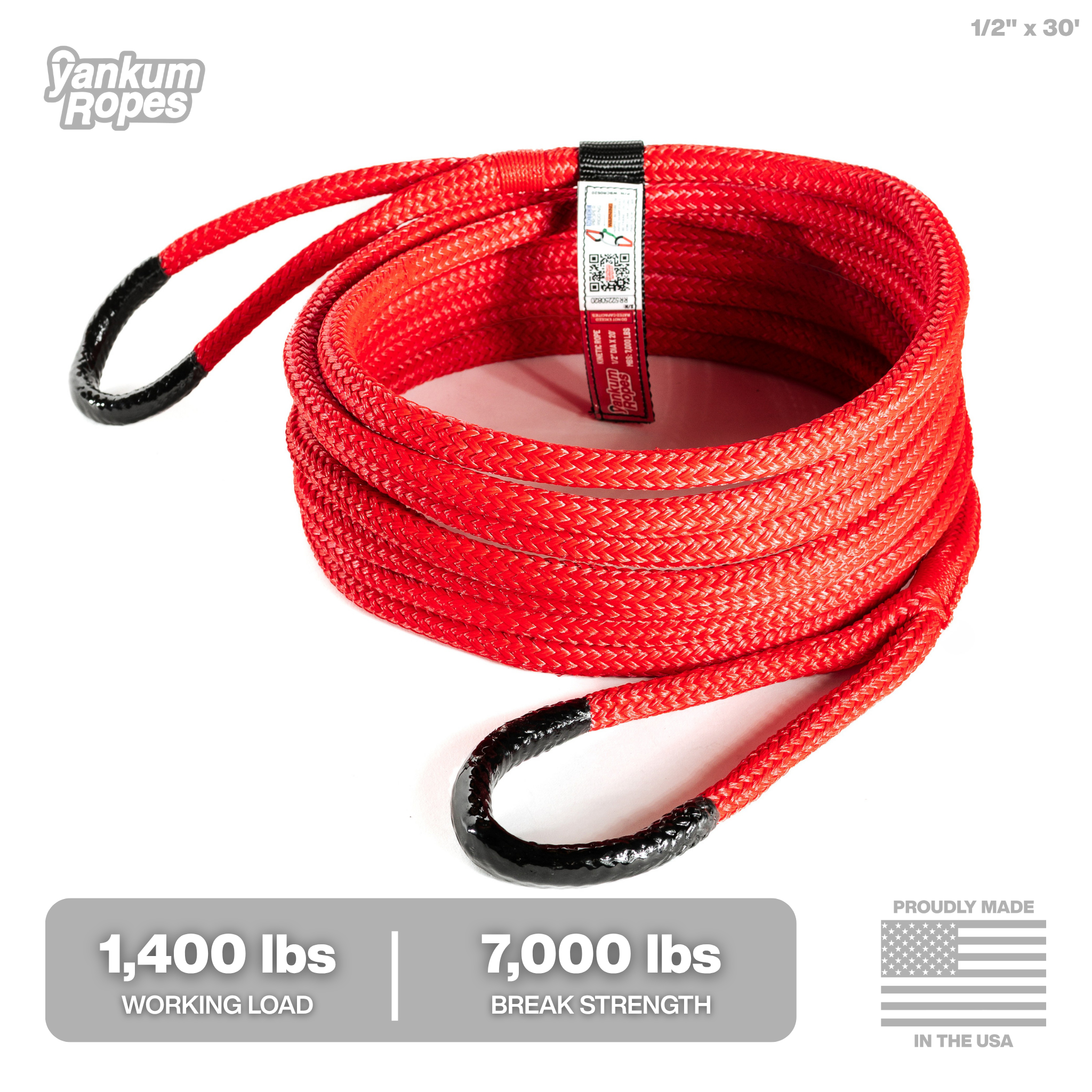
| 1/2" | Racer | 700 – 1,399 lbs | 7,000 lbs | ATVs, quads, small boats |
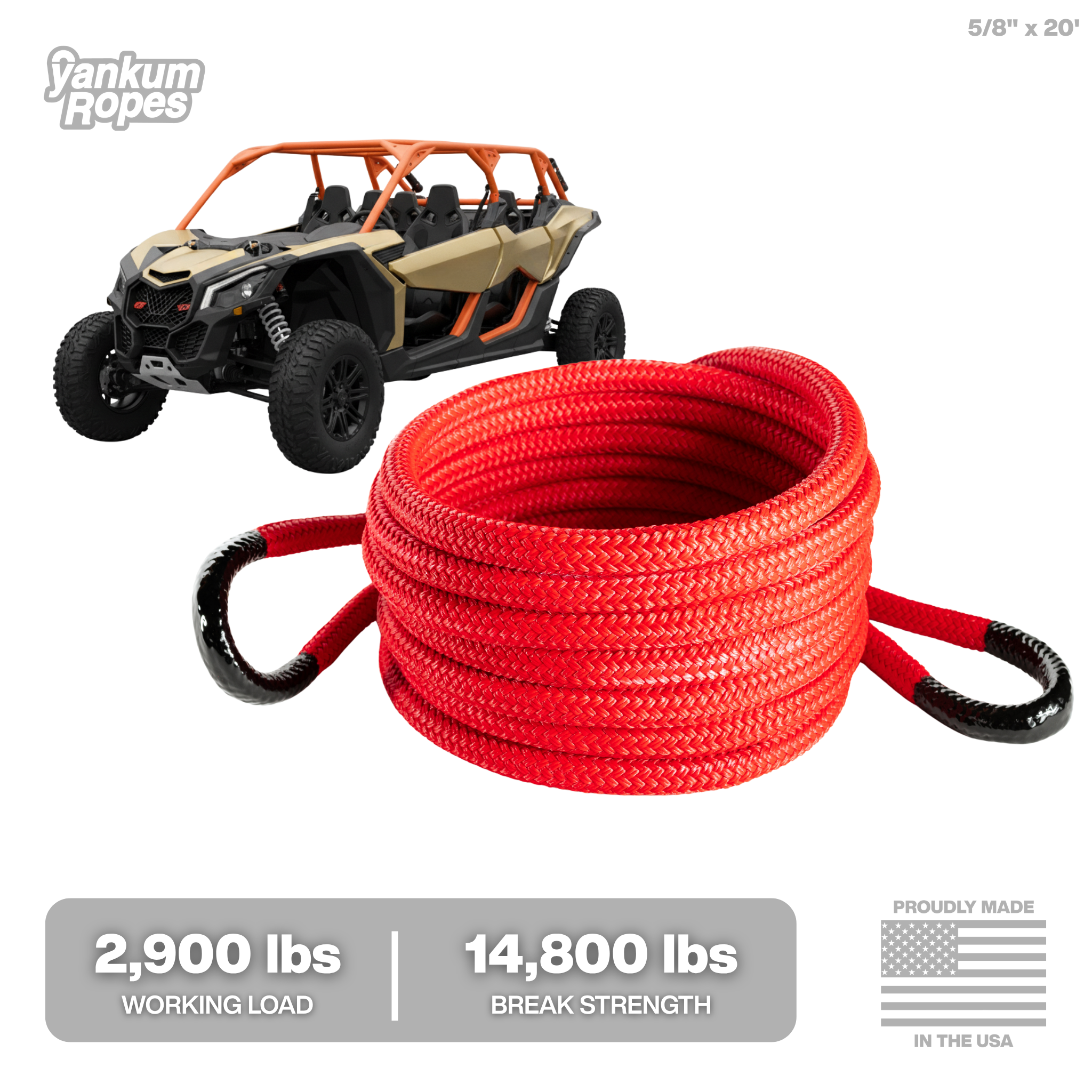
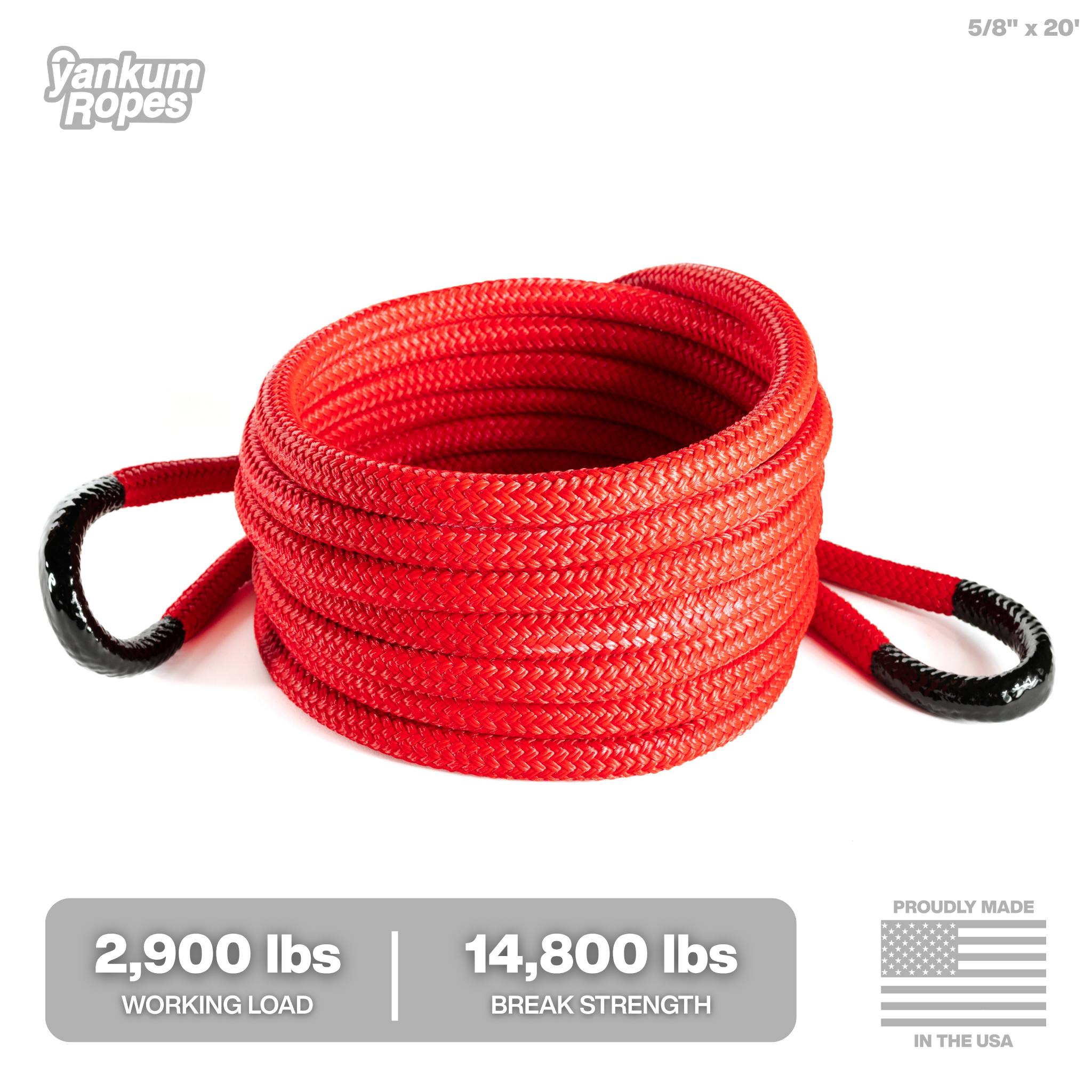
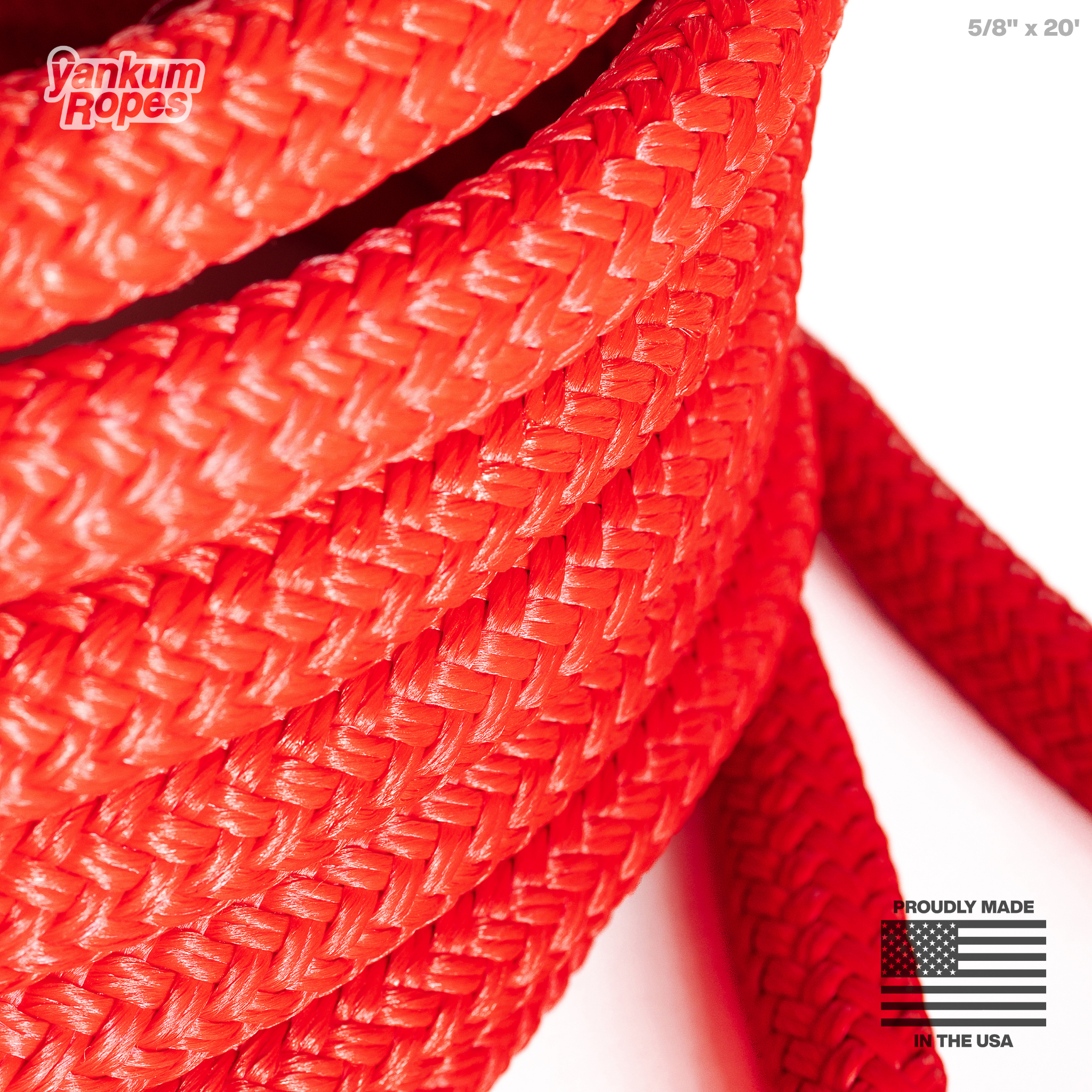
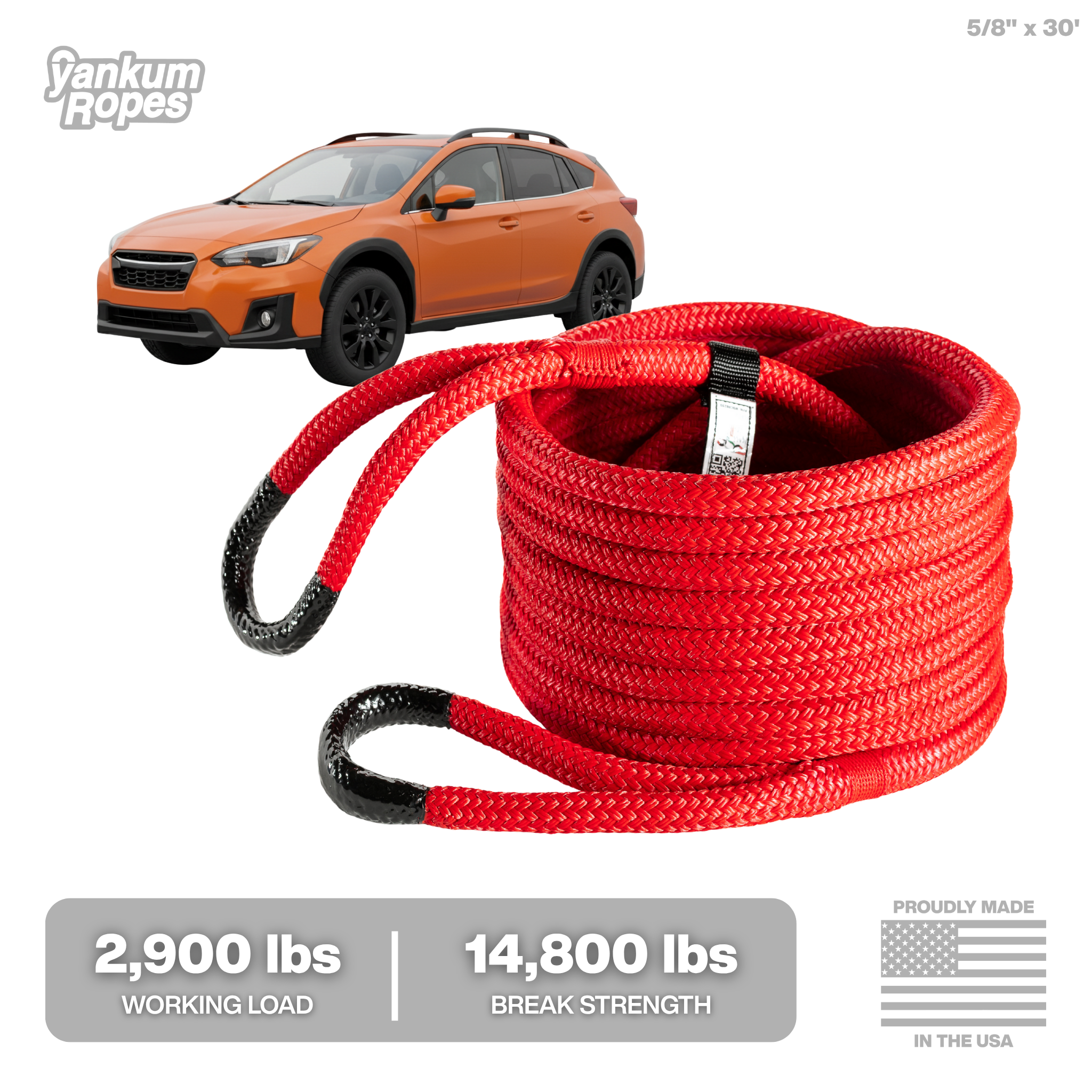
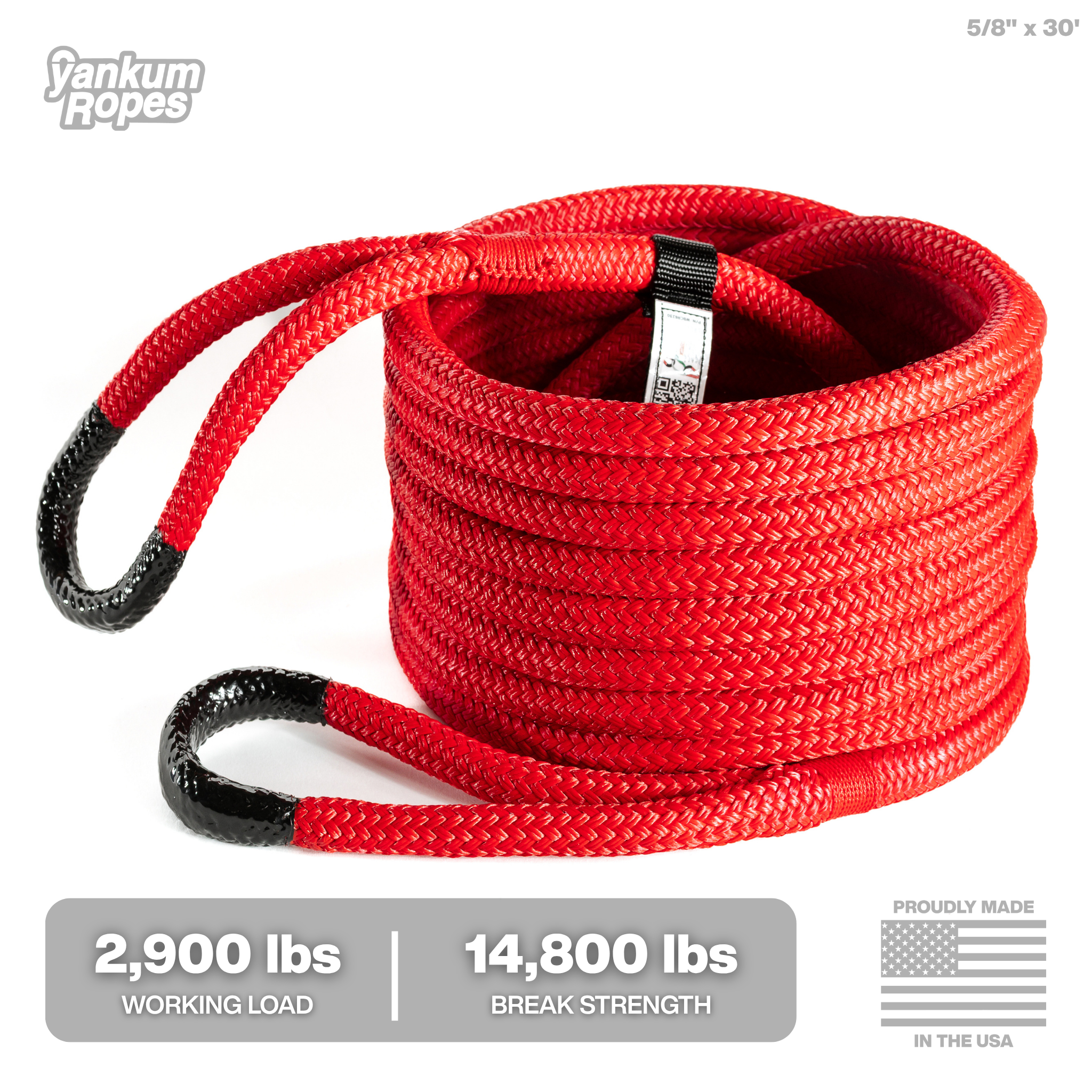
| 5/8" | Viper | 1,400 – 2,999 lbs | 14,800 lbs | SXS, UTV |
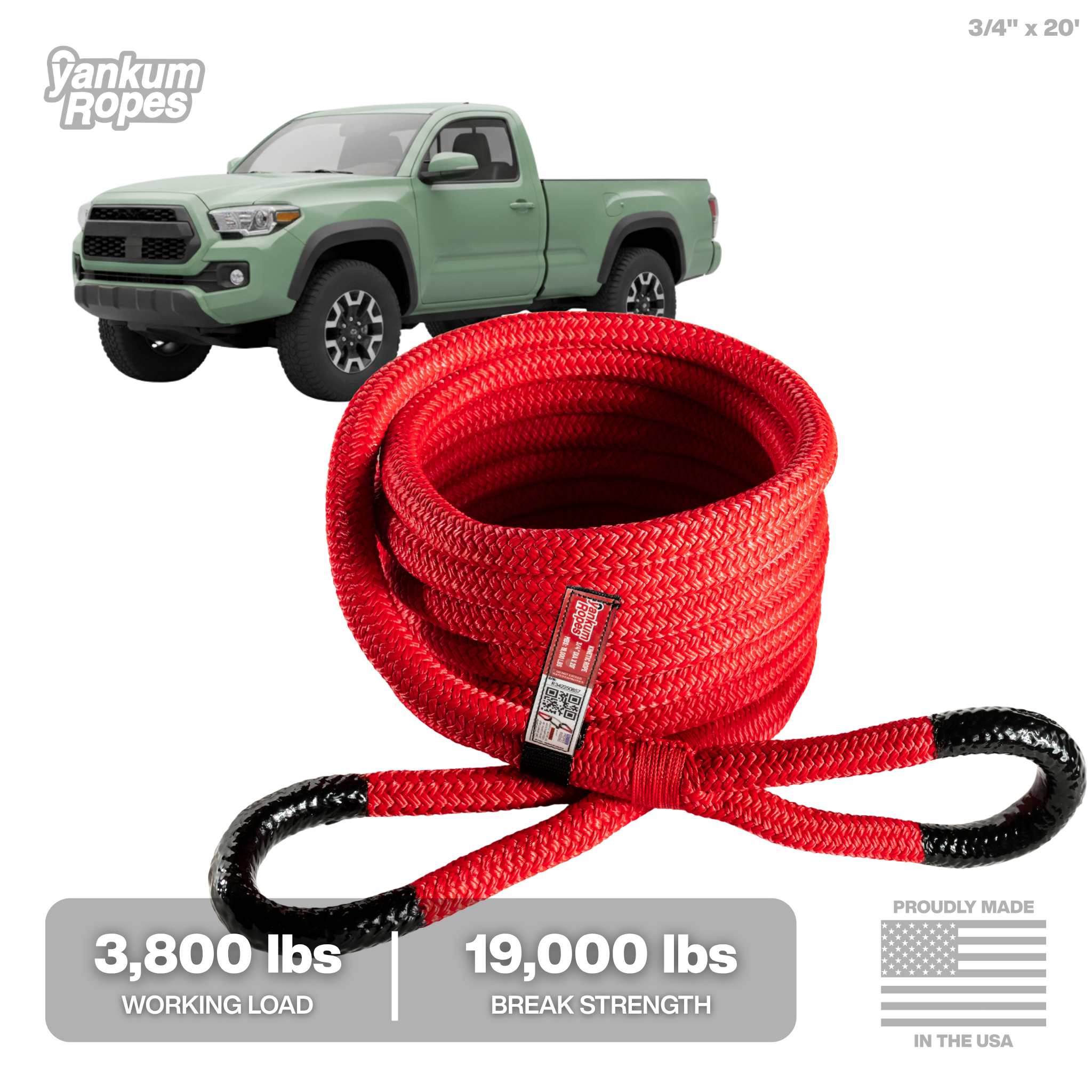
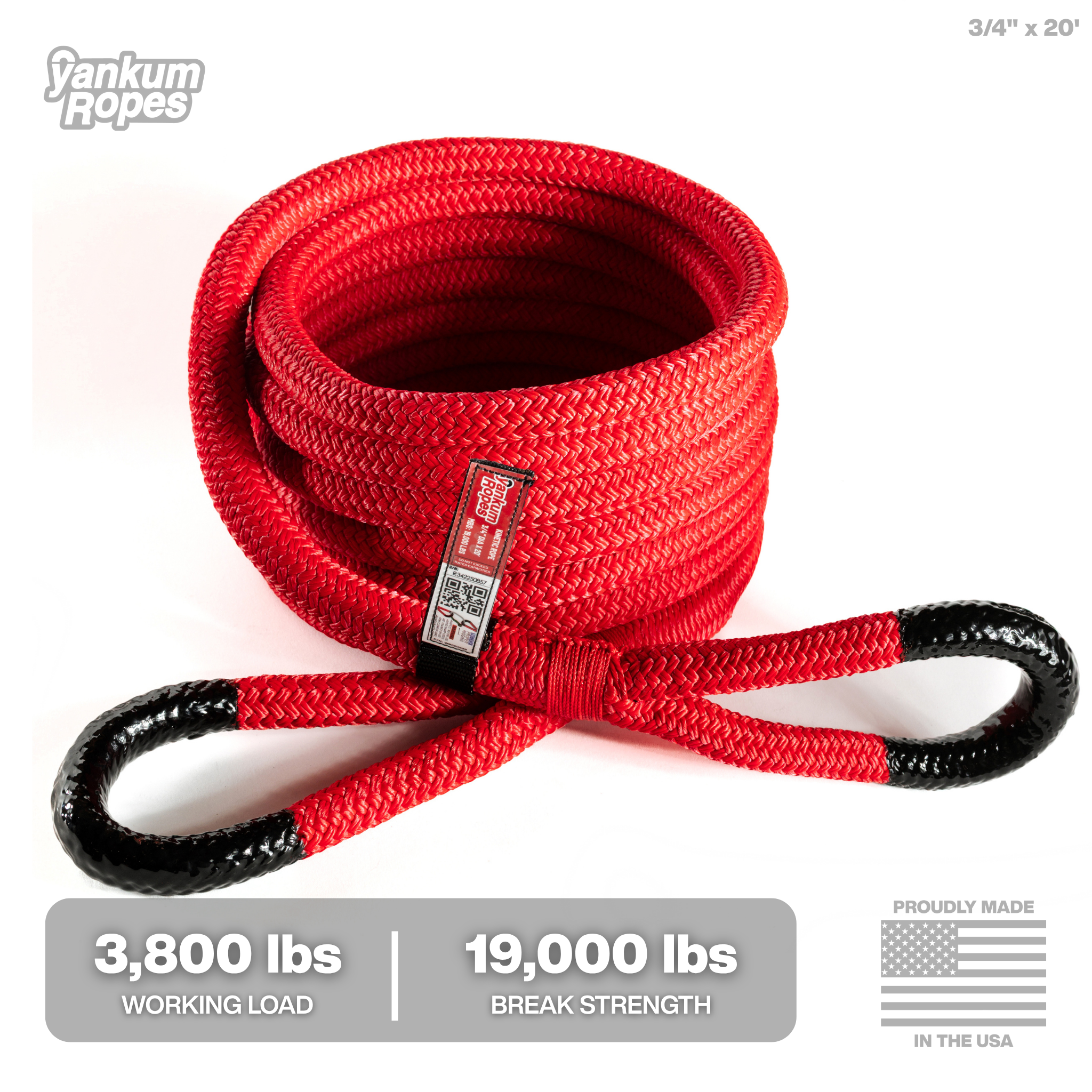
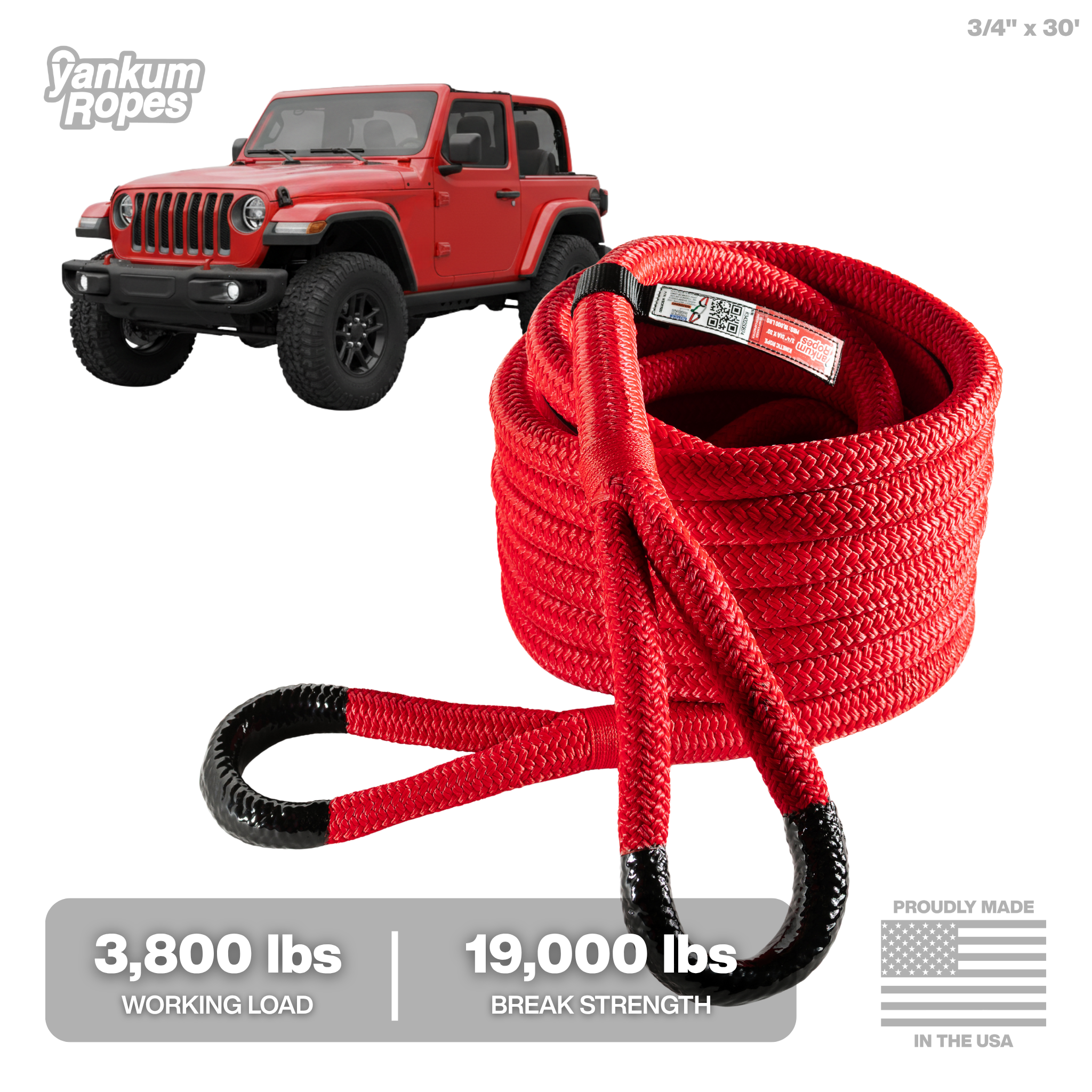
| 3/4" | Rubber Boa | 3,000 – 4,999 lbs | 19,000 lbs | 2-door Jeeps, crossovers, small SUVs |
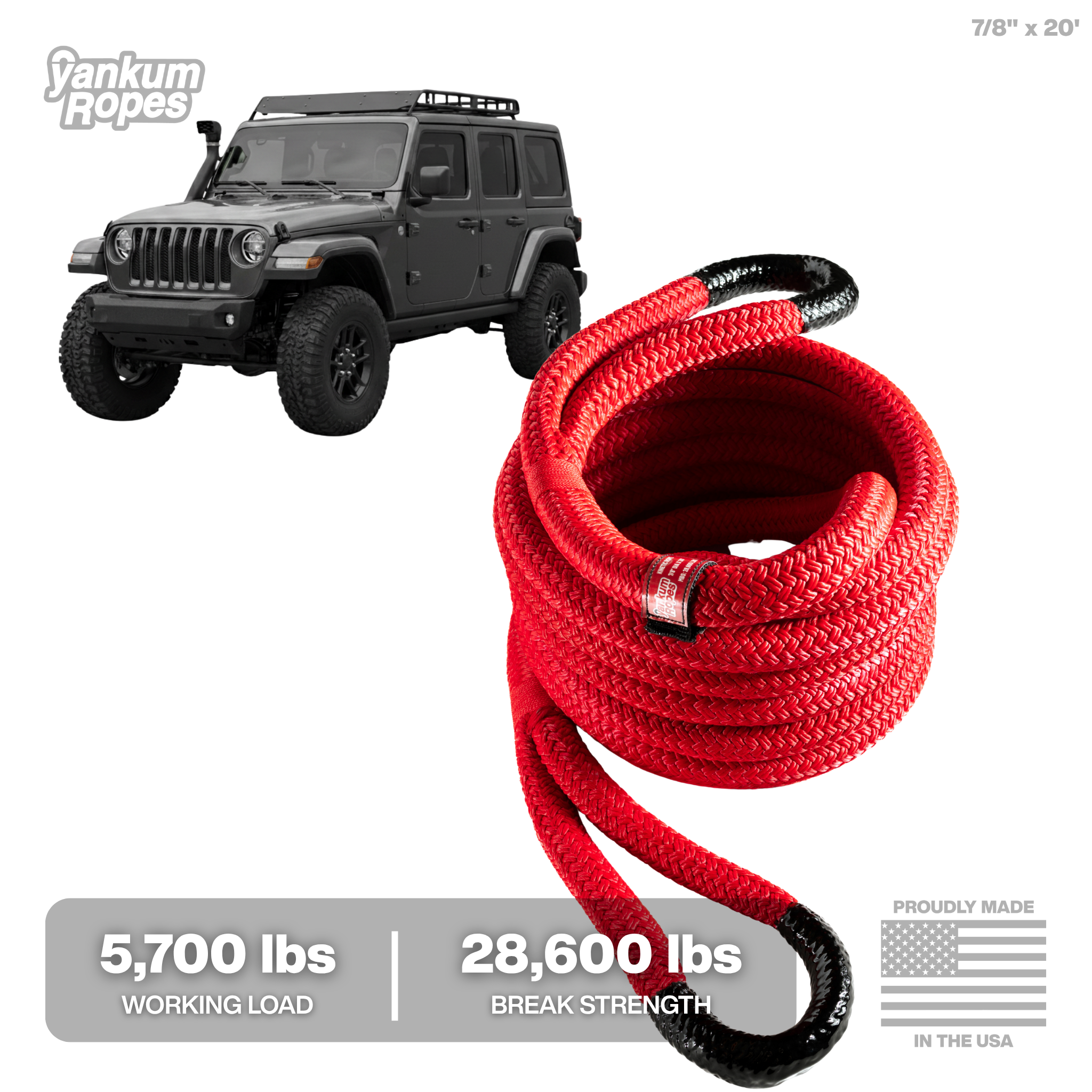
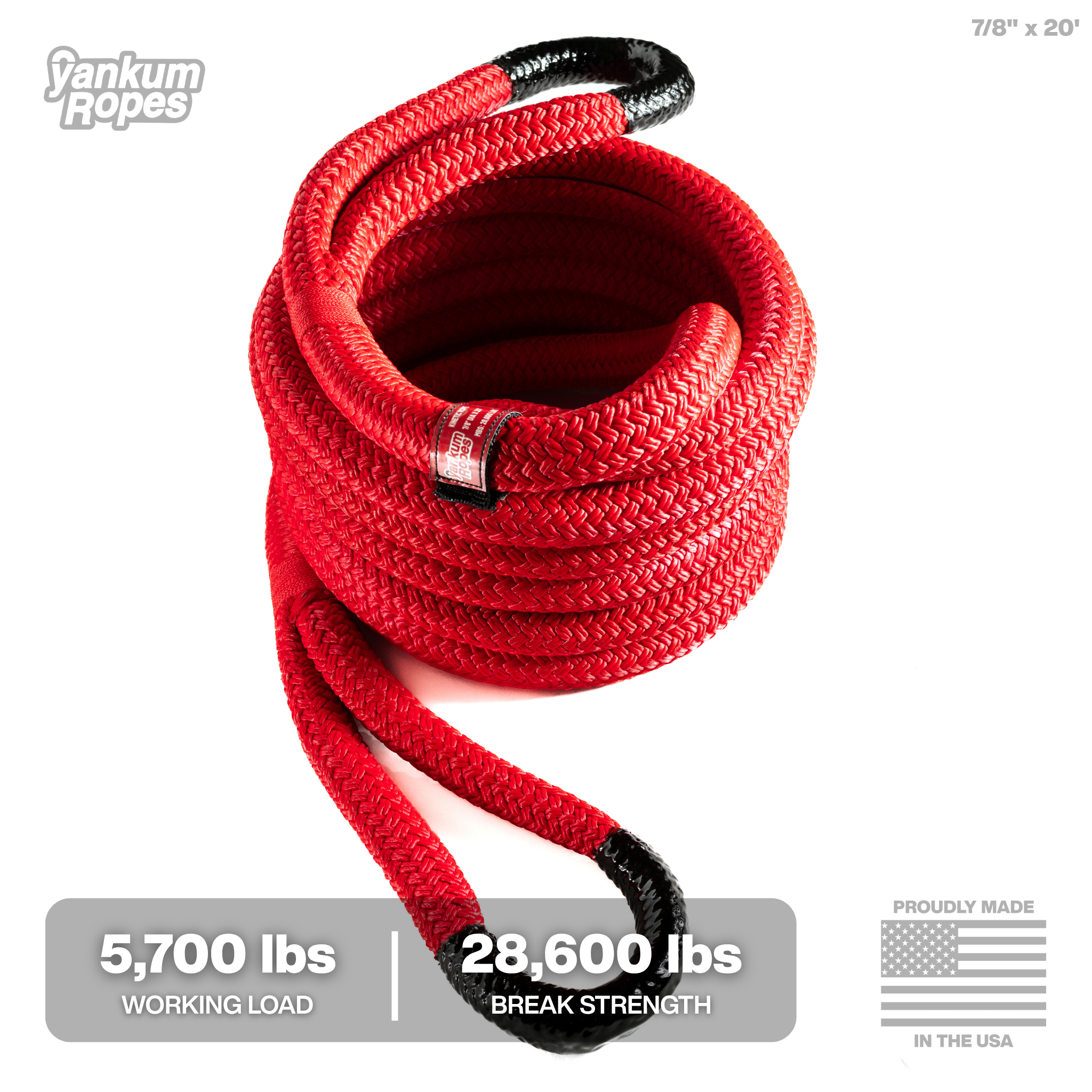
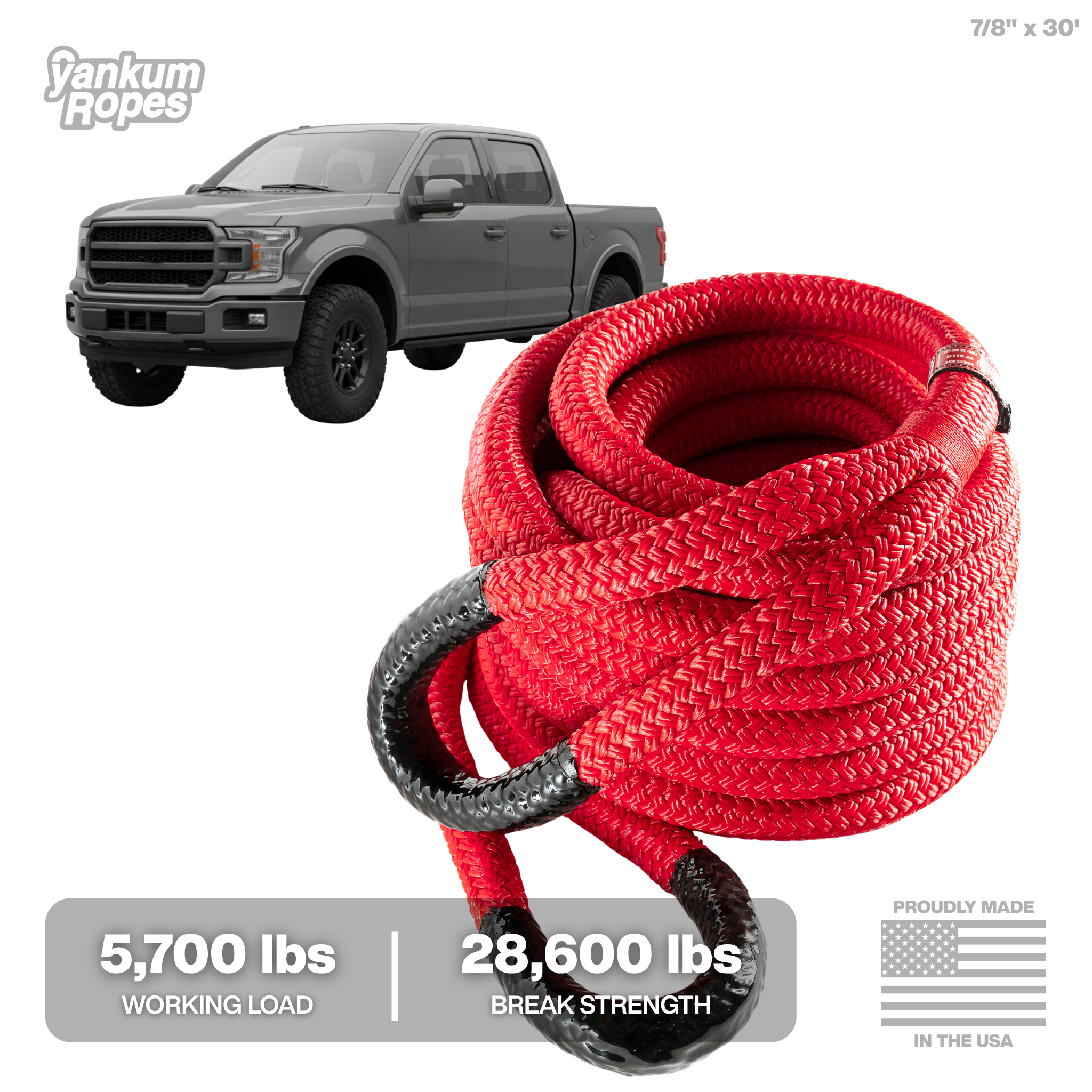
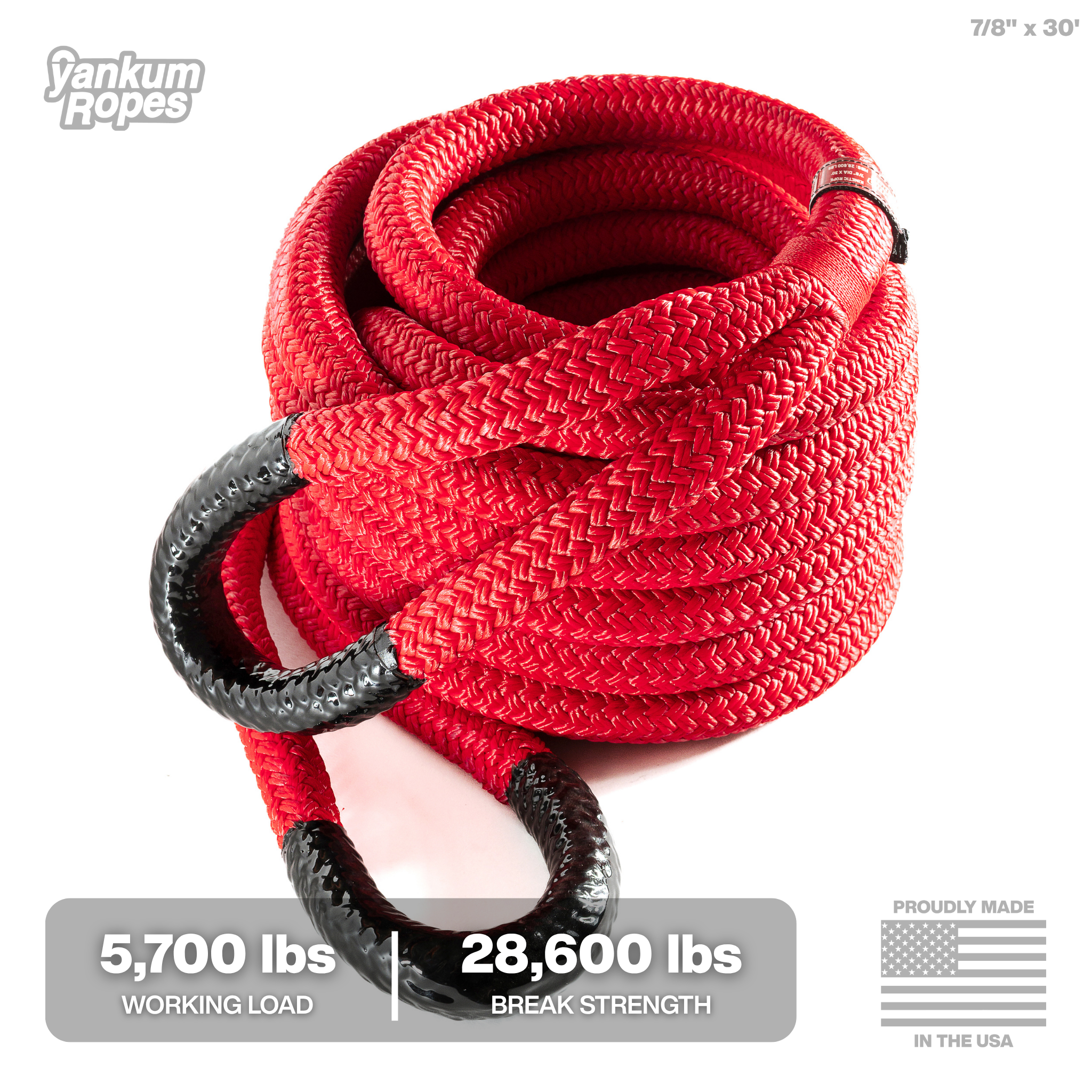
| 7/8" | Python | 5,000 – 7,199 lbs | 28,600 lbs | 4-door Jeeps, half-ton trucks, large SUVs |
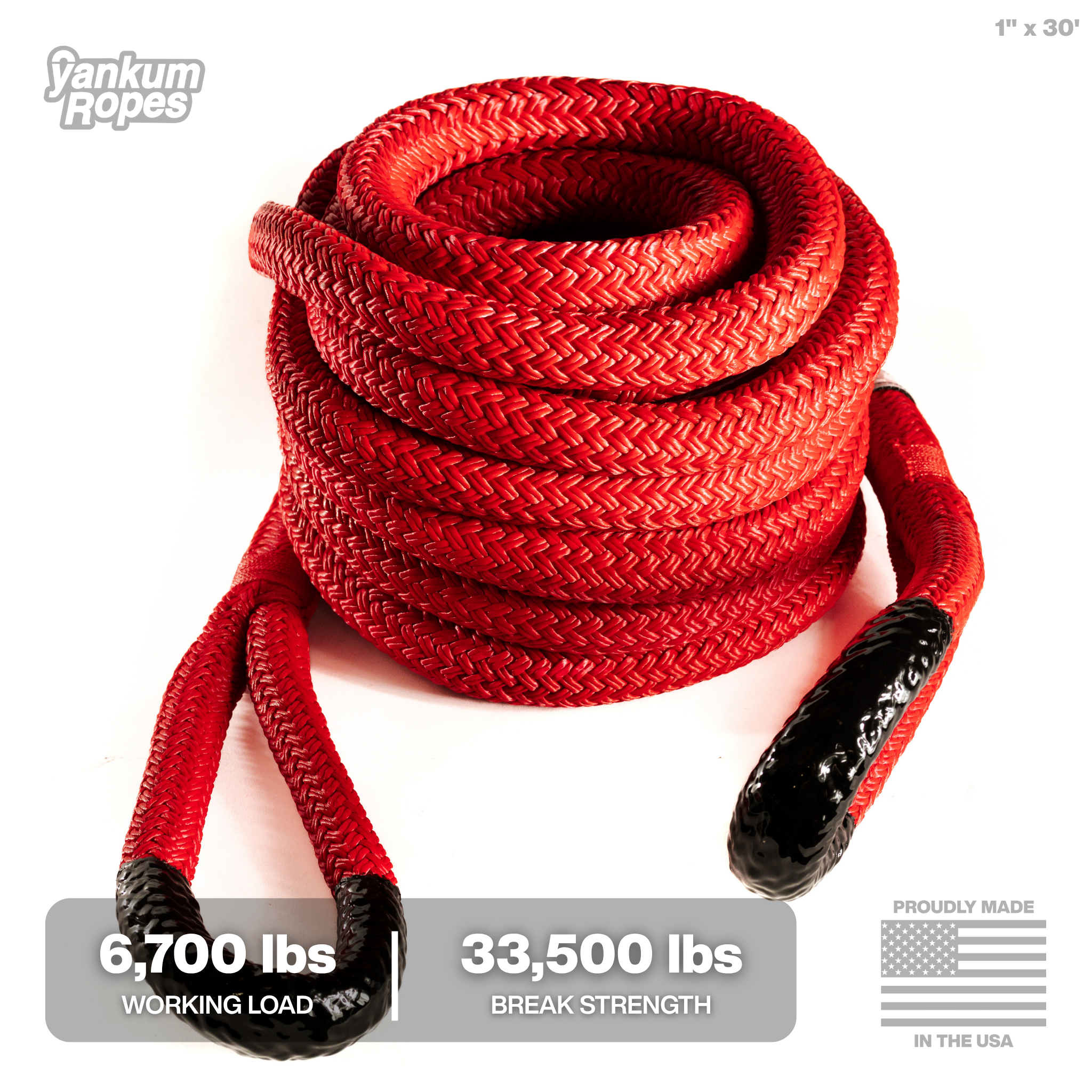
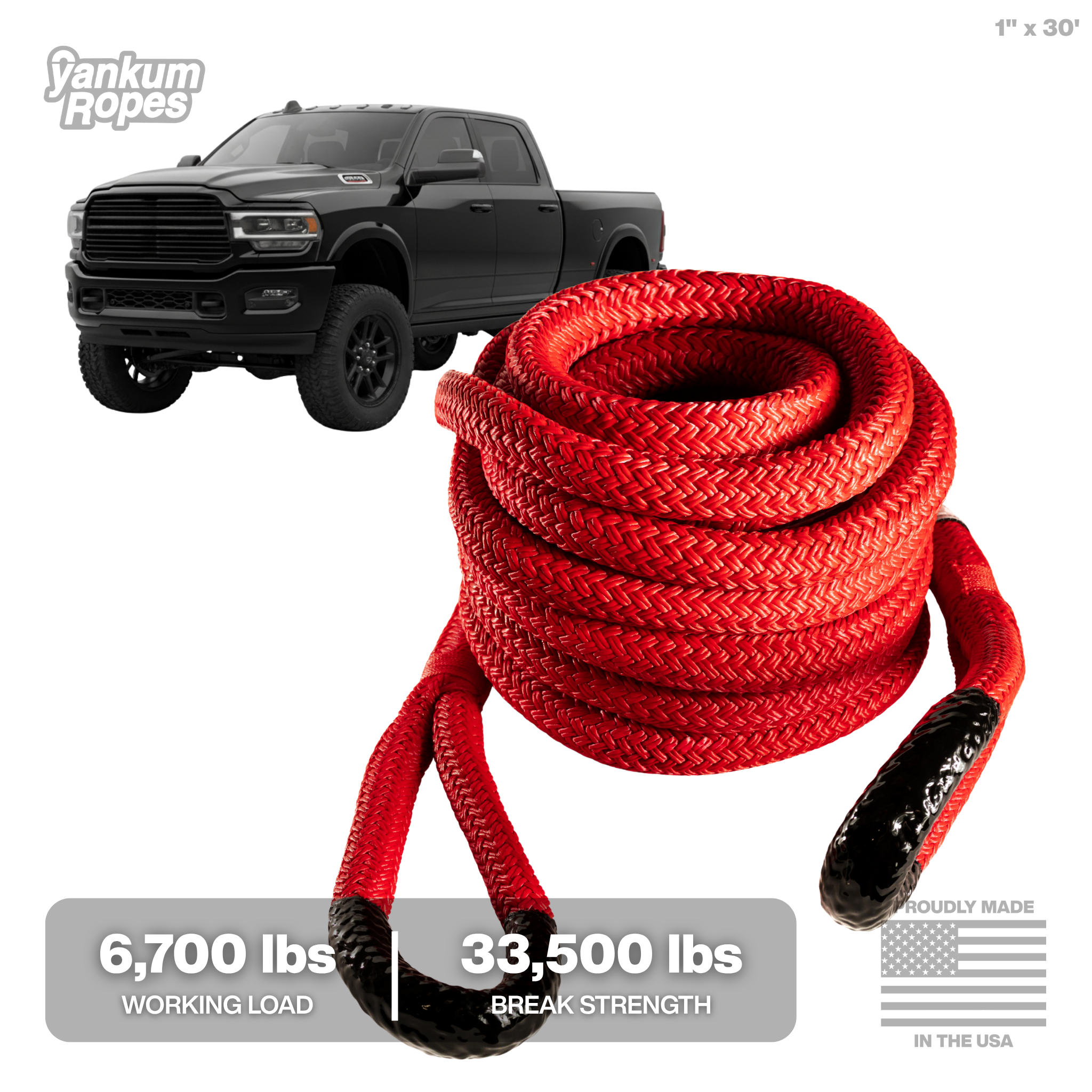
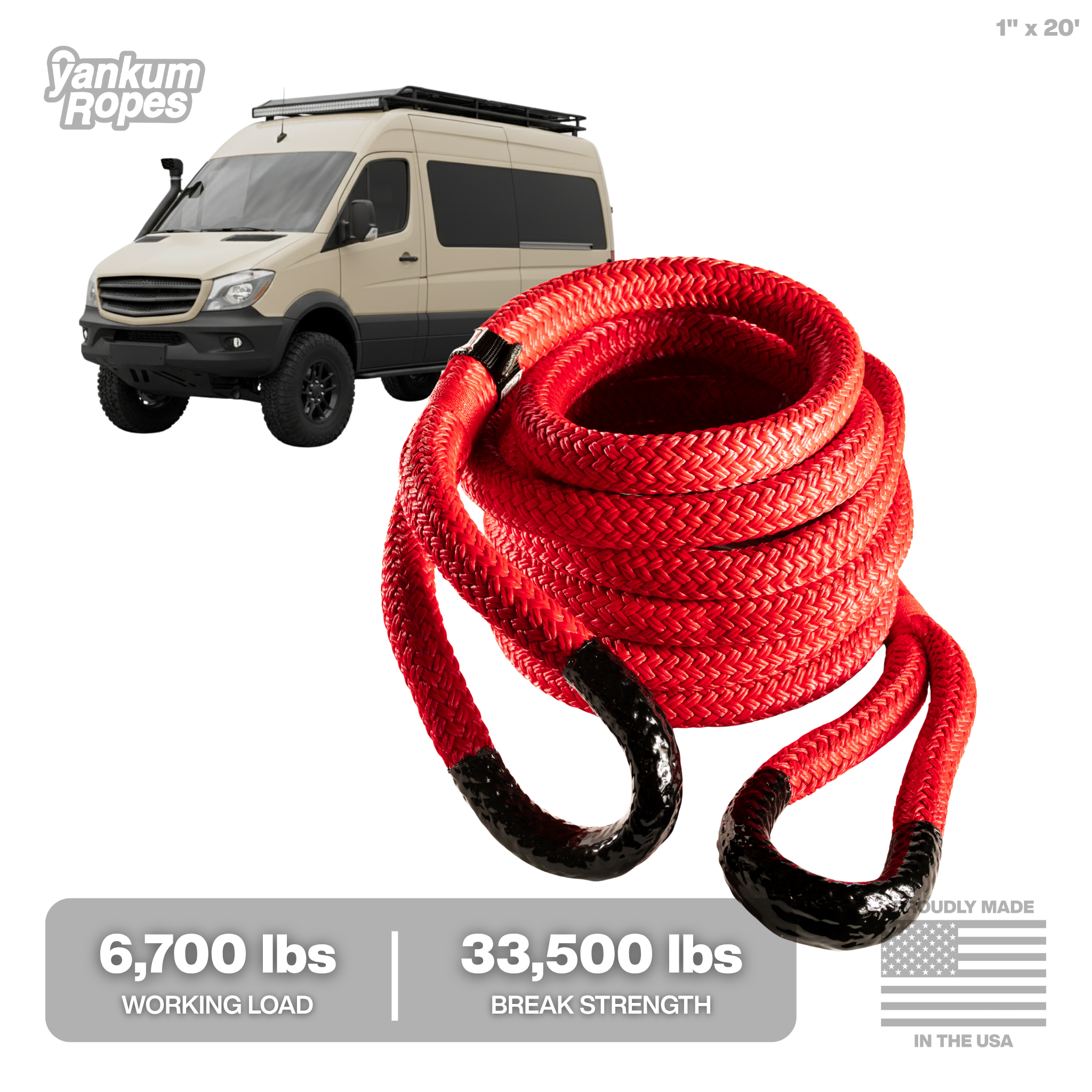
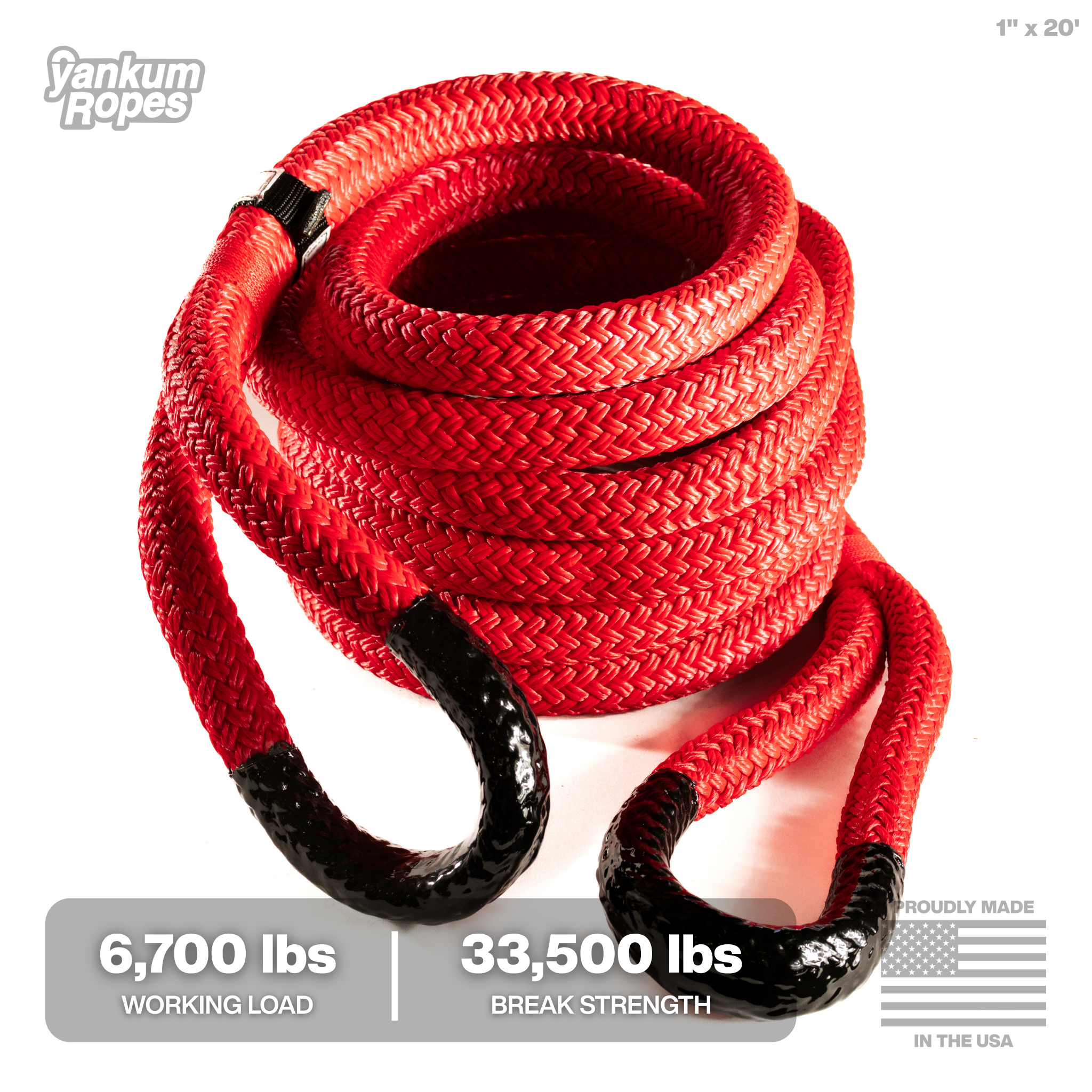
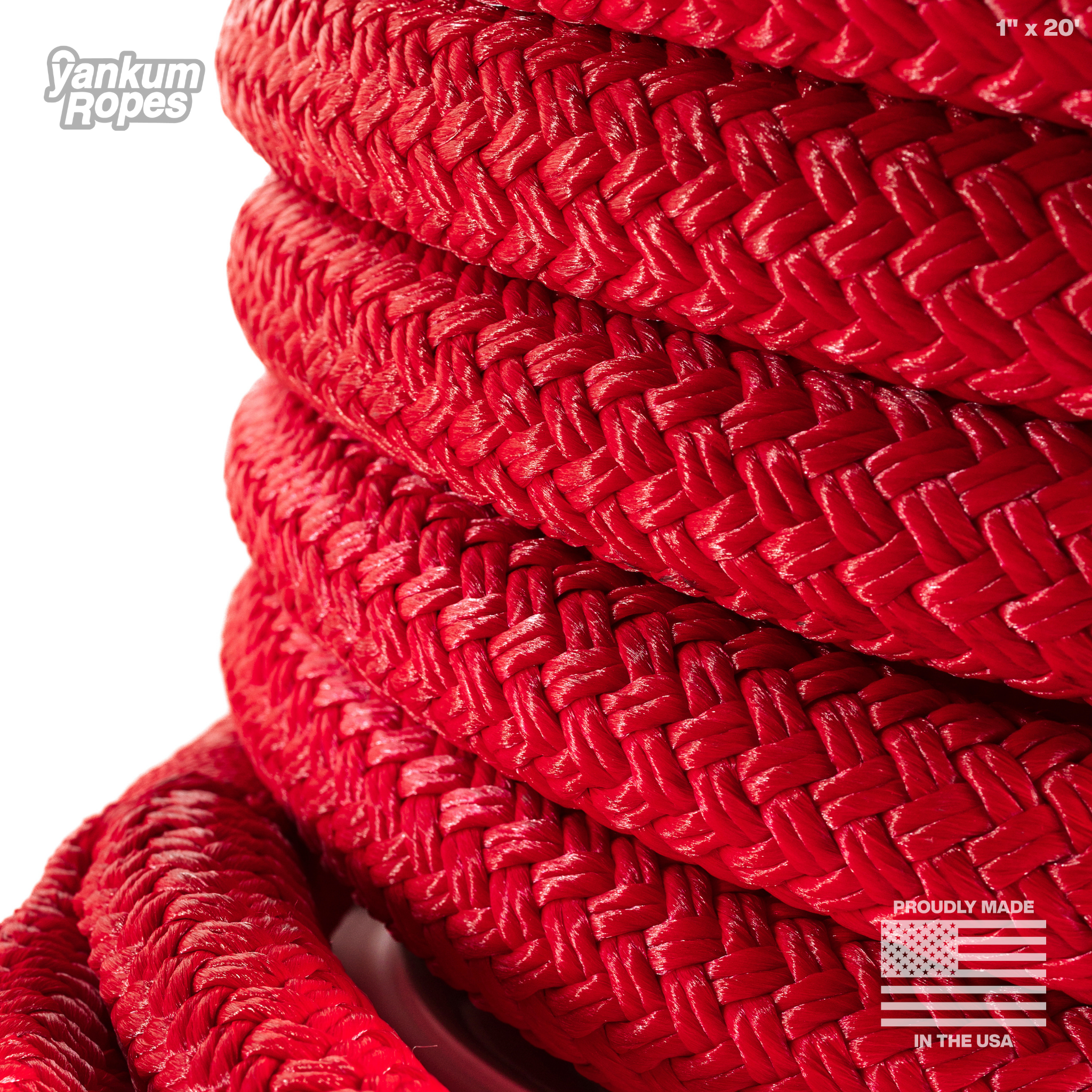
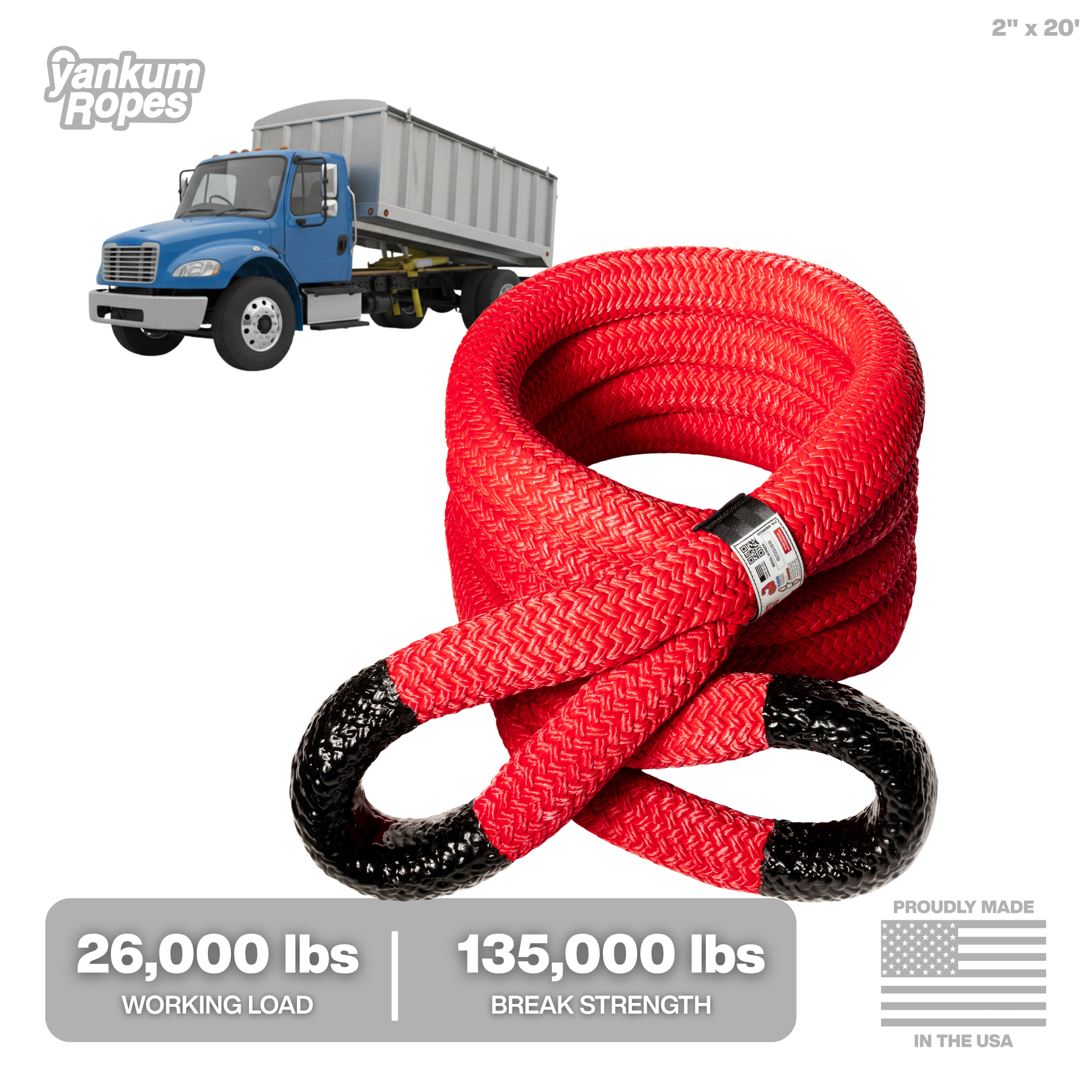
| 1" | Rattler | 7,200 – 10,249 lbs | 33,500 lbs | 3/4 and 1 ton trucks, heavy SUVs |
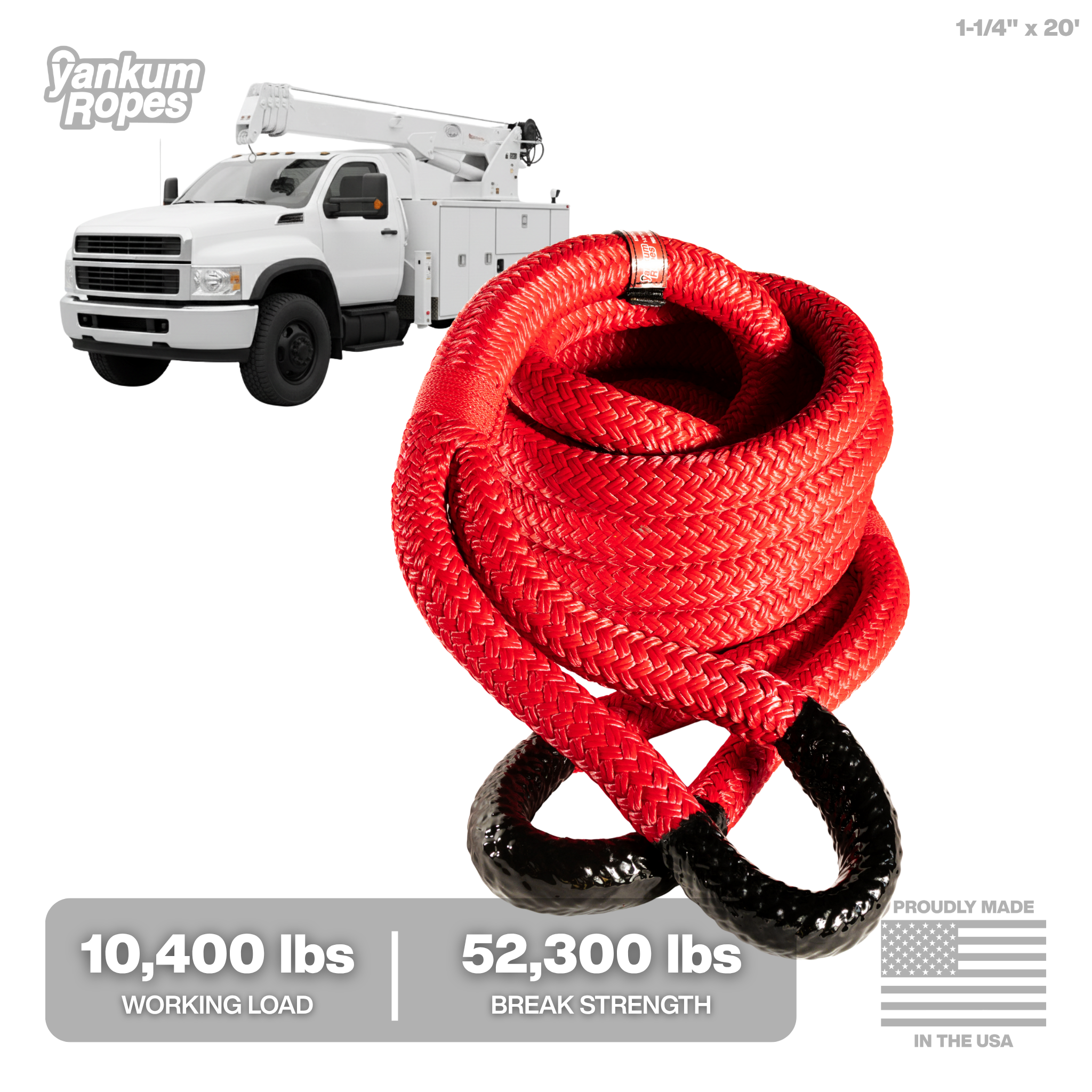
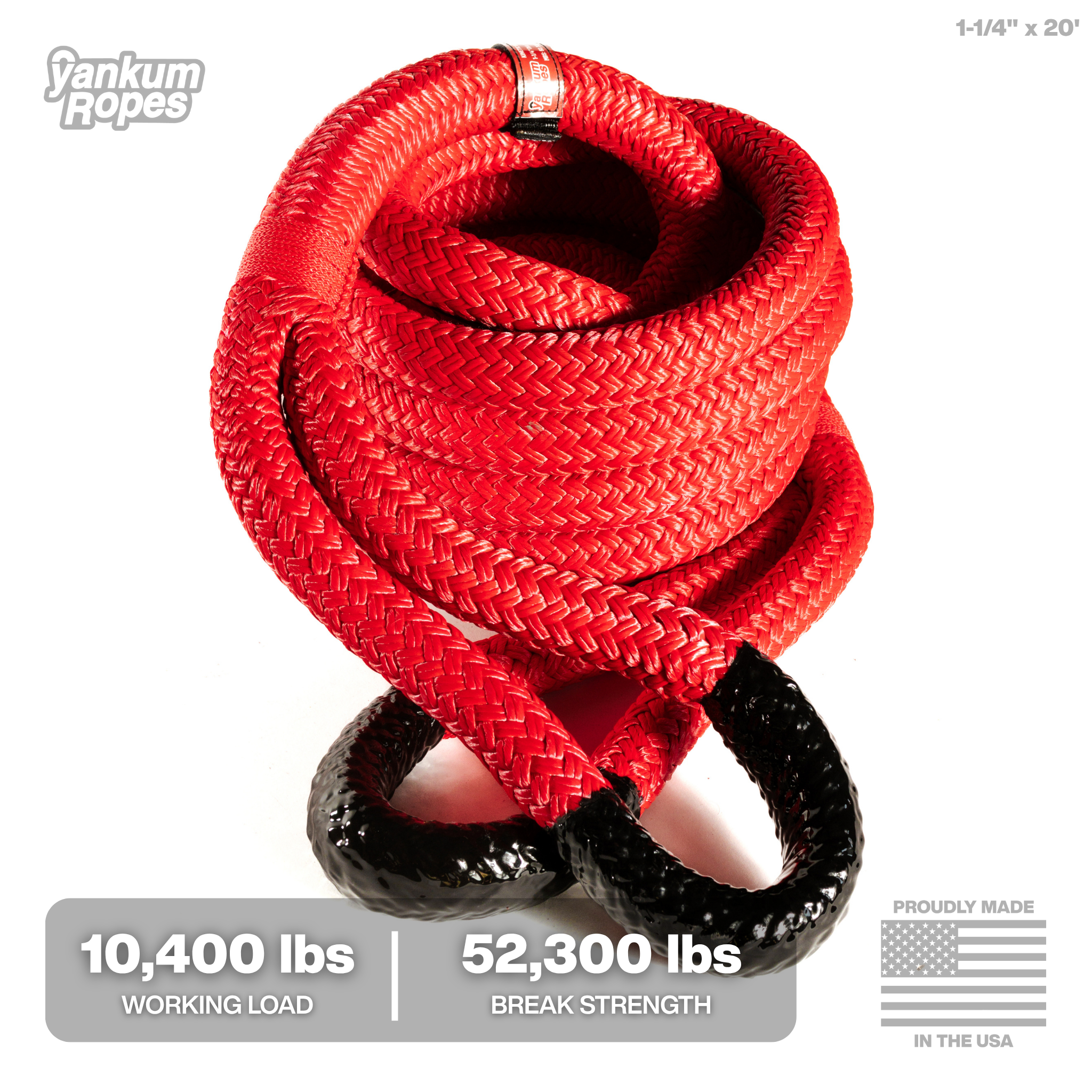
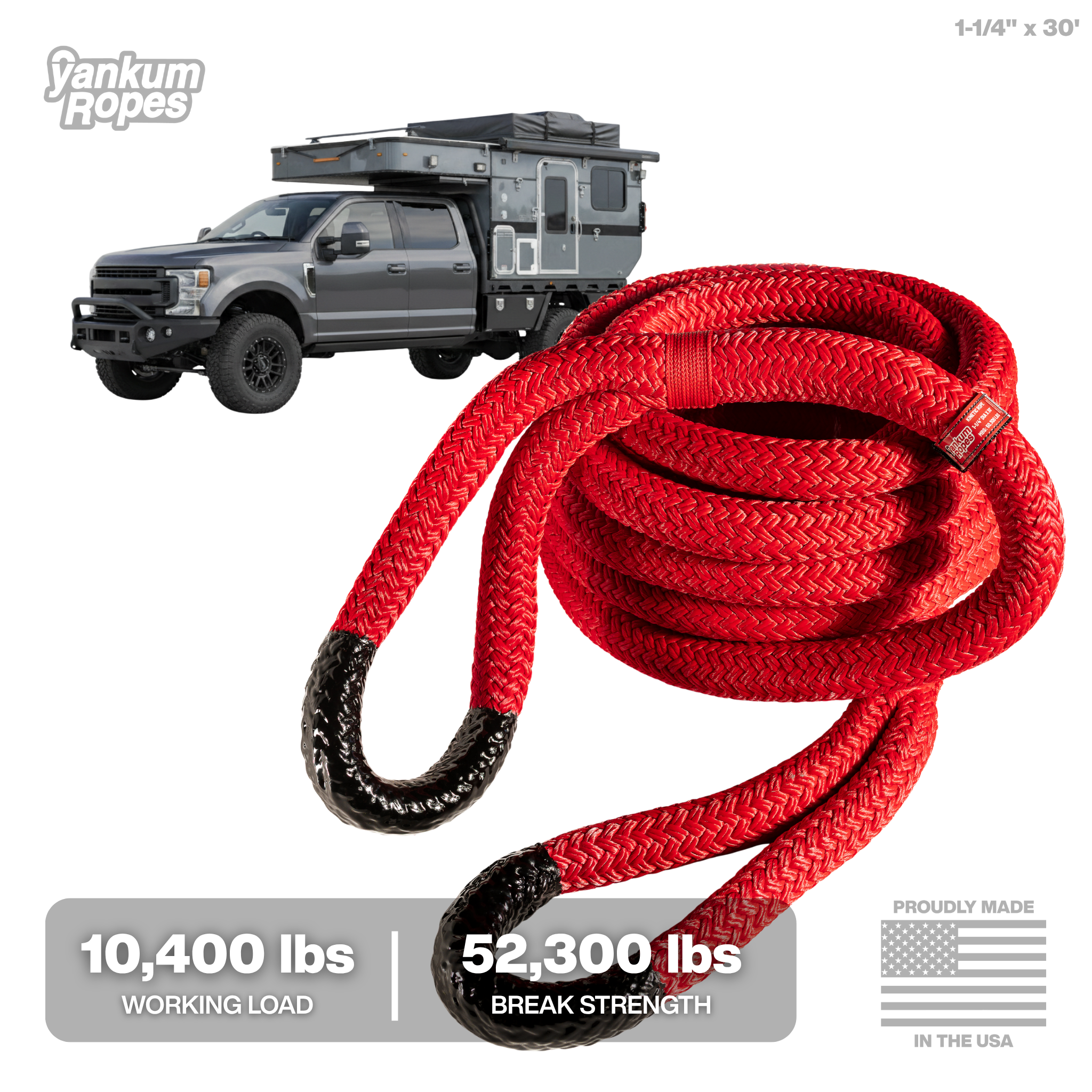
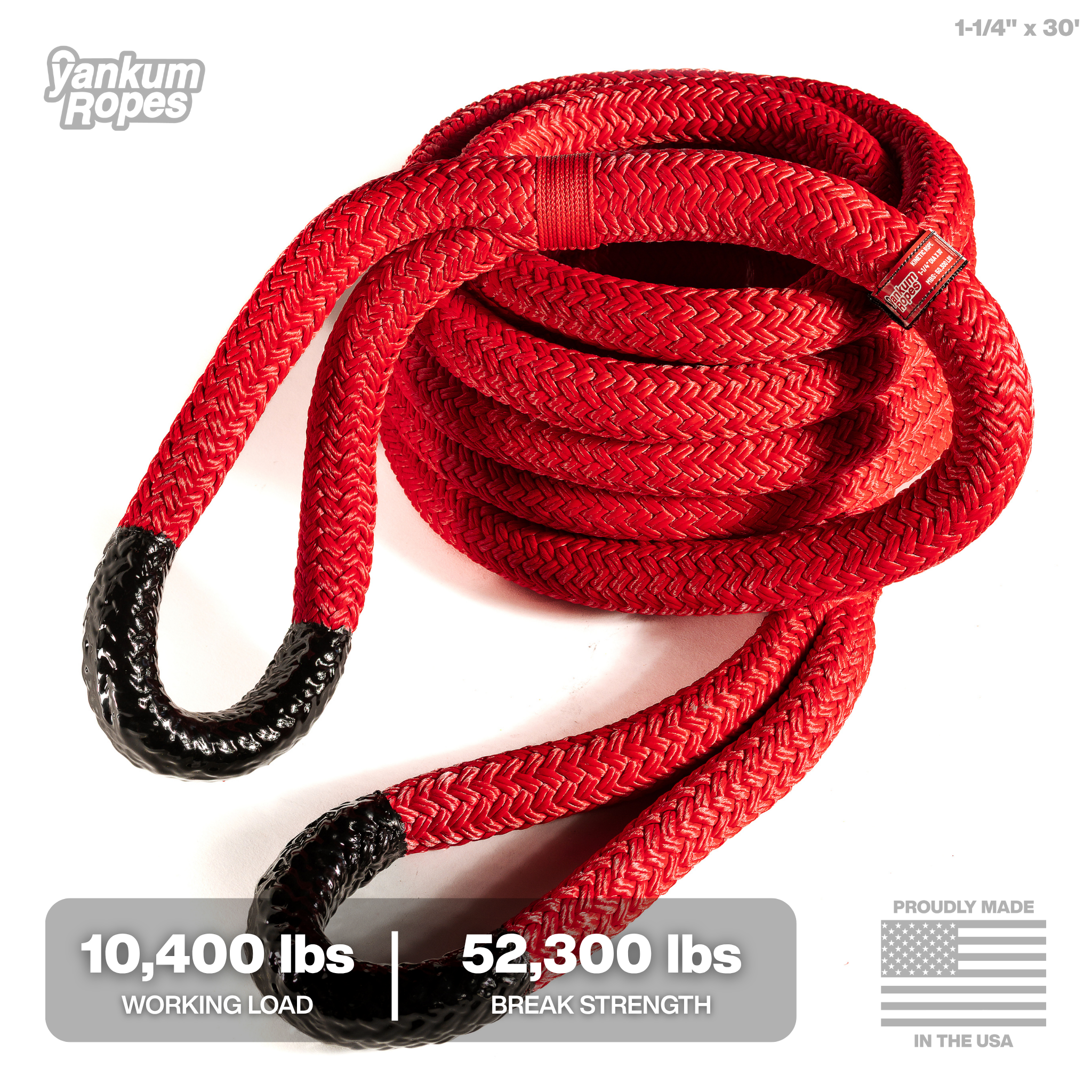
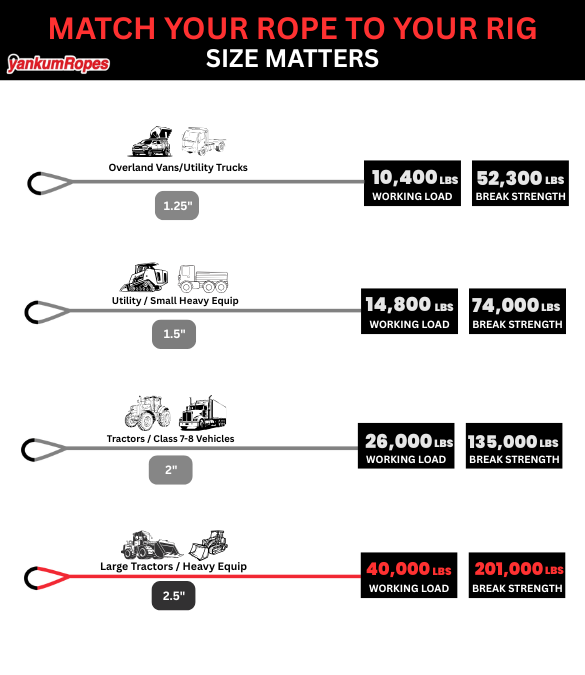
| 1-1/4" | Mamba | 10,250 – 14,499 lbs | 50,300 lbs | 1 ton utility bed trucks, overland vans, heavy diesel |
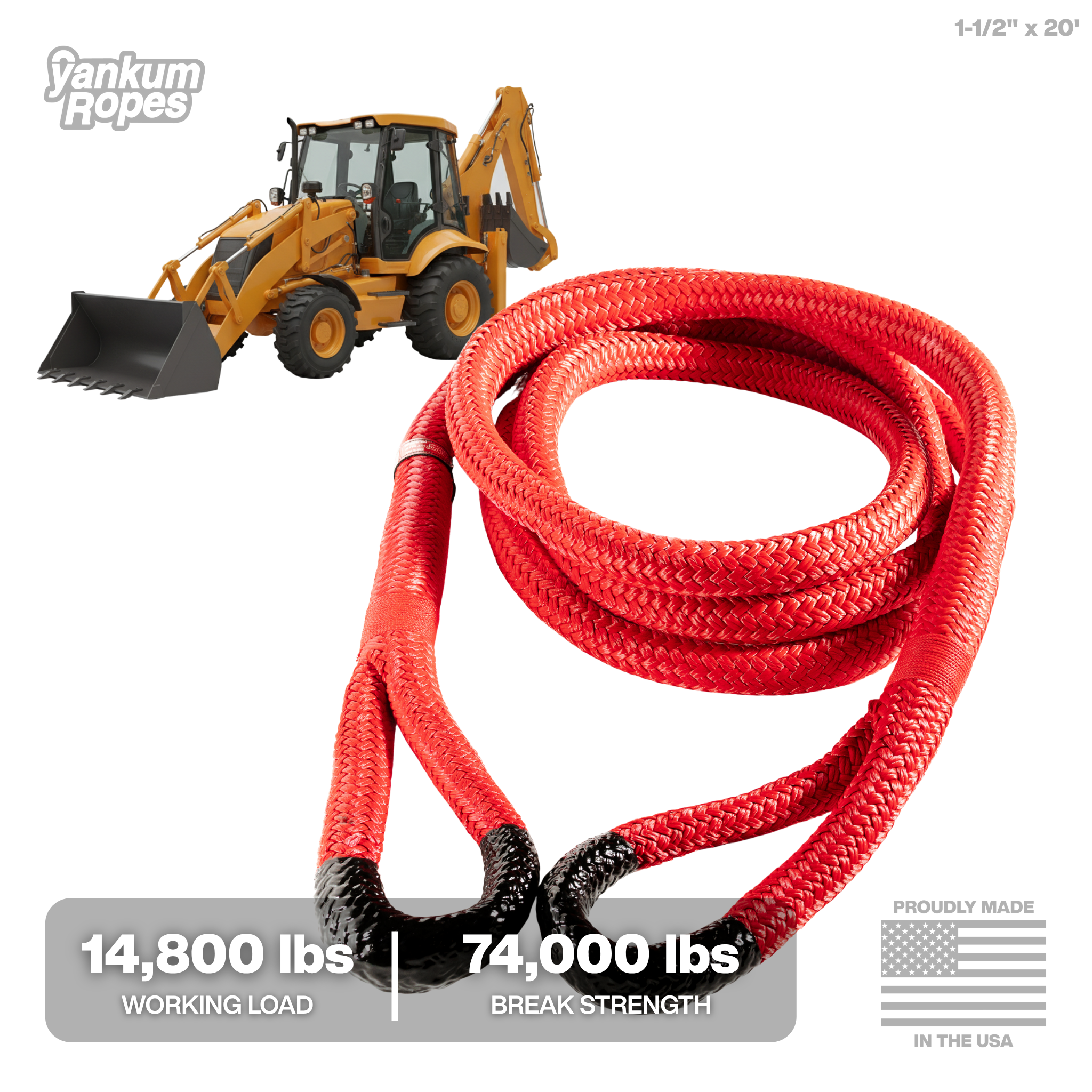
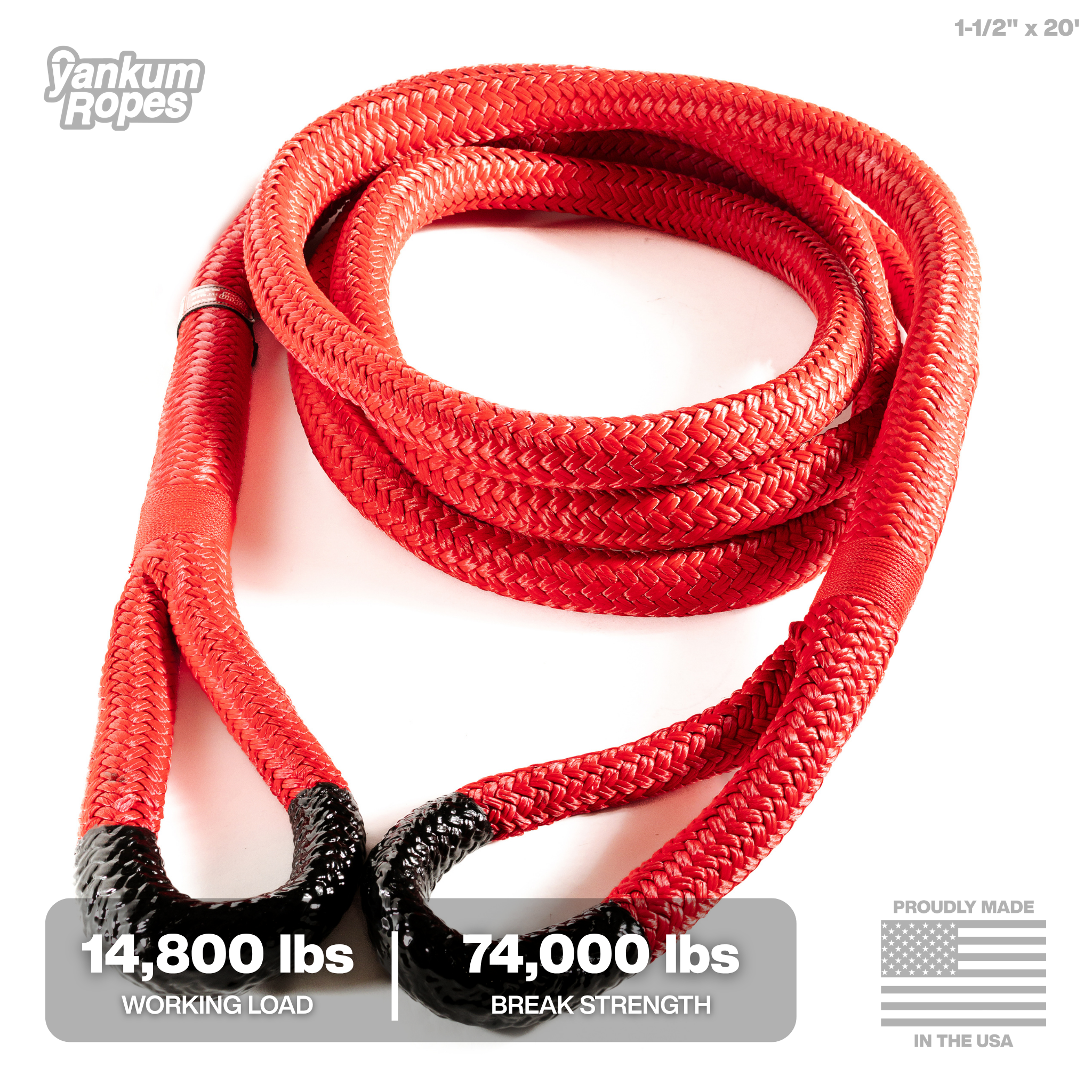
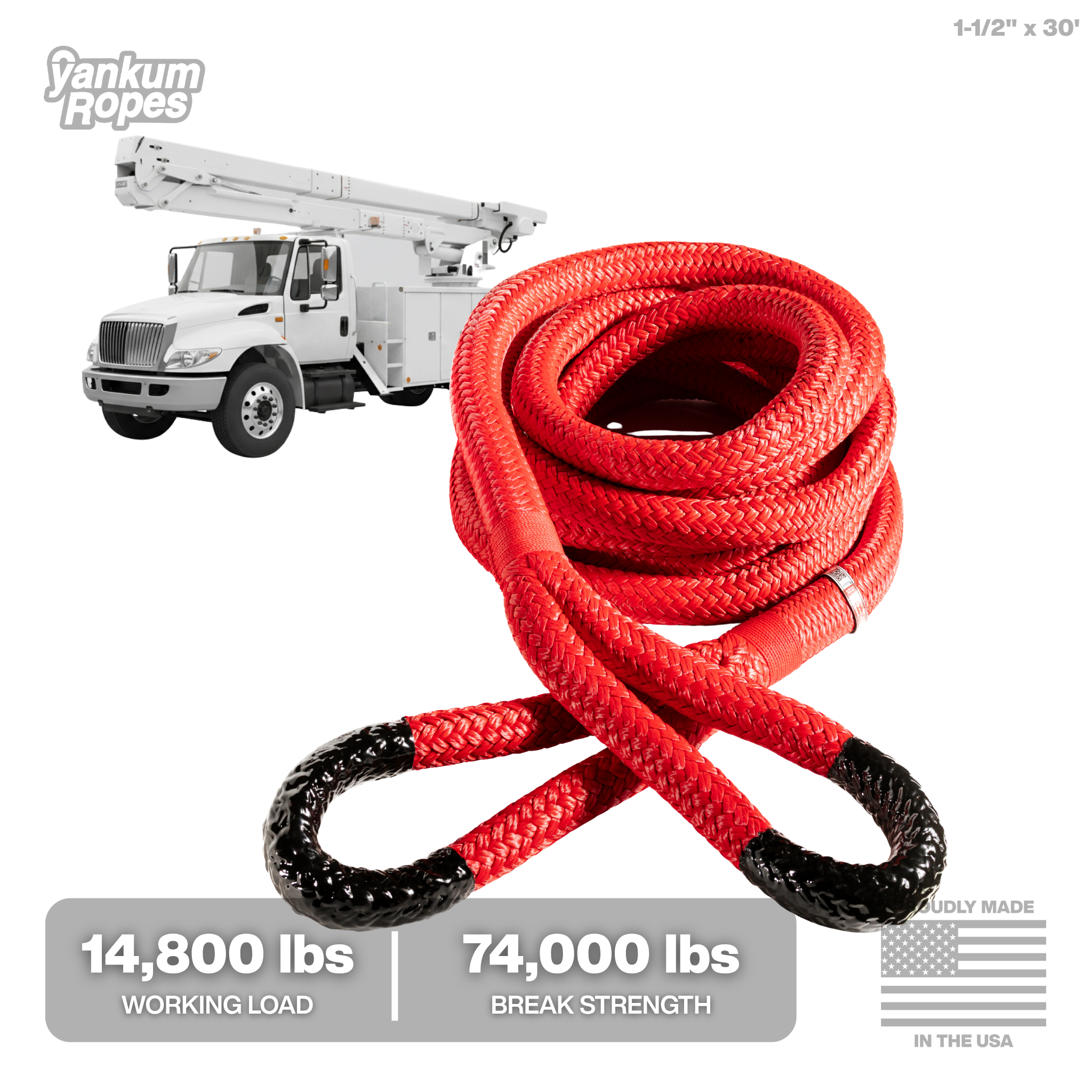
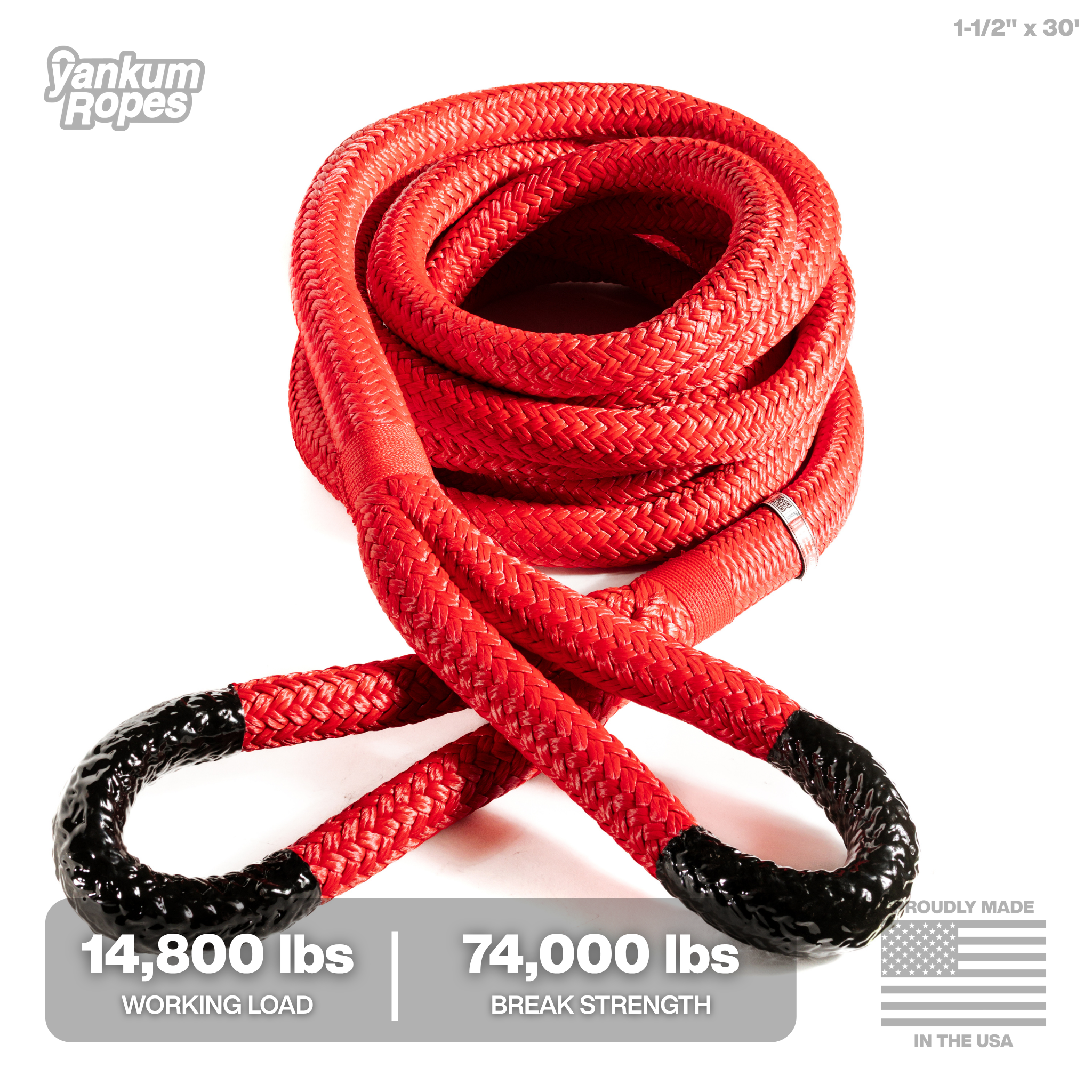
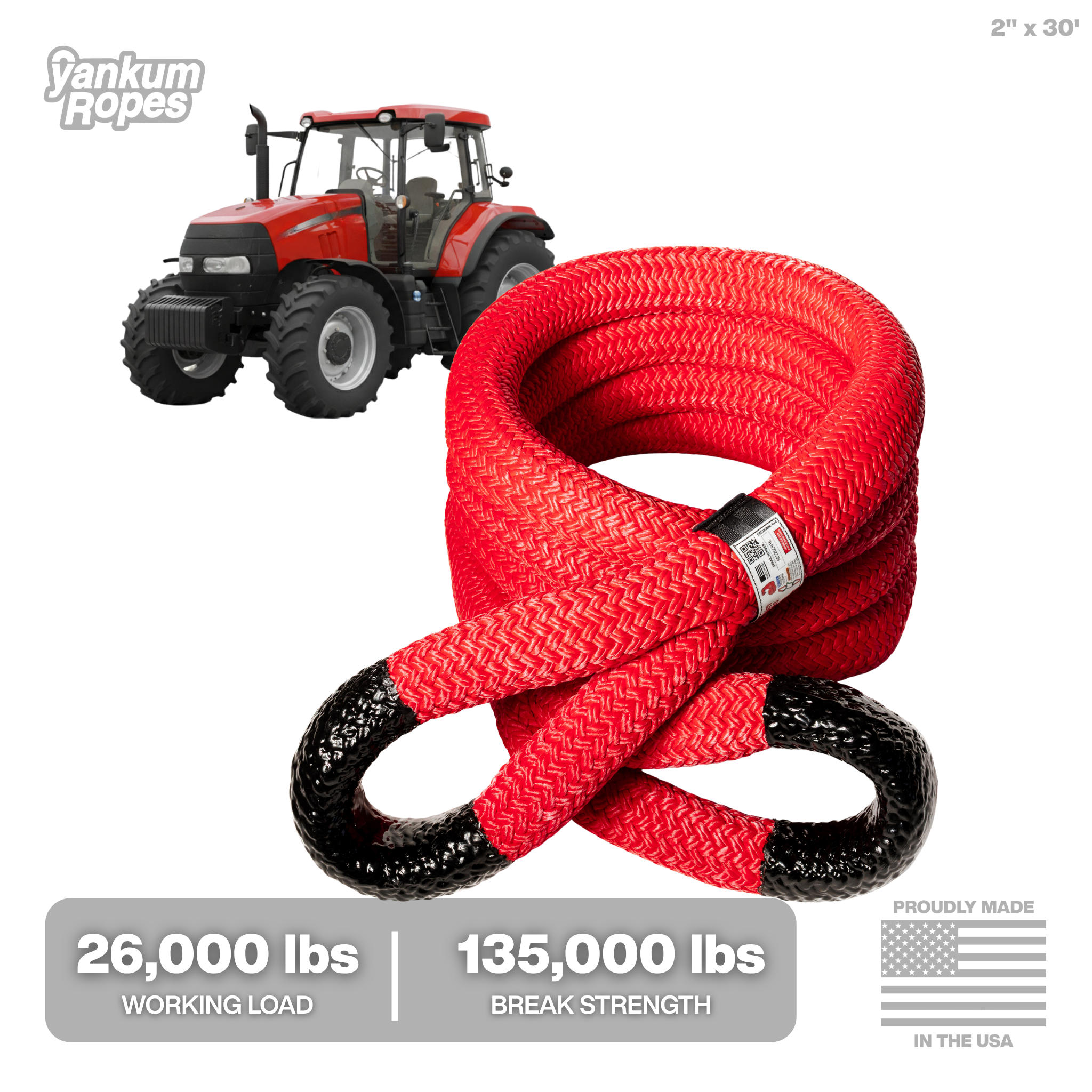
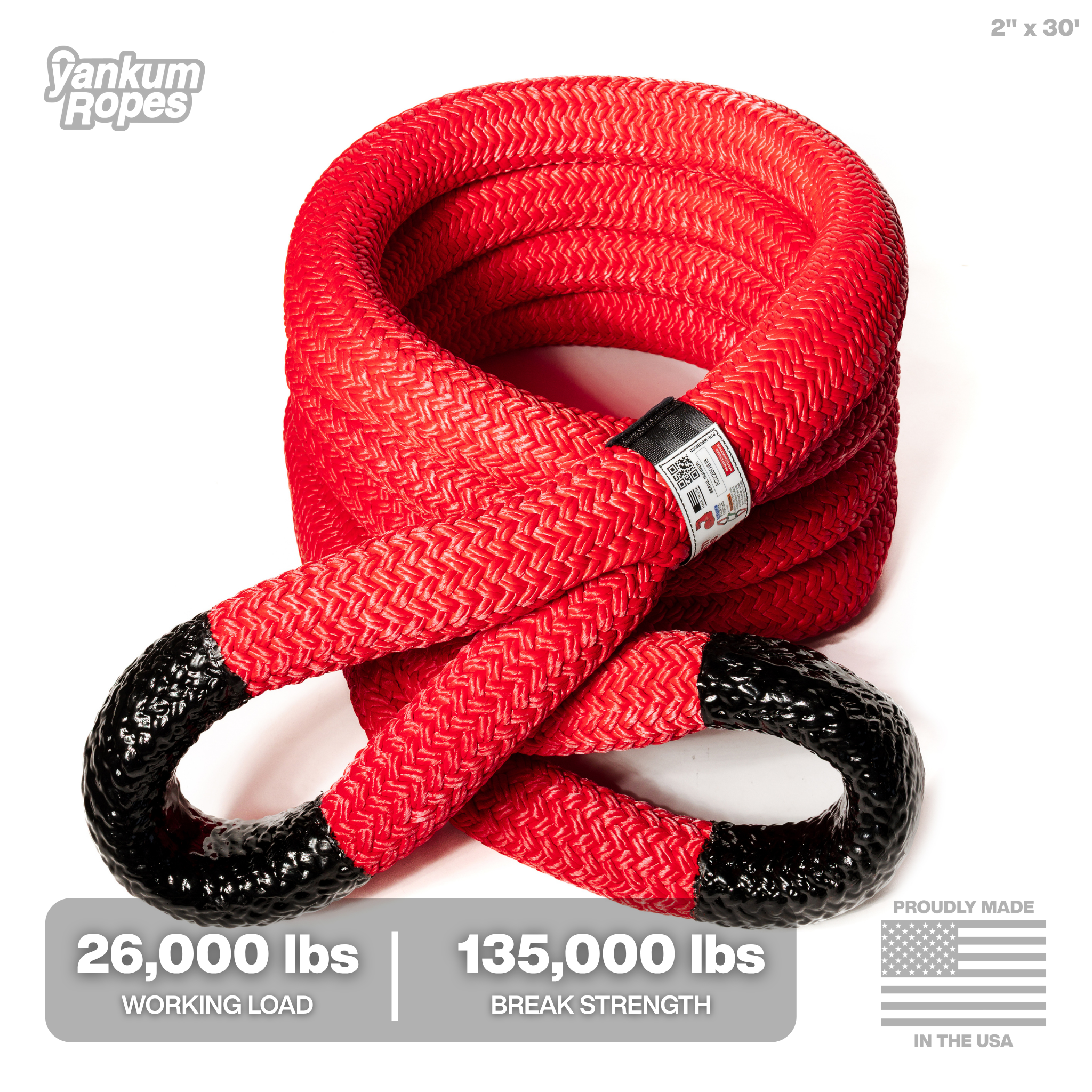
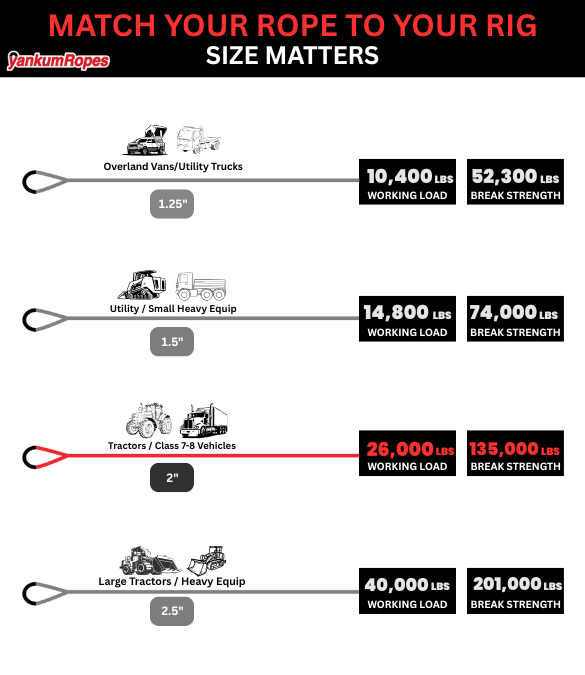
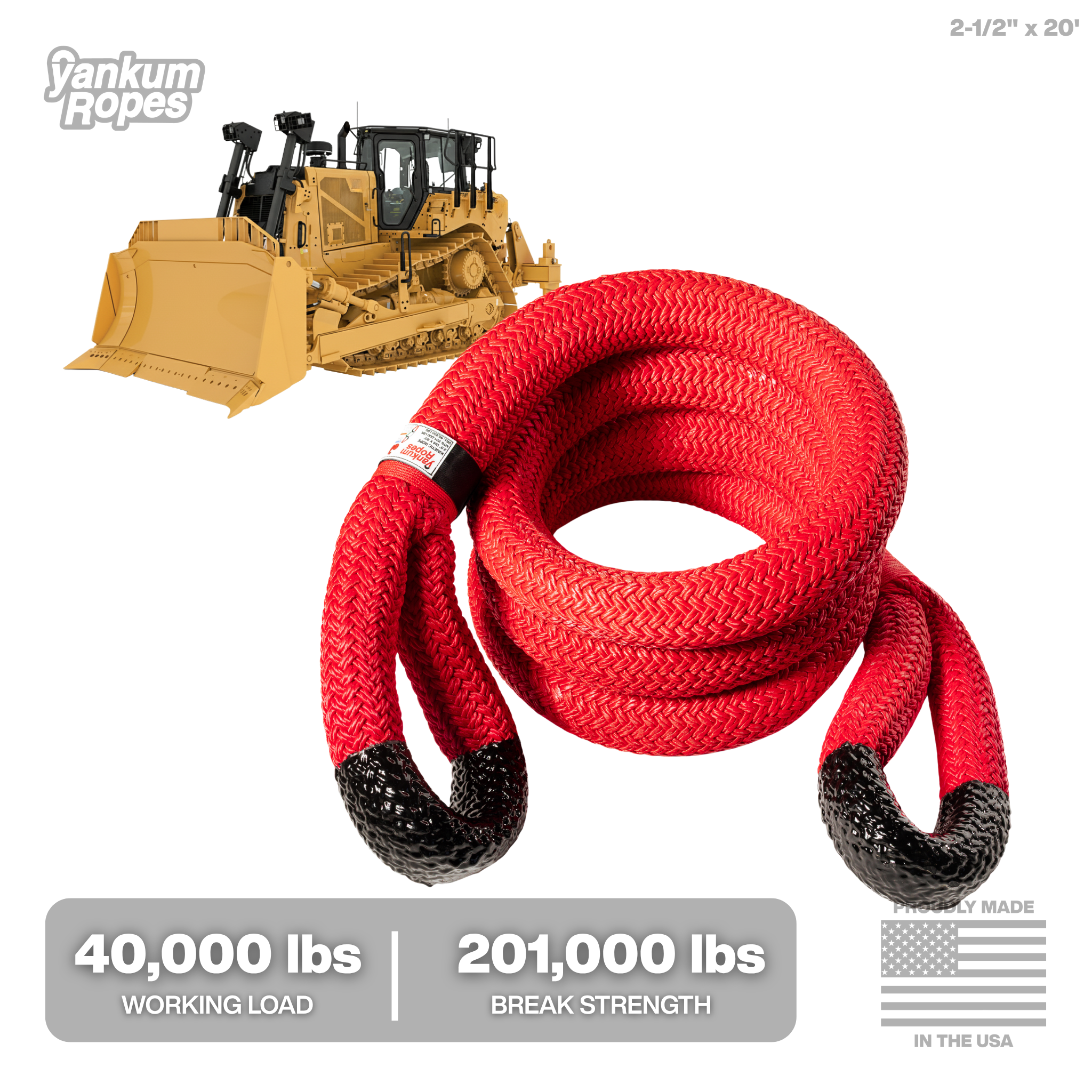
| 1-1/2" and up | — | 14,500 lbs and above | Contact us | Commercial and heavy equipment |
For 1-1/2" and larger we would rather confirm the current rating with you directly than have you work from a number on a web page. Get in touch and we will check the spec before you order.
Which length
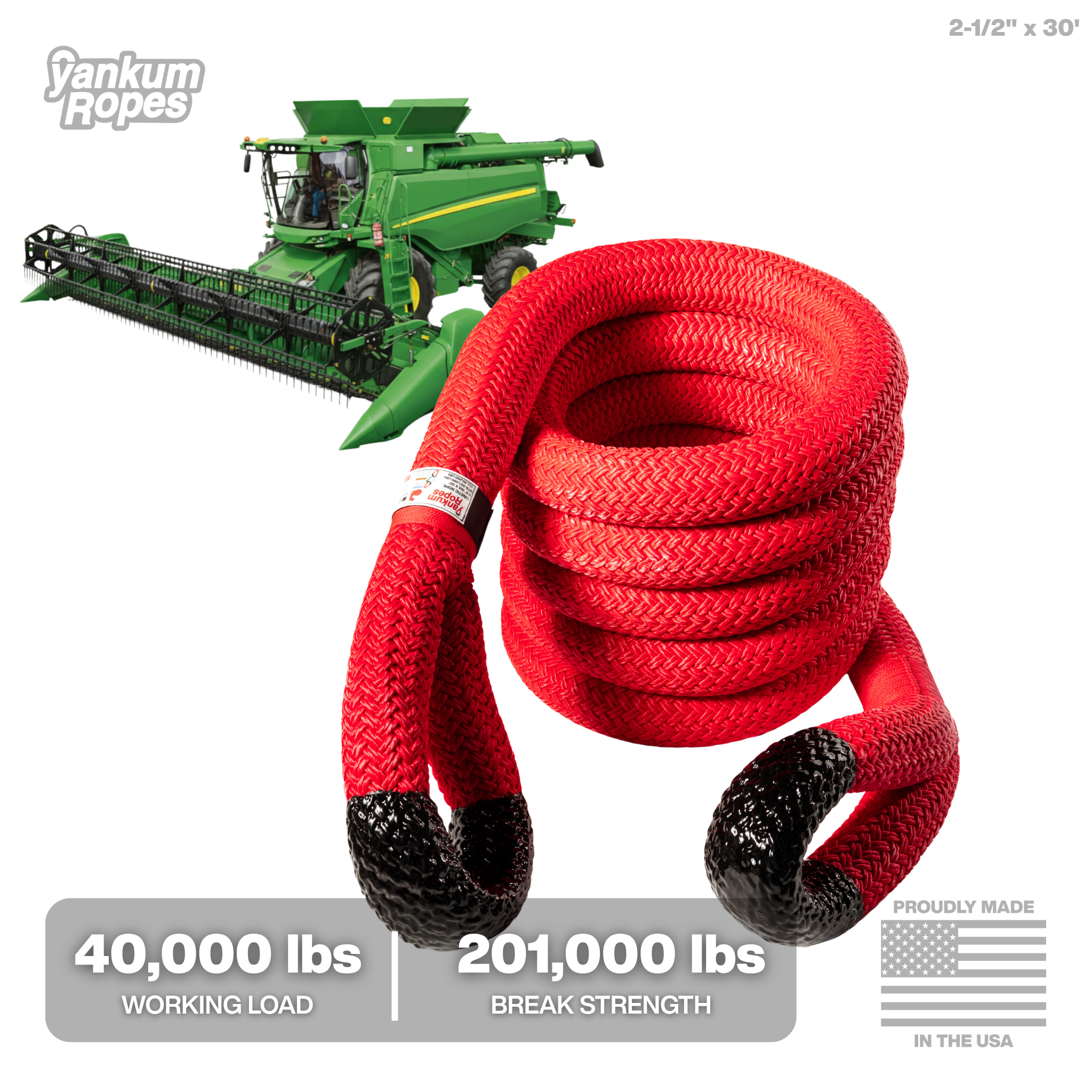
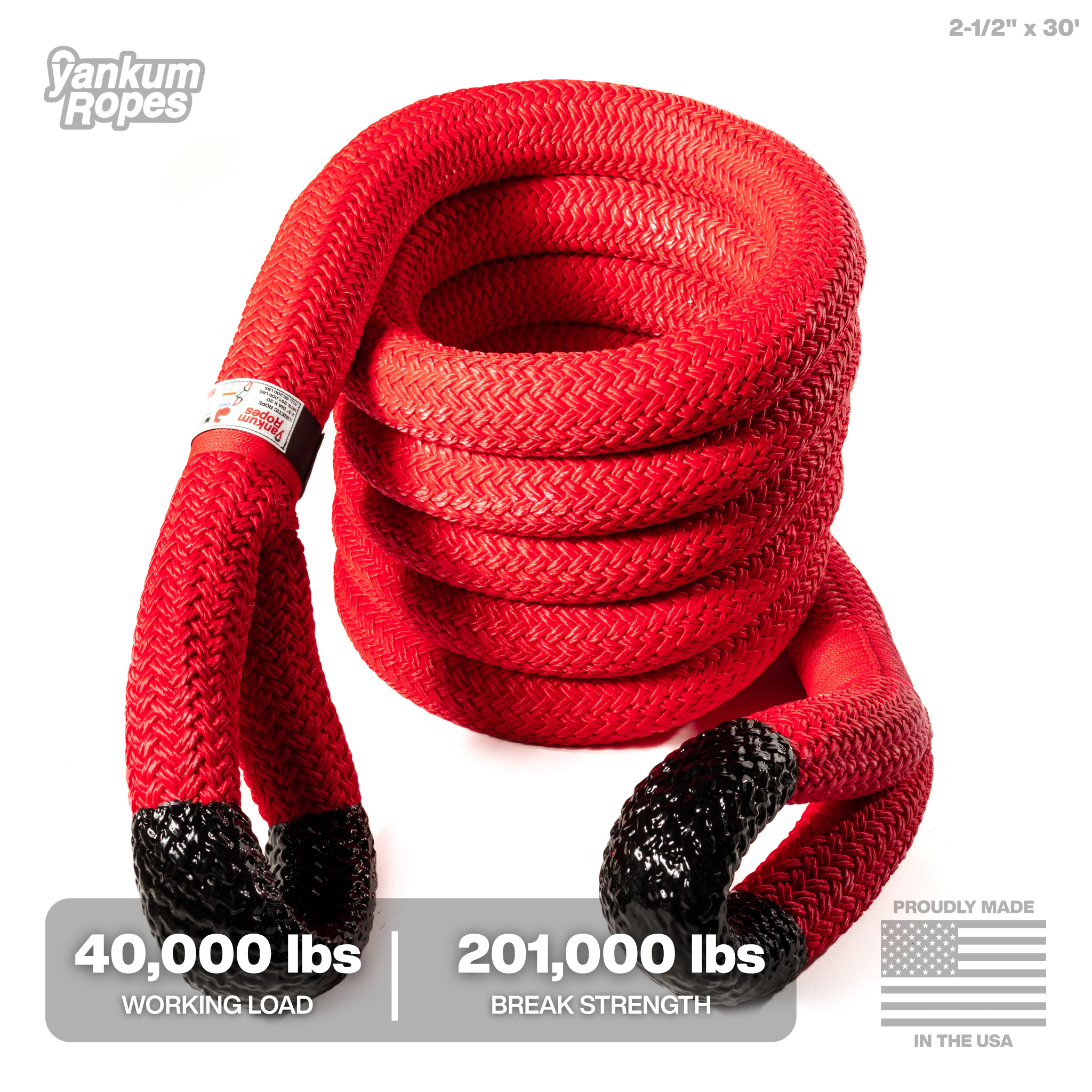
20' for tight terrain — dense woods, rock, anywhere you cannot get the vehicles far apart. 30' for open country, desert, sand, mud flats, worksites. More length means more rope to stretch, which means a gentler pull on both vehicles. If you only buy one and you have the room, buy the 30'.
Understanding the rating
Minimum breaking strength is where the rope fails, not where you should work it. Divide by a safety factor to get your working load. A factor of 3 is aggressive, 4 is a sensible middle ground, and 5 is what we would suggest if you are newer to this.
Worked example on the 7/8" Python at 28,600 lbs: ÷ 3 = 9,533 lbs, ÷ 4 = 7,150 lbs, ÷ 5 = 5,720 lbs.
Matching your shackles and bag
| Rope | Soft shackle | Hard shackle | Bag |
|---|---|---|---|
| 1/2" Racer | 1/4" | 1/2" | — |
| 5/8" Viper | 5/16" | 1/2" | X-Small |
| 3/4" Rubber Boa | 5/16" | 3/4" | Small |
| 7/8" Python | 7/16" | 3/4" | Medium |
| 1" Rattler | 7/16" | 7/8" | Medium |
| 1-1/4" Mamba | 1/2" | 7/8" | Large |
How to use it without hurting anyone
Start with a slow pull to take up the slack. Then build speed gradually. Do not exceed 5 mph. If you have reached 5 mph and nothing has moved, stop and rethink the recovery — dig, use boards, change the angle, run a winch. Repeatedly hammering a stuck vehicle is how equipment fails and people get hurt.
Rig to rated recovery points only. Never a hitch ball, never a tow hook that is not rated. Lay a dampener over the rope. Keep everyone well clear of the line.
Construction
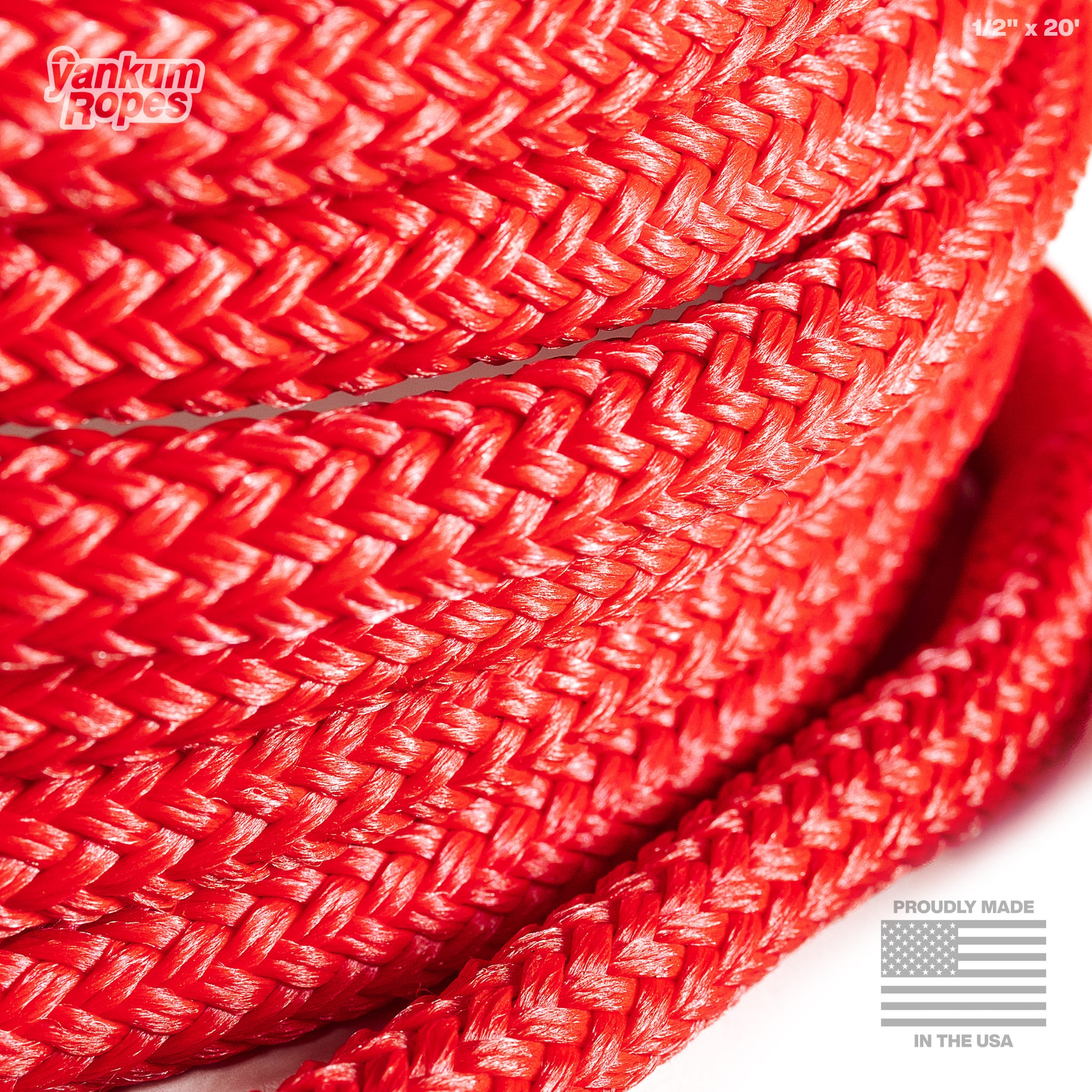
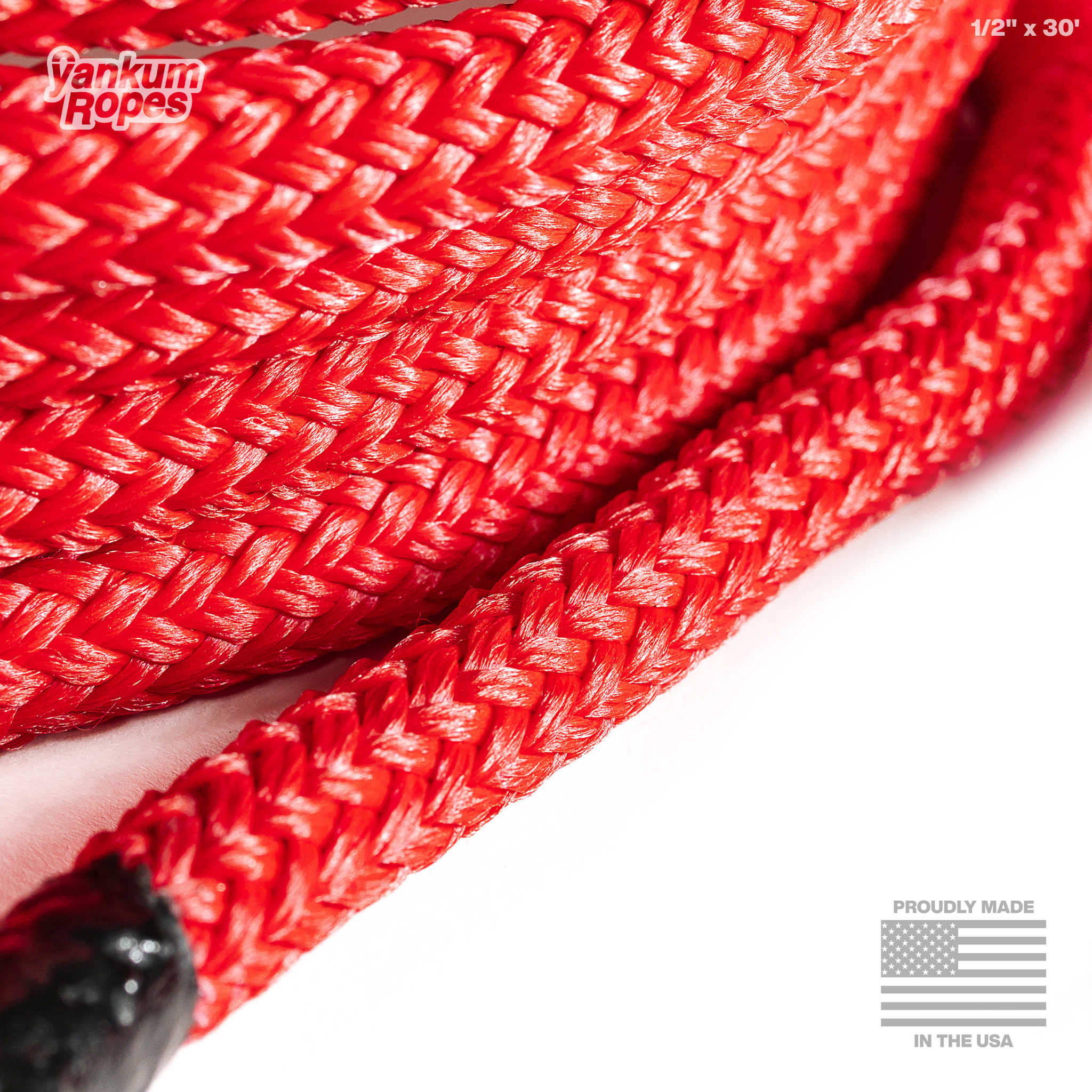
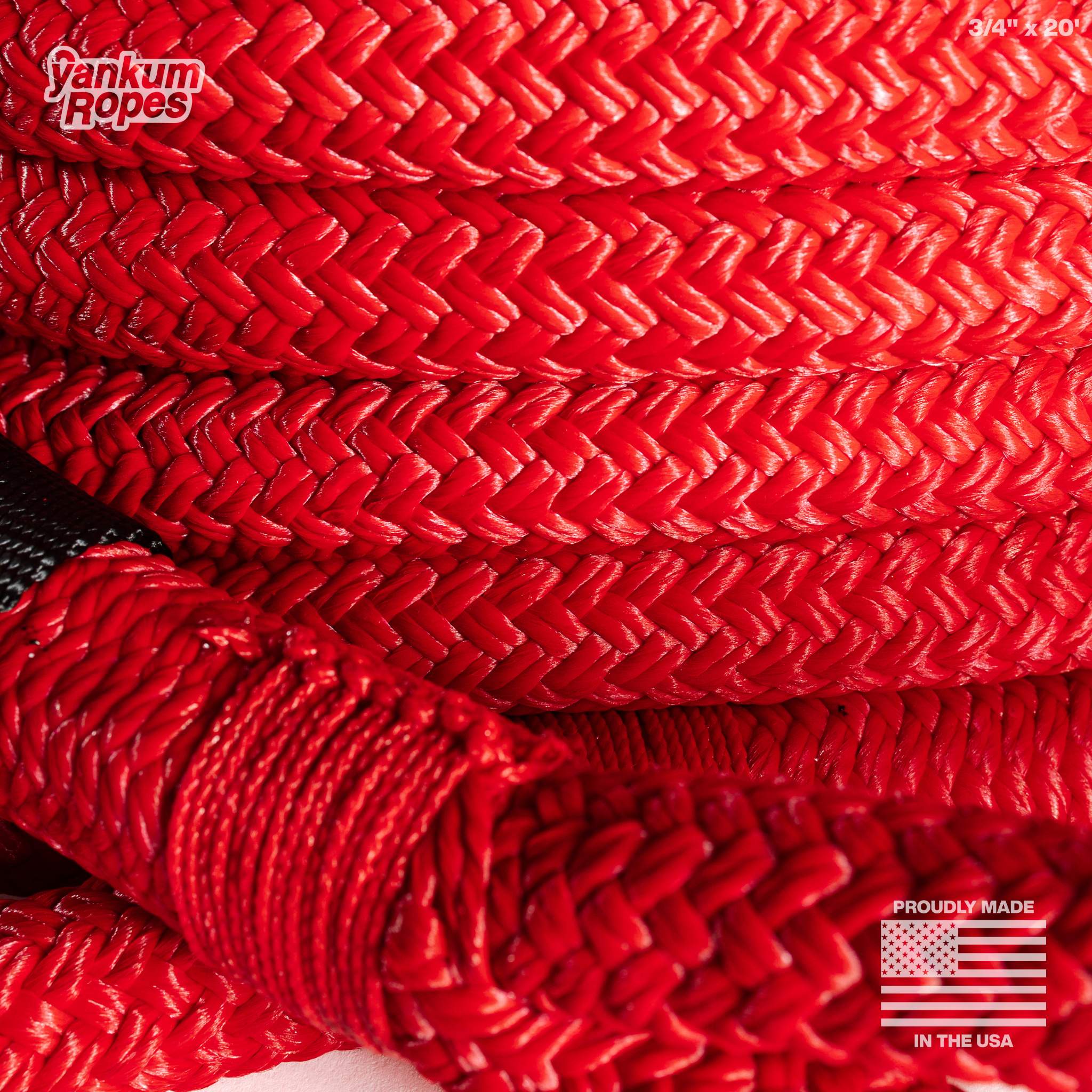
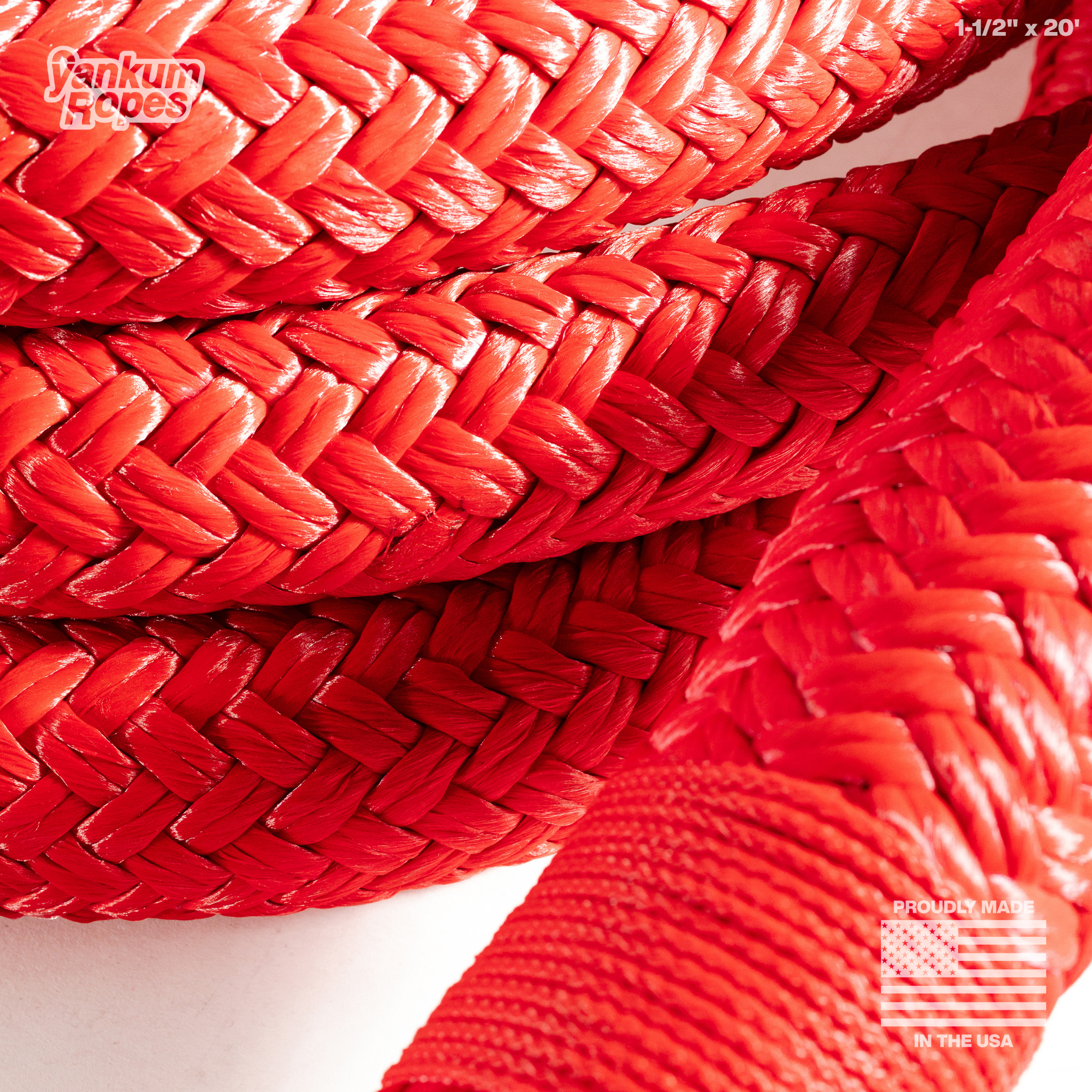
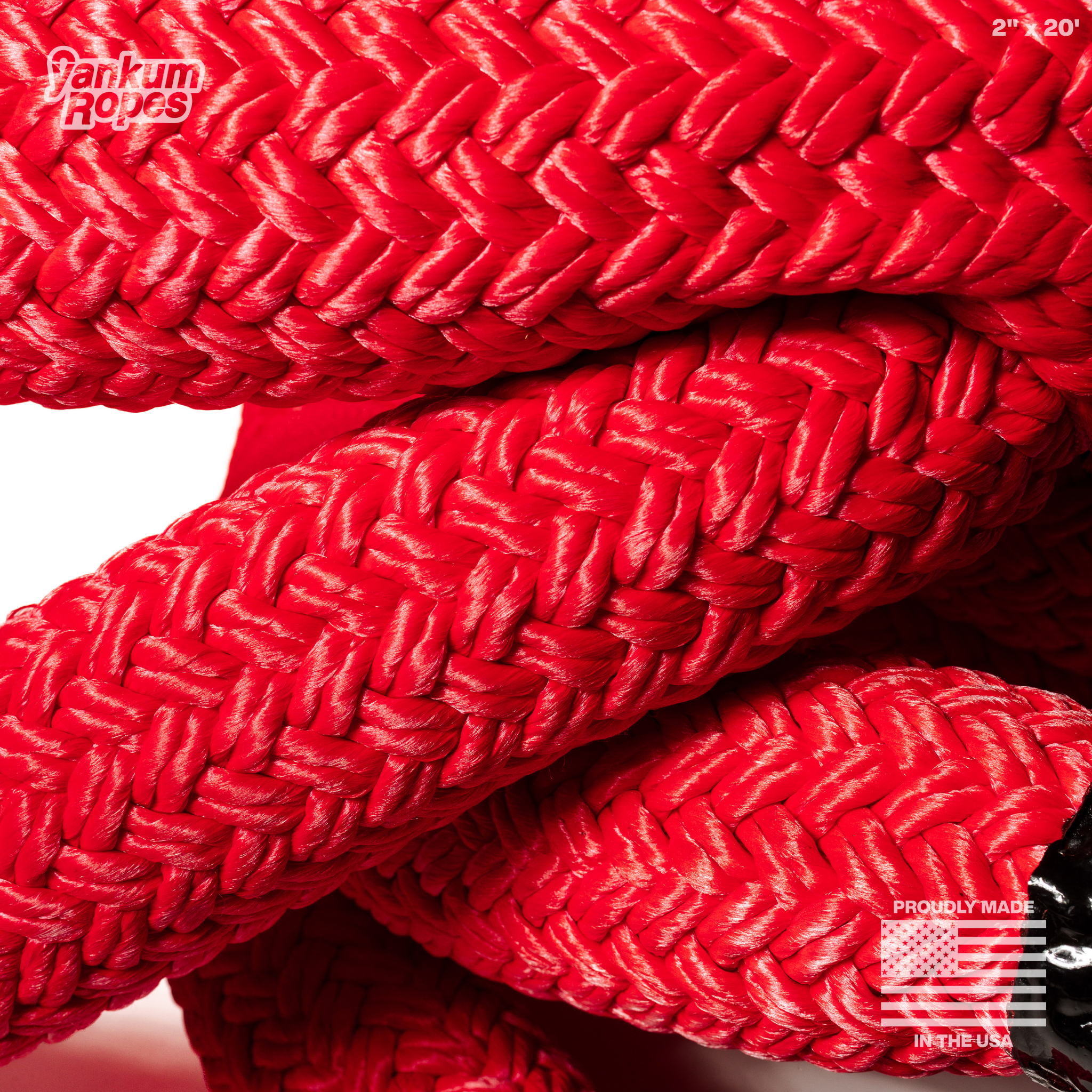
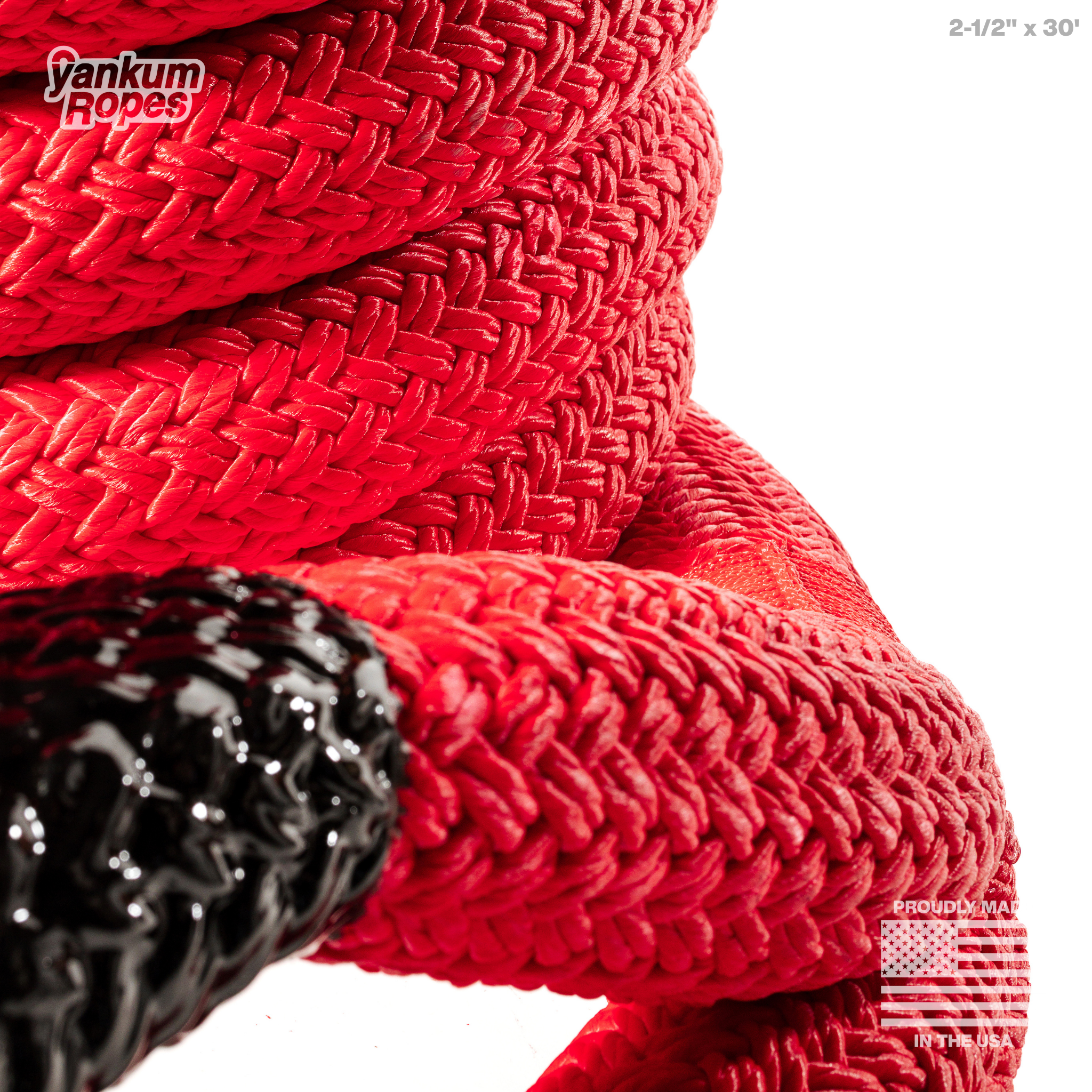
- Double braid nylon
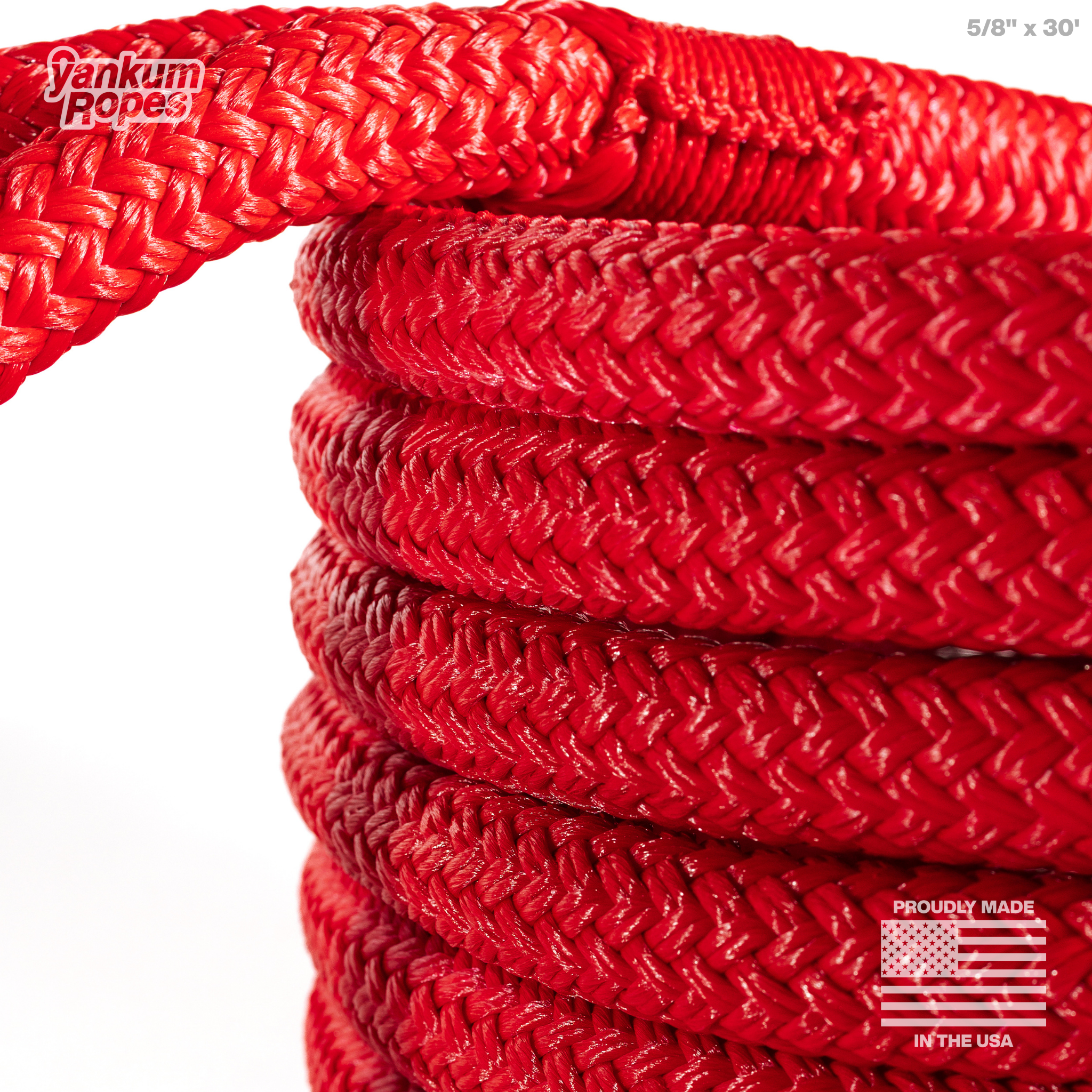
- Polymeric coating — UV, water and abrasion resistant
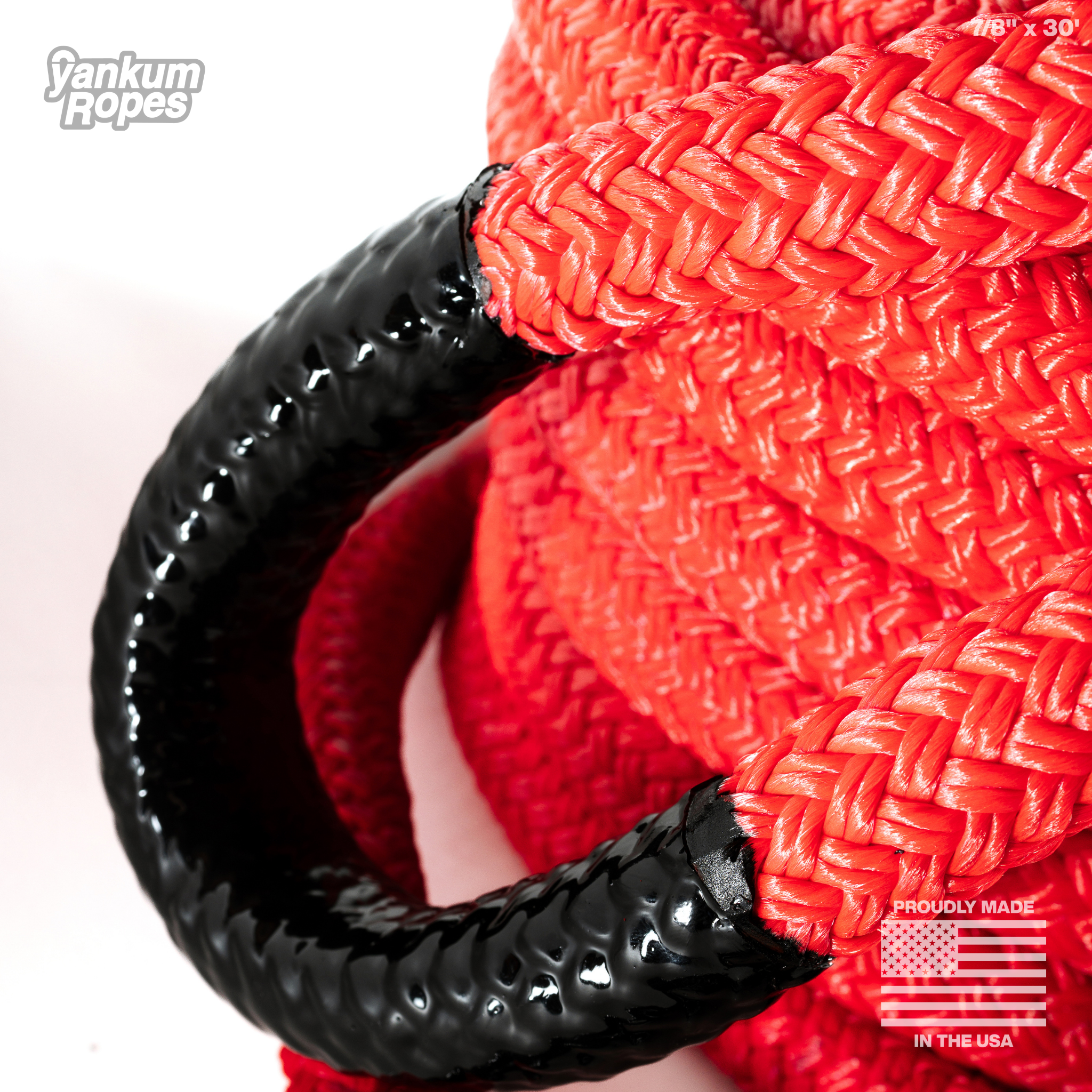
- Rubber-dipped eyes for extended life where it matters most
- Made in USA
- 1 year limited warranty, through Yankum
FAQ
Can I use this as a tow rope?
No. Kinetic ropes are for recovery, not towing. Towing on a rope that stretches is unpredictable and unsafe.
What is the black velcro sleeve?
The chafe sleeve — five feet of polyurethane-coated ballistic nylon that slides along the rope to protect it where it crosses something abrasive. Worth having if you ever run the rope over rock or a bumper edge.
How do I store it?
Out of the sun, away from fuel and solvents. The coating handles UV and water well, but nylon does not like harsh chemicals. Damp is fine; soaked in diesel is not.
How long does a rope last?
There is no hour meter on it. Inspect before every use — look for glazing, cuts, stiffness, or a section that has gone noticeably thinner. If you are unsure about a rope, retire it. It is cheaper than the alternative.
I am between two sizes.
Go up. Loaded weight is almost always more than people think.
Still not sure? Ask us — it is a quick answer and it matters more than most gear questions.
Also worth a look
Presented by Overland Kitted
The Dispatch
Gear We Like: DVA Mechanics for the Grenadier
MAXTRAX Introduces Universal Mounting Pins for MKII, XTREME, and LITE Boards